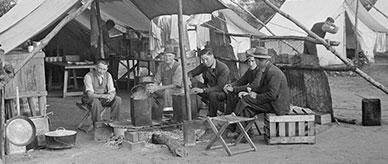
When the First World War was declared, over 100,000 Germans and people of German descent were living in Australia. They were treated with suspicion and xenophobia, with both the government and the population at large questioning where their loyalties might lie.
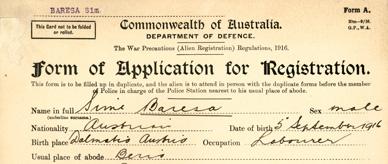
People with German or Austro-Hungarian heritage were required to register with the government. German schools and churches were closed, and German names for places and food were changed. Ultimately, 7,000 people with German heritage were interned in camps around Australia.
Despite the suspicion that fell on them, German Australians fought for recognition of their Australian nationality and rights. Here are the stories of just 2 of them.
The right to fight
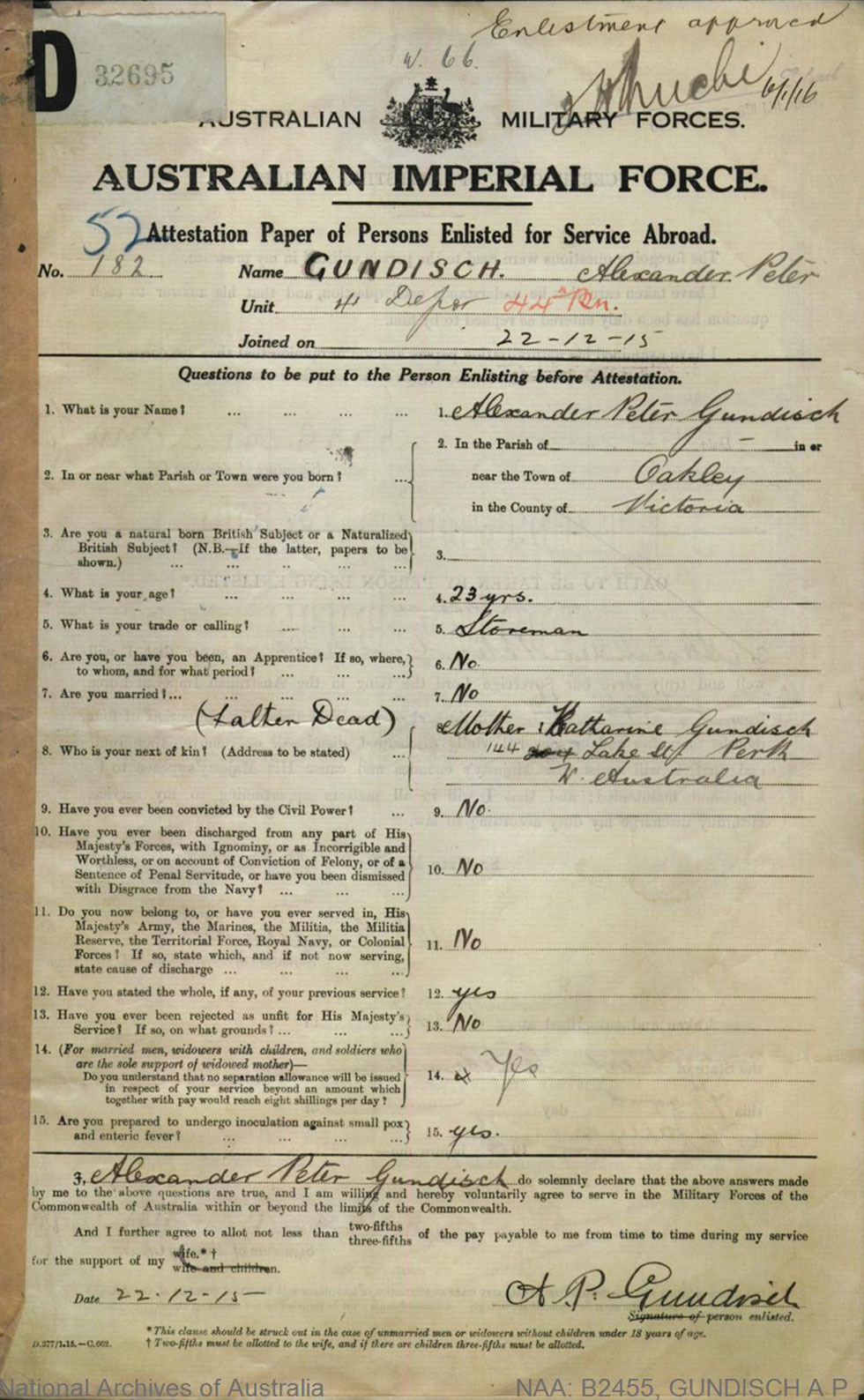
Alexander Peter Gundisch was 23 when he enlisted to fight in the Australian Army in December 1915. Born in Victoria and a storeman by trade, he lived with his mother Katharine in inner-city Perth.
His Germanic surname immediately put him under suspicion. His file was sent to Military Intelligence for investigation. His father – presumed dead – was thought to be Austrian, and had migrated to Australia at 10 years old. His mother had been born in Germany, and had arrived in Australia at 15.
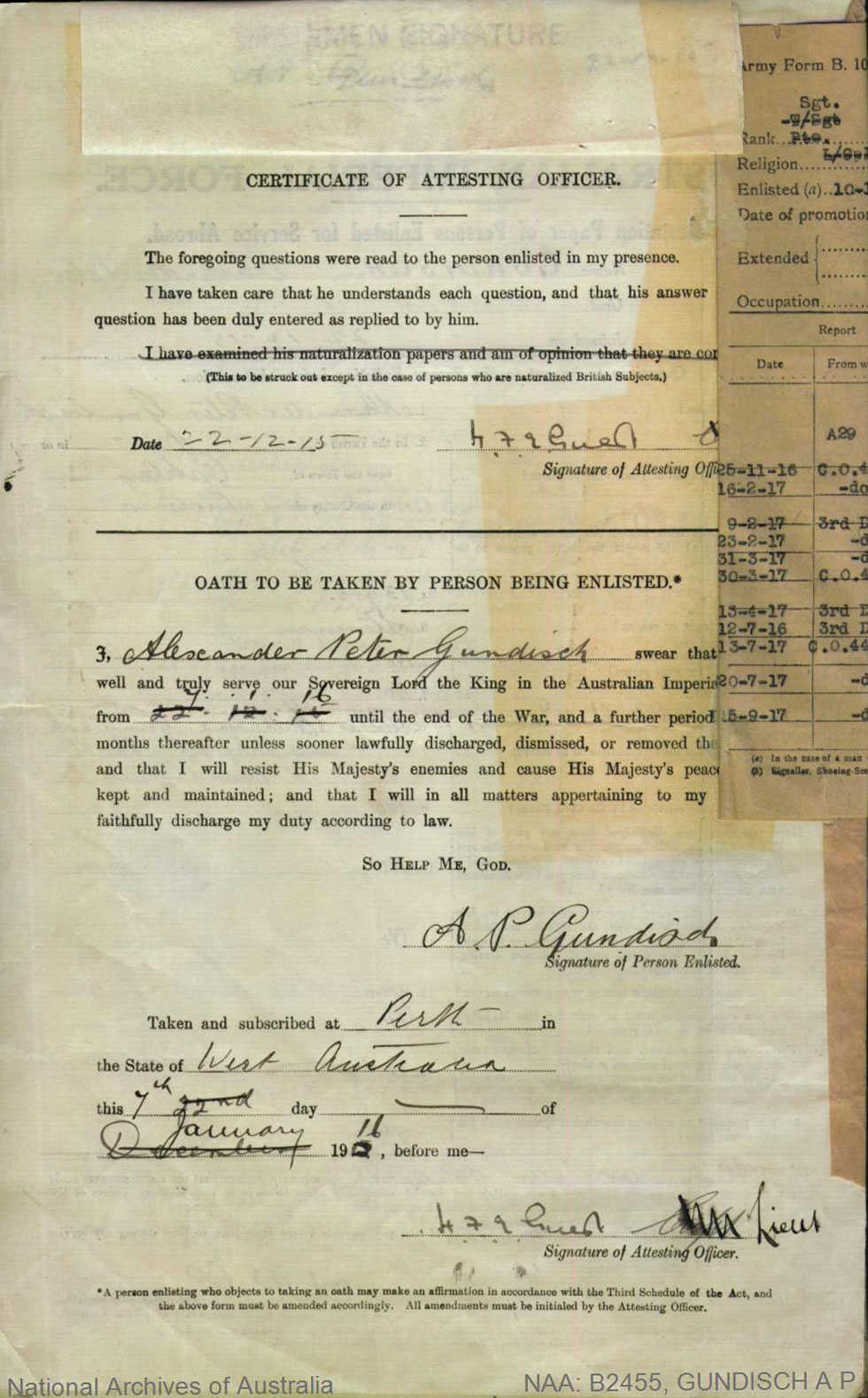
Gundisch was fortunate. His past and previous employers testified to his loyalty to Australia. His enlistment was approved in January 1916.
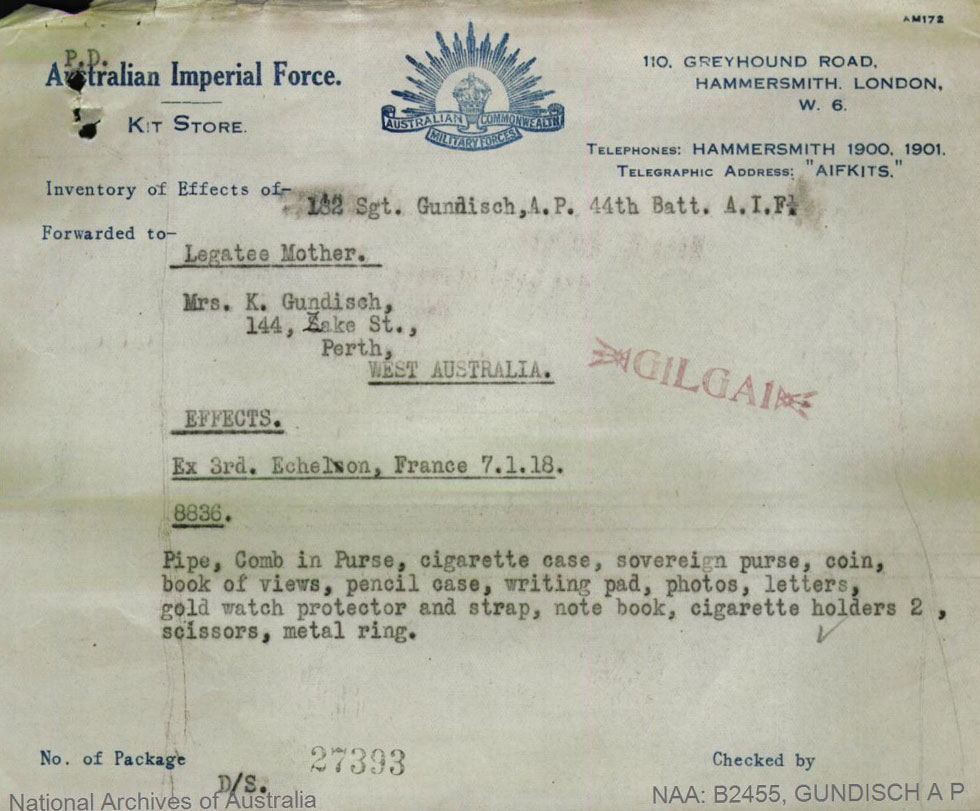
He left Fremantle 6 months later to serve on the Western Front. His war record appears exemplary, and he was promoted to Sergeant after being wounded in September 1917. Only a month later, in October 1917, he received a gunshot wound to the head. He died 5 days later in a military hospital in France. He was one of an unknown number of German Australians who fought and died for Australia.
Gundisch's mother Katharine received a war pension of 52 shillings a fortnight until her death in 1923.
A shop owner’s internment
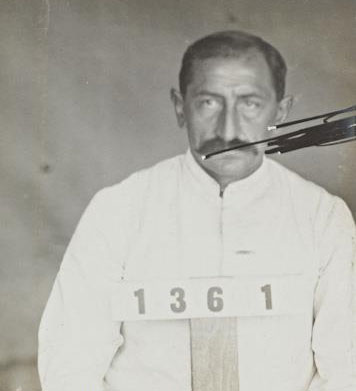
Robert Hirschbolz and his wife, Rachel, ran a ham, beef and fried fish shop in Northbridge, Perth. He was about 40 years old, and had migrated from Germany in 1898. He had married Rachel, a divorcee with 2 daughters, in 1901.
In 1908 the whole family had travelled to Europe, staying there for 5 years, mostly in Germany. They had returned to Australia in late 1913.
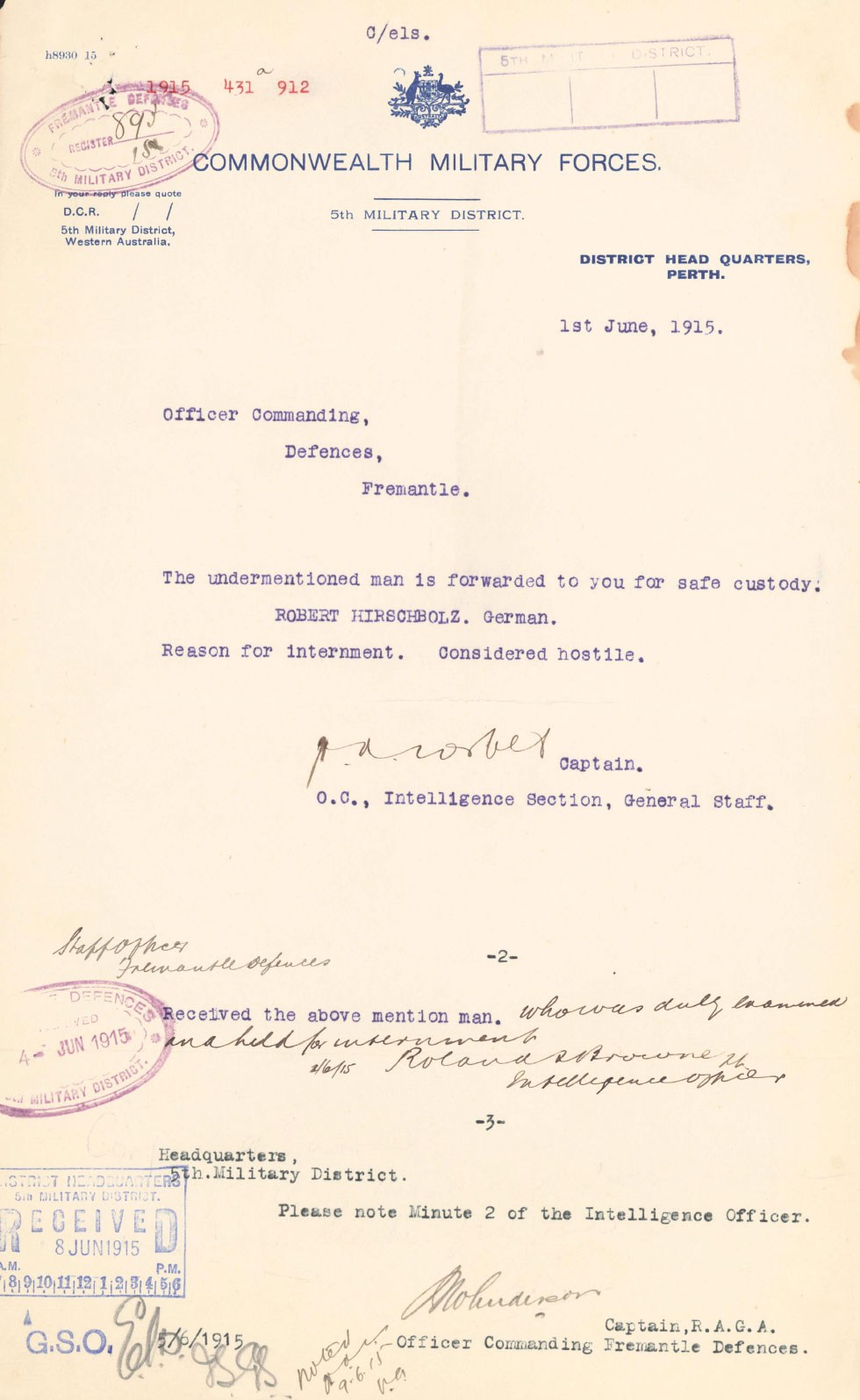
Military Intelligence identified Hirschbolz as an 'enemy alien'. On 1 June 1915, he was arrested. He spent 2 days at Fremantle Barracks before being sent to the interment camp on Rottnest Island. A Lieutenant Browne at Fremantle Barracks reported 'although he neglected to become naturalised, [he] states he looks upon Australia as his permanent home … I hardly think that the type of man Hirschbolz is should be interned'.
Despite this report, later in 1915, when the Rottnest internment camp closed, Hirschbolz and around 1,000 other internees were sent to Holsworthy Internment Camp.
Rachel was left to run their shop alone. She had lost her British citizenship upon her marriage to Robert. By March 1916, she had closed the shop and moved to stay in West Guildford with her married daughter. She wrote to military authorities that she was in 'distressed circumstances'.
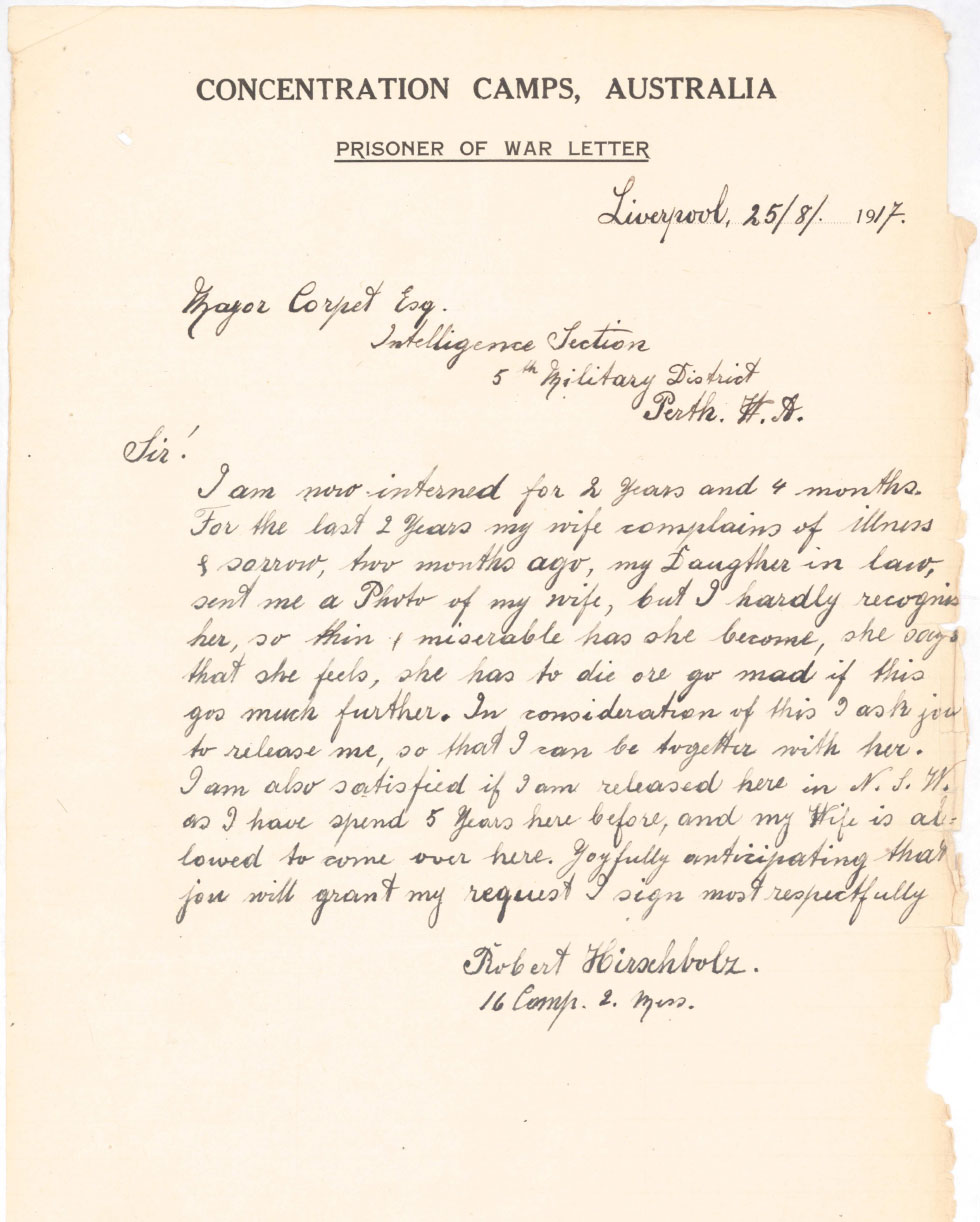
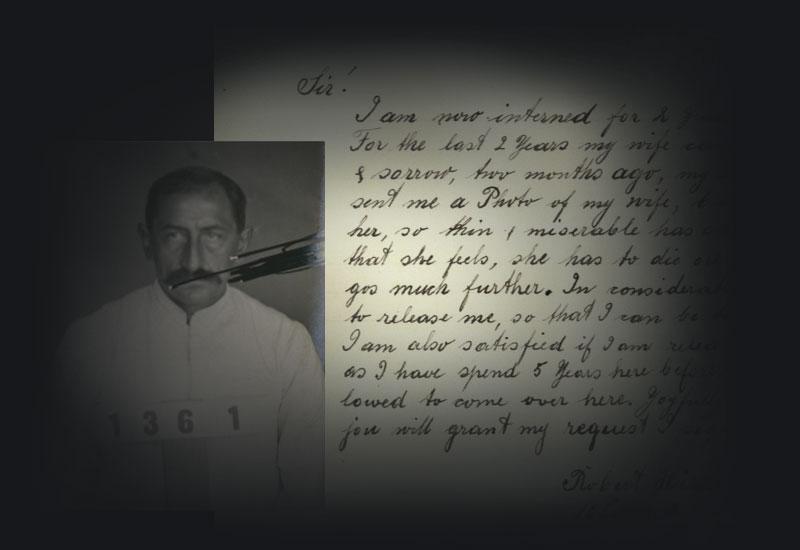
In August 1917, Robert wrote to the authorities from the internment camp. 'For the last 2 years my wife complains of illness & sorrow, two months ago, my Daughter in law, sent me a Photo of my wife, but I hardly recognise her, so thin & miserable has she become … I ask you to release me, so that I can be together with her'.
His pleas were heard, and he was released in December 1917.
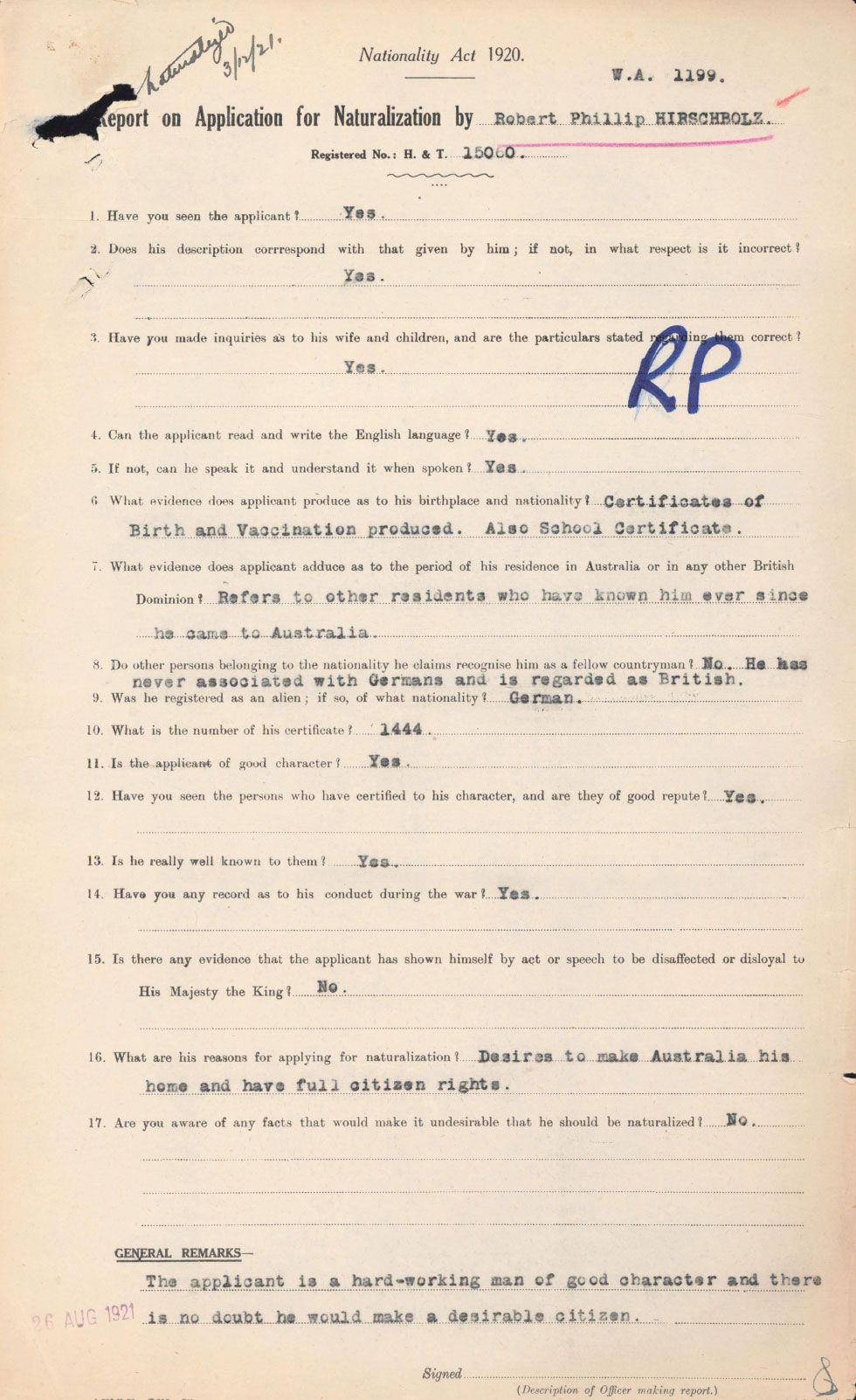
After the war, he applied to become a naturalised British citizen in 1921. An official wrote 'The applicant is a hard-working man of good character and there is no doubt he would make a desirable citizen.' Shortly after his citizenship was approved, he changed his surname to his wife's: Goggin.
The Second World War and beyond
German Australians would again fall under suspicion during the Second World War. Once again, thousands of German Australians would be interned around Australia.
Despite this, the German Australian community maintained its culture and resilience. In the 2021 Australian Census, over 1 million Australians claimed German ancestry.