Layered like a pearl: the life of Yasukichi Murakami

Lucie Shawcross
Tuesday, 28 April 2026

Yasukichi Murakami migrated to Australia from Japan in 1897. Like many migrants, Yasukichi’s life is documented in a variety of government records. They tell a complex story of business, family, the White Australia policy, and internment. 

Between Wakayama and WA

Yasukichi was born in 1880 in Tanami, a small seaside village in Wakayama prefecture, Japan. At age 16 he came to Australia in search of work and economic opportunities. He arrived in Cossack, Western Australia. He then moved to Broome in 1900, where he worked for the storekeeper Takazò Nishioka.
Love and money

In 1901 Yasukichi’s boss, Takazò, died and his business passed to his widow Eki. In 1906 Eki married Yasukichi and they expanded the business to imports, wholesale, retail, banking and photography.

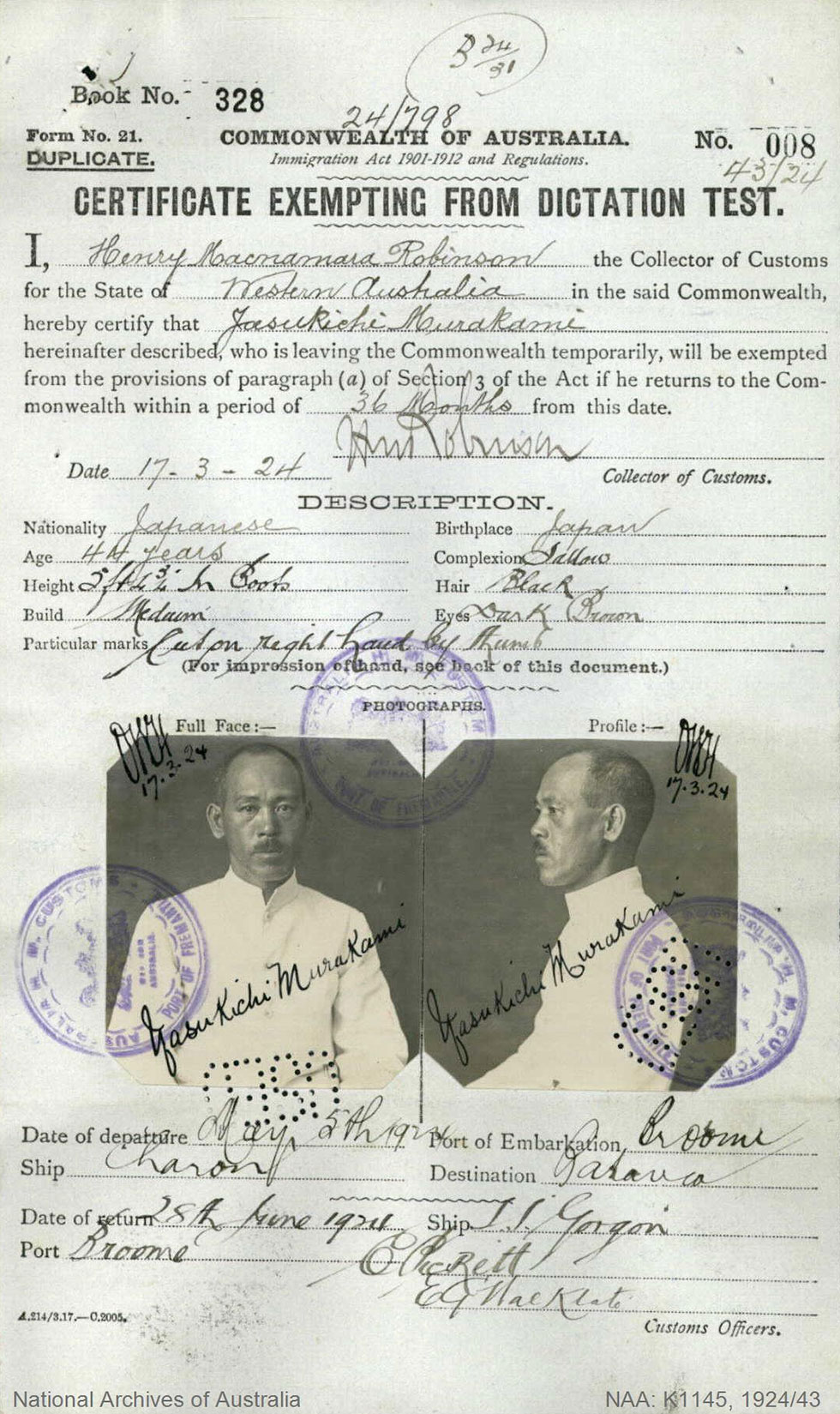
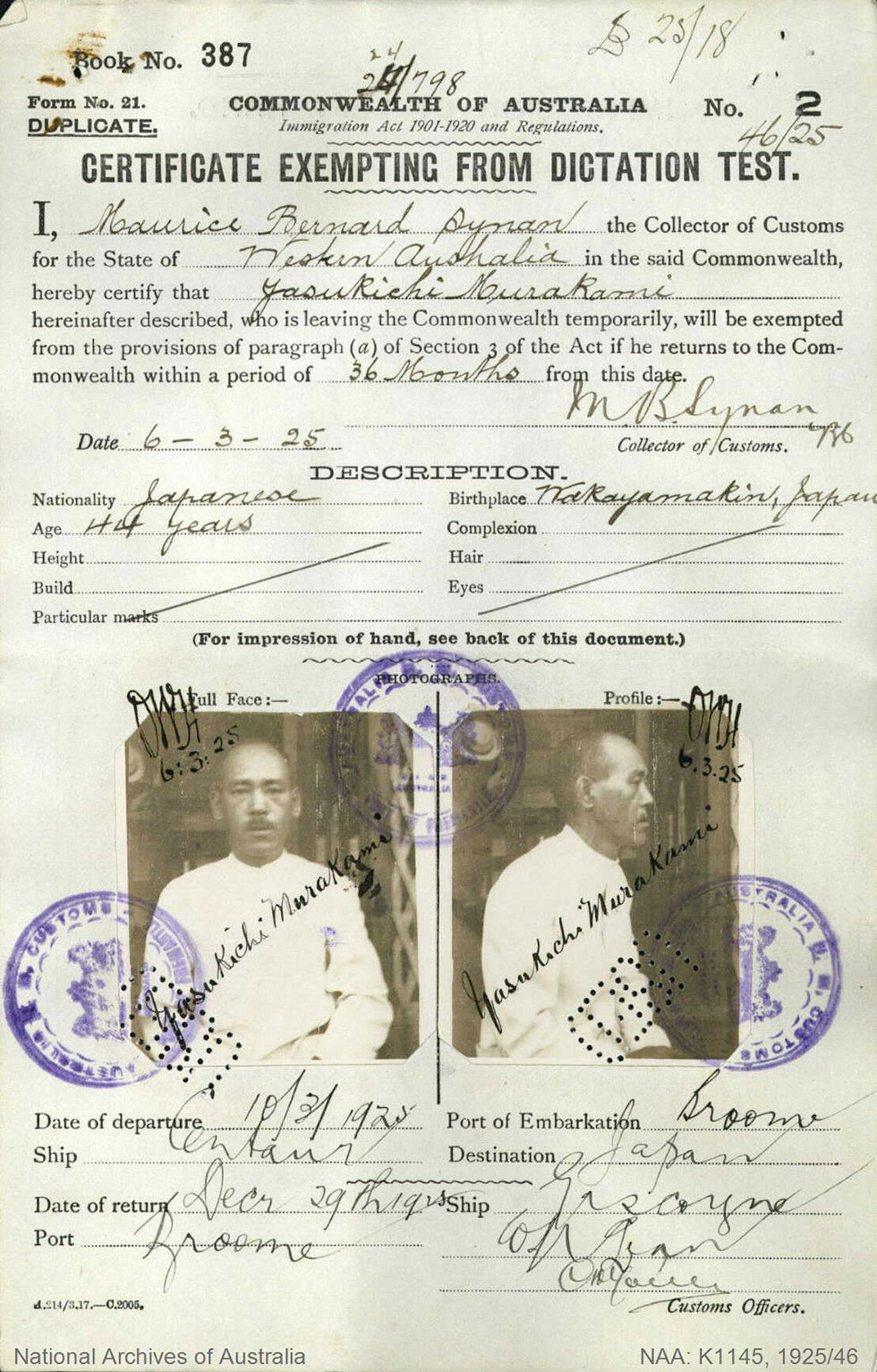
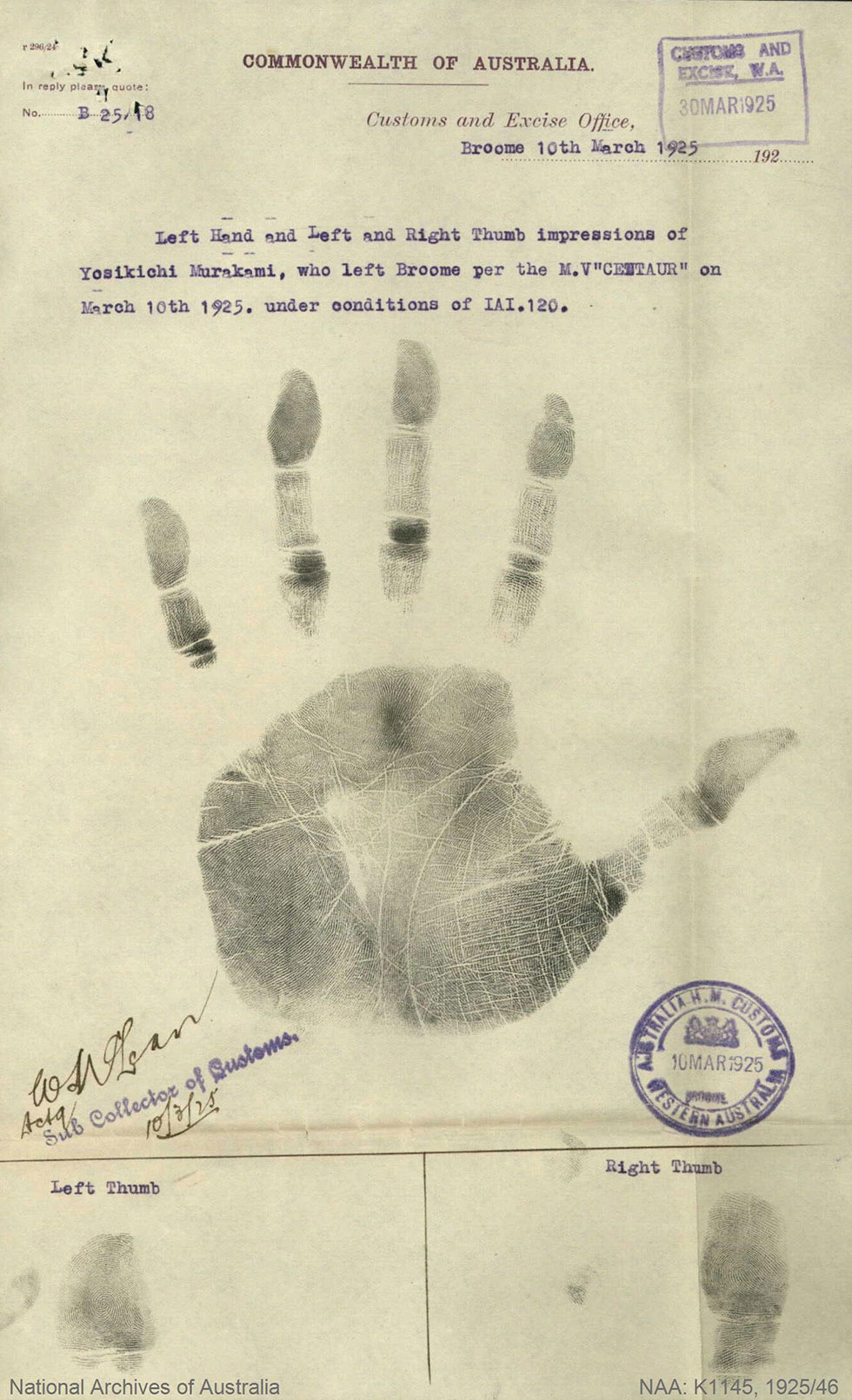
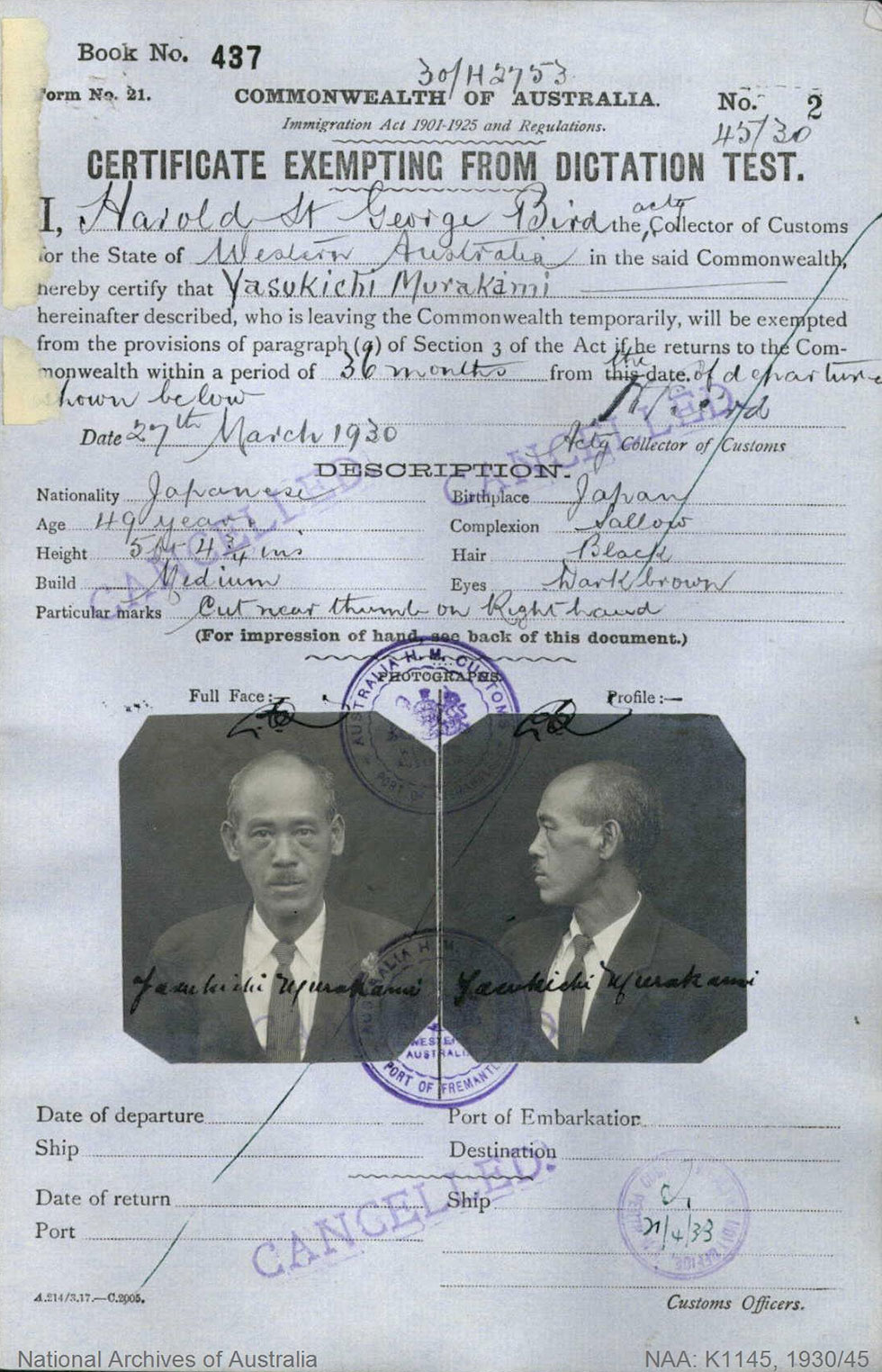
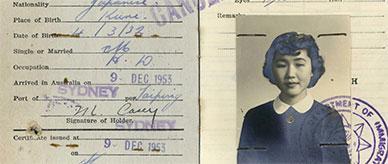
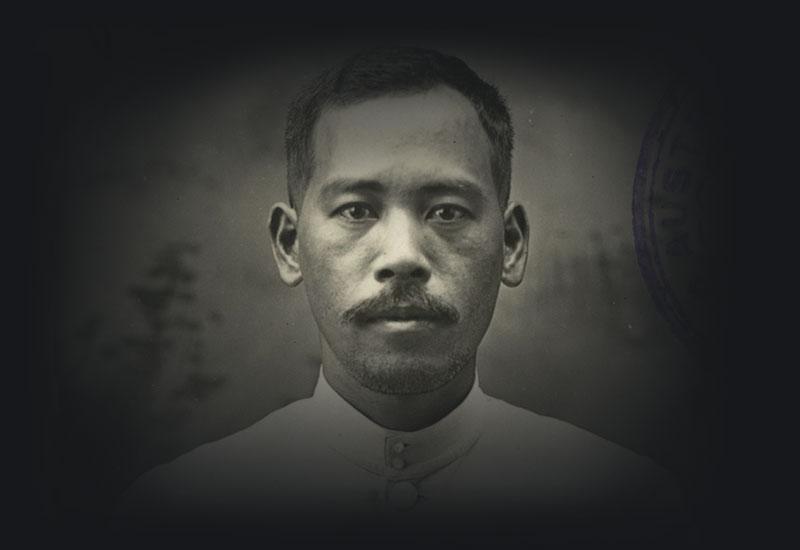
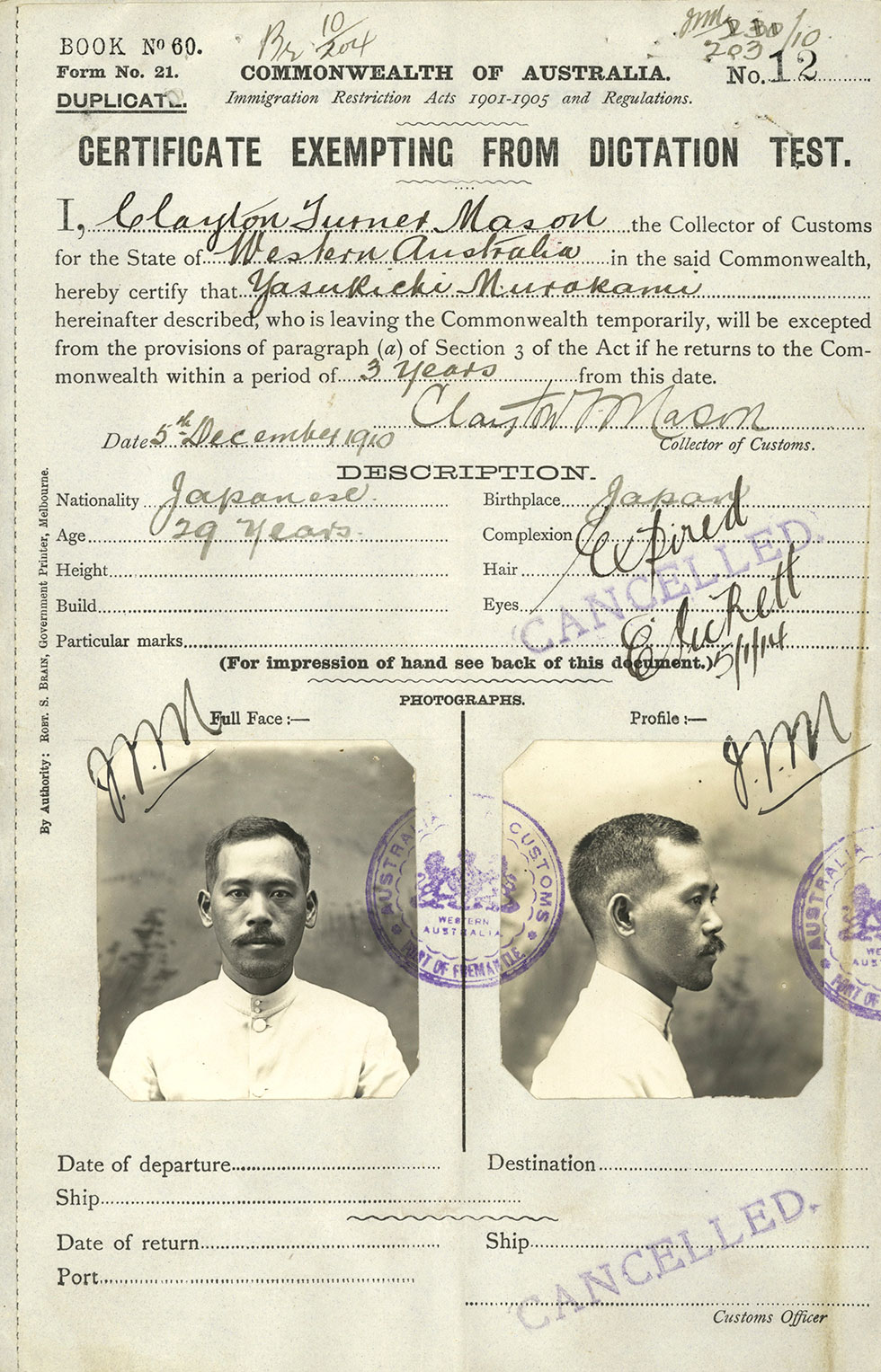
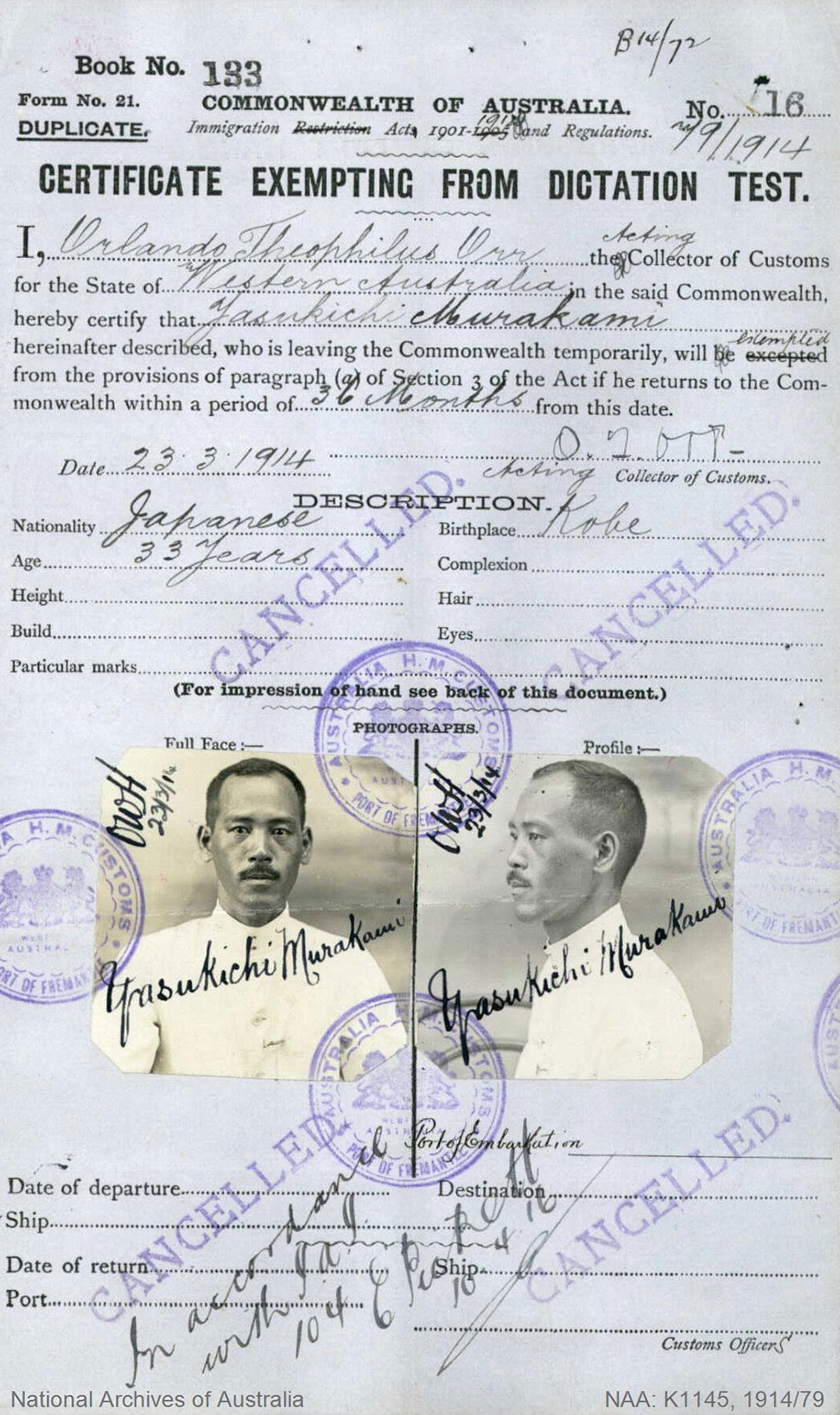
In 1910, we have the first of several images of Yasukichi held at National Archives. The Immigration Restriction Act 1901 required non-British subjects to undertake a dictation test (in any language), to enter Australia. Every time Yasukichi visited Japan, he had to complete forms exempting him from the test on his return. These documents record his travels, show him ageing, and even include his handprints.

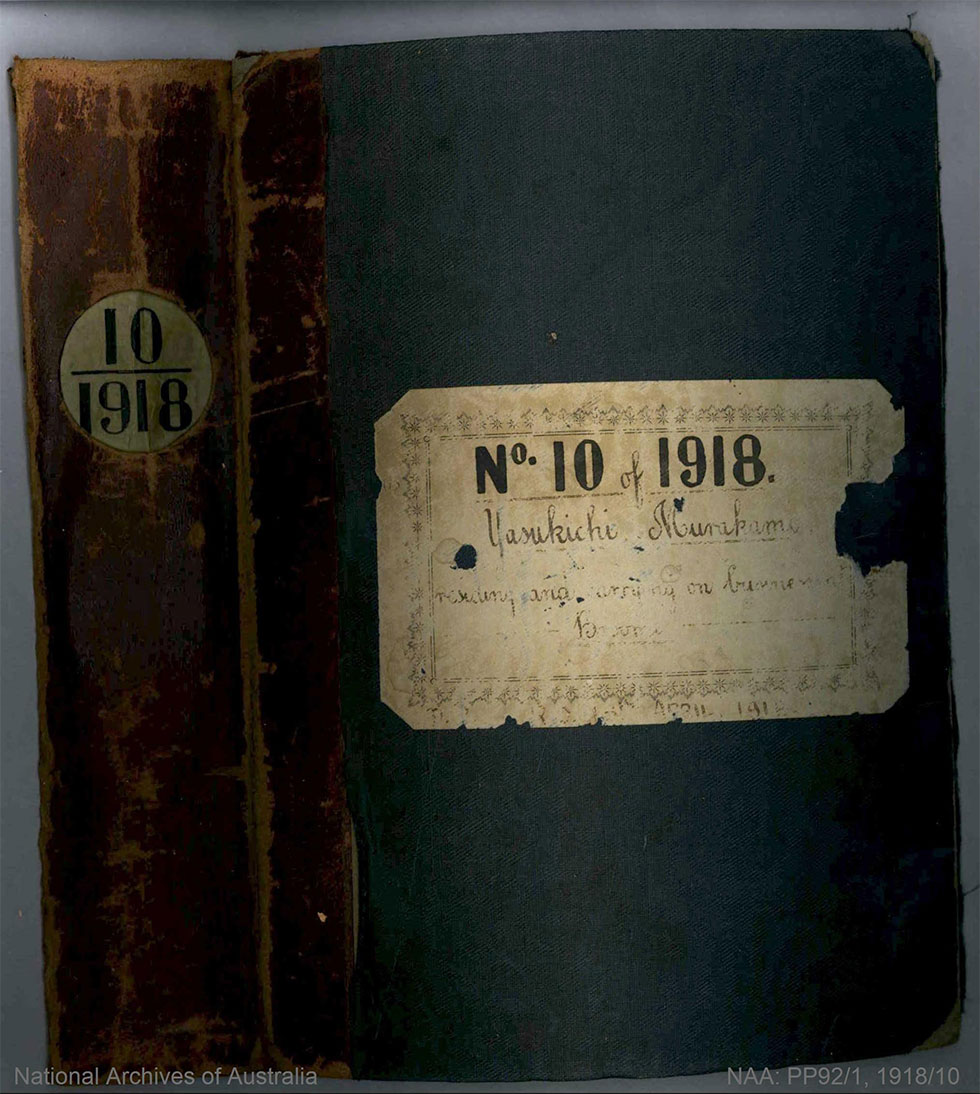
By 1918 Eki had left Yasukichi, his business had failed, and he had gone bankrupt. One of the most detailed records relating to Yasukichi is a leather-bound book of over 500 pages describing his financial affairs, created by the Western Australia State Bankruptcy Administration.

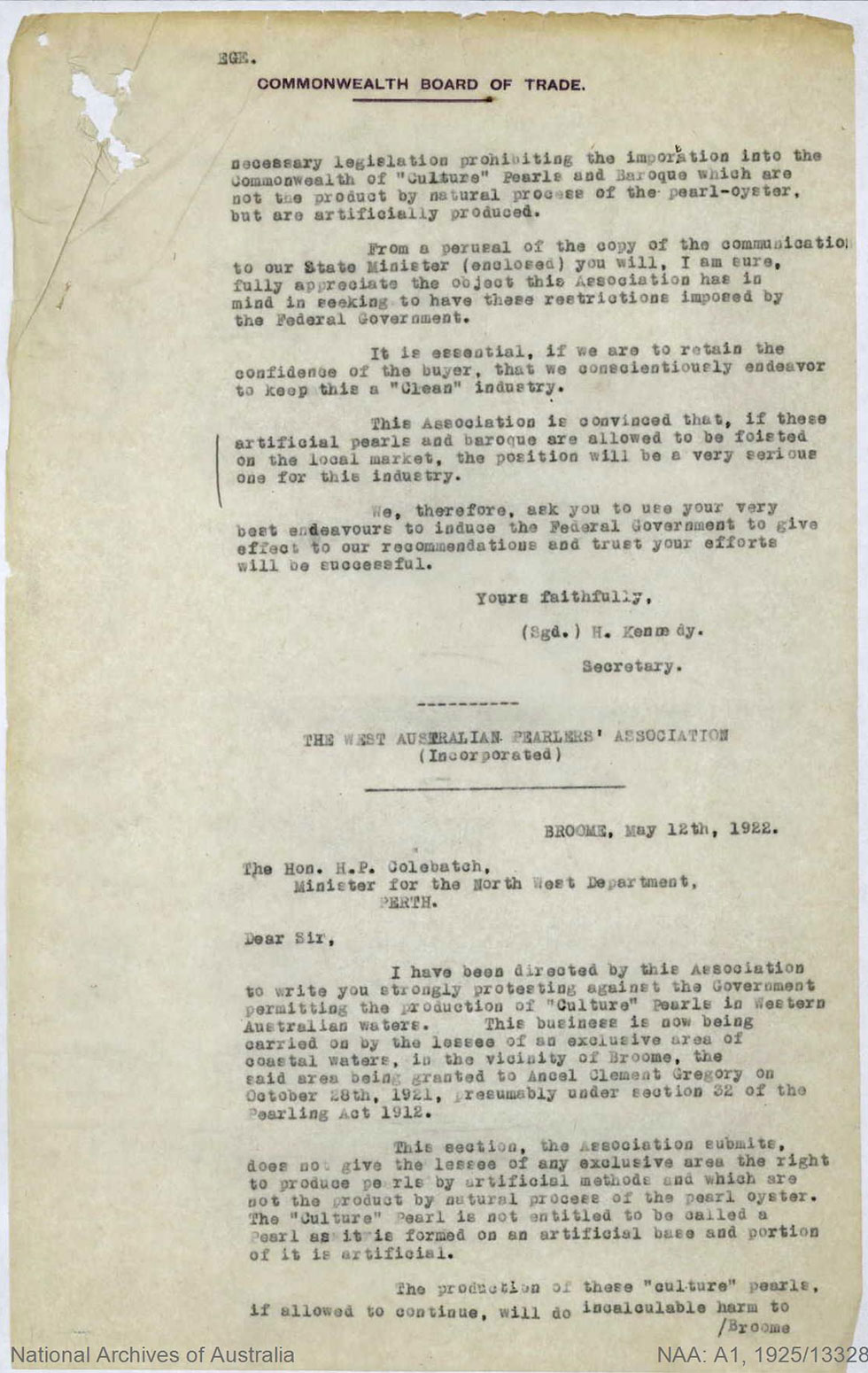
Following his bankruptcy, Yasukichi married Teresa Shigeno Murata in 1920. He began looking for other business opportunities. Yasukichi and the pearler AC Gregory, attempted to develop a cultured pearl industry. However, strong opposition by the West Australian Pearlers' Association prevented them from pursuing their venture.

Safe diving

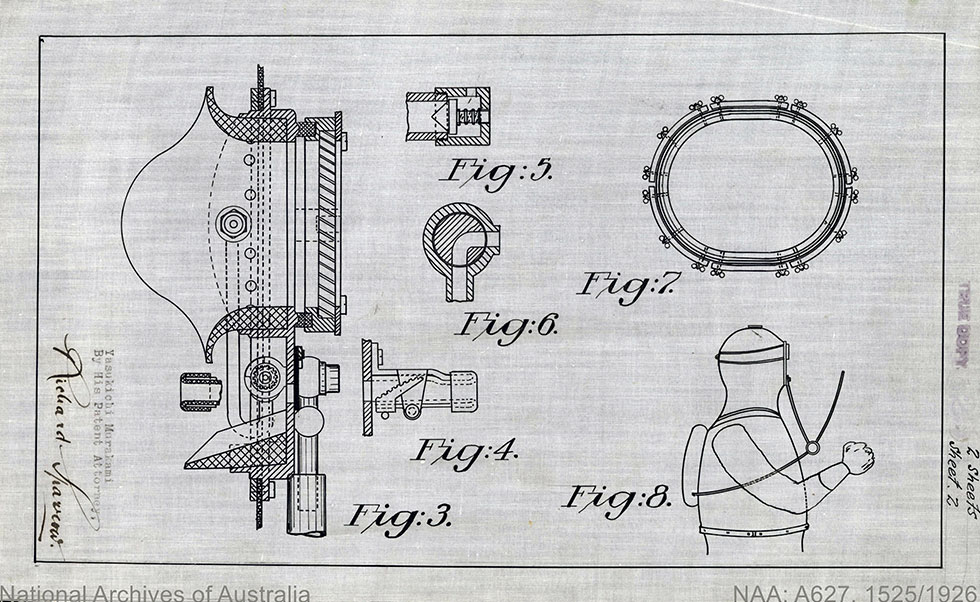
In the 1920s Yasukichi lodged patent applications for diving 'dresses', to improve pearl divers’ safety. Standard diving apparatuses fed air into the helmet, which the diver then breathed out into the suit. This filled the suit with air, making it more buoyant and requiring additional clean air to be pumped in. In contrast, Yasukichi's invention of a nose and mouthpiece with valves allowed the air, once exhaled, to leave the suit. Yasukichi also used more rubber parts, which enabled his 'dresses' to be tighter, lighter and more flexible. Unfortunately, Yasukichi never commercialised his invention.

No to naturalisation

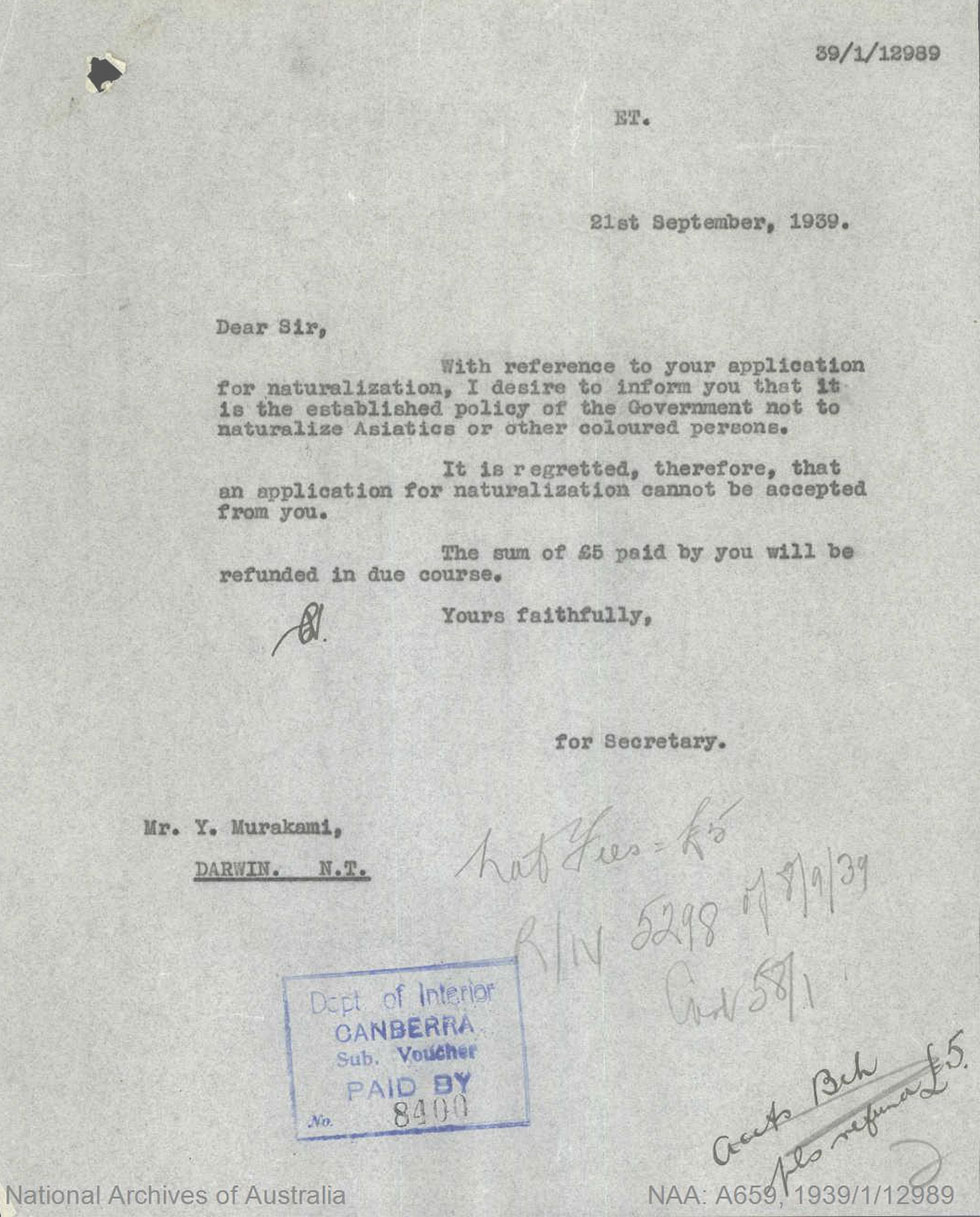
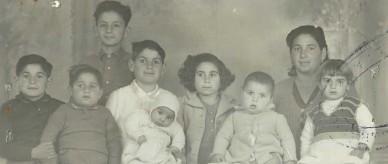
In 1935 Yasukichi, Teresa and their 9 children moved to Darwin, where they opened a photographic studio. The business prospered and in 1939 Yasukichi applied for naturalisation. Despite having called Australia home for over 40 years, he was rejected on the grounds 'it is the established policy of the Government not to naturalize [sic] Asiatics or other coloured persons'.

'Enemy alien'

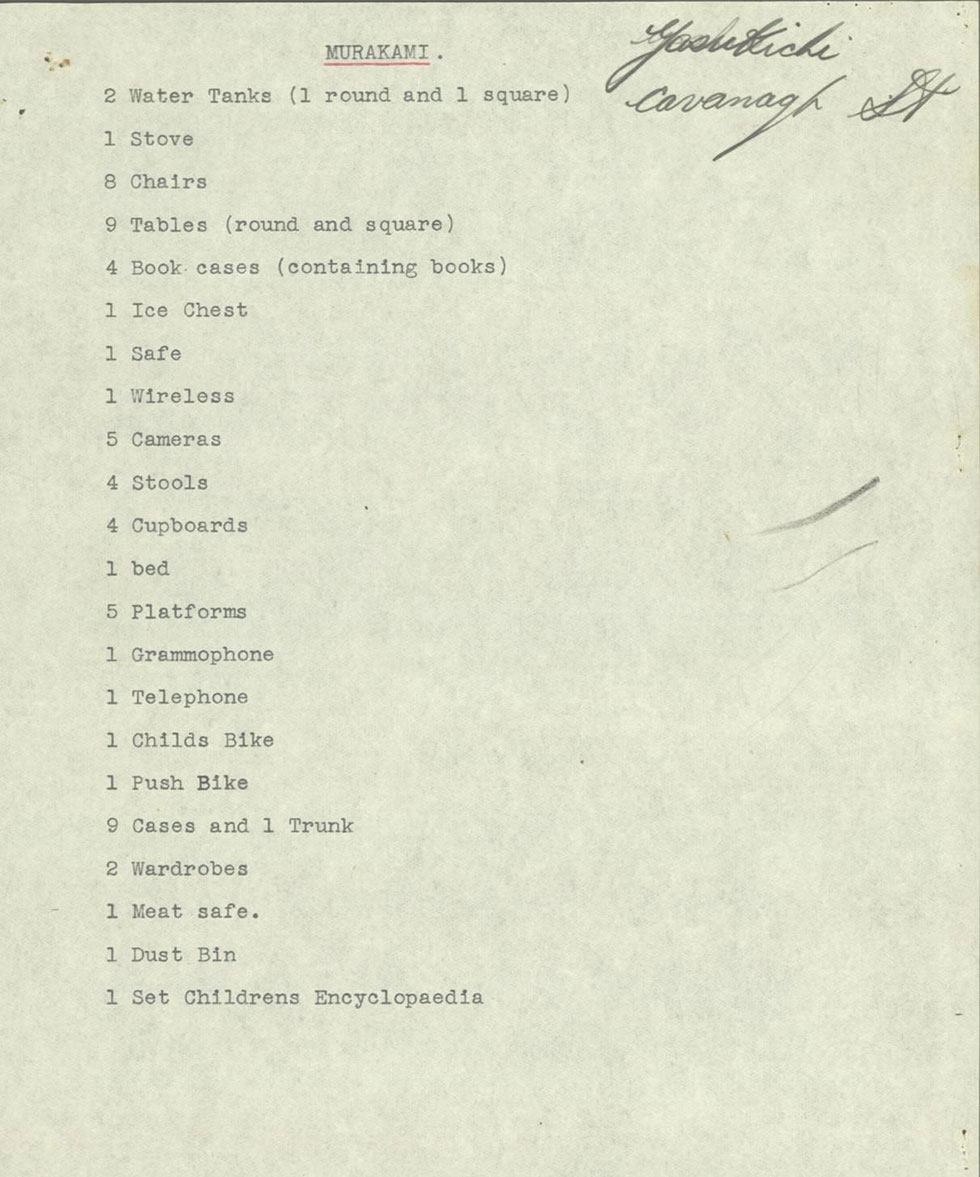
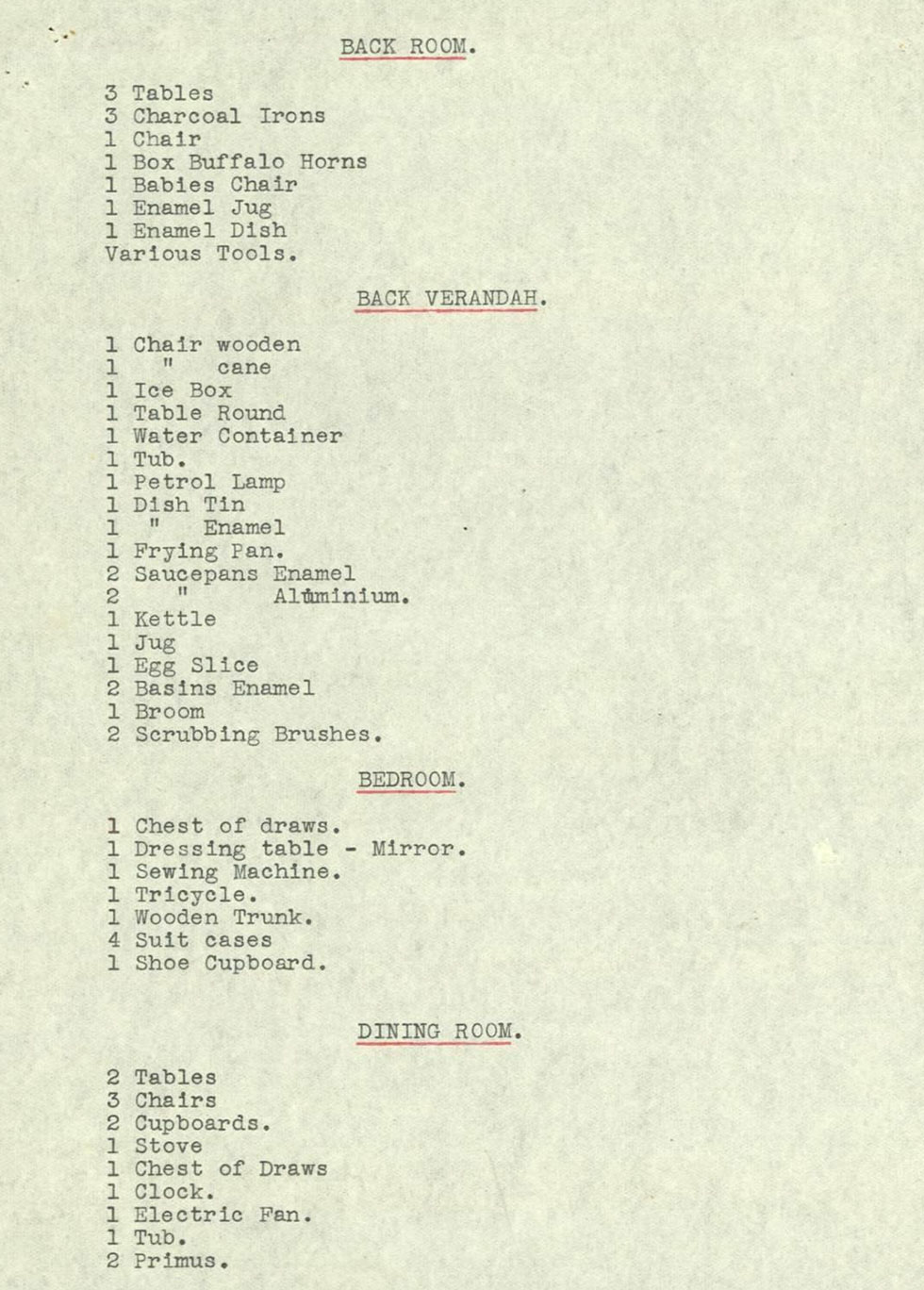
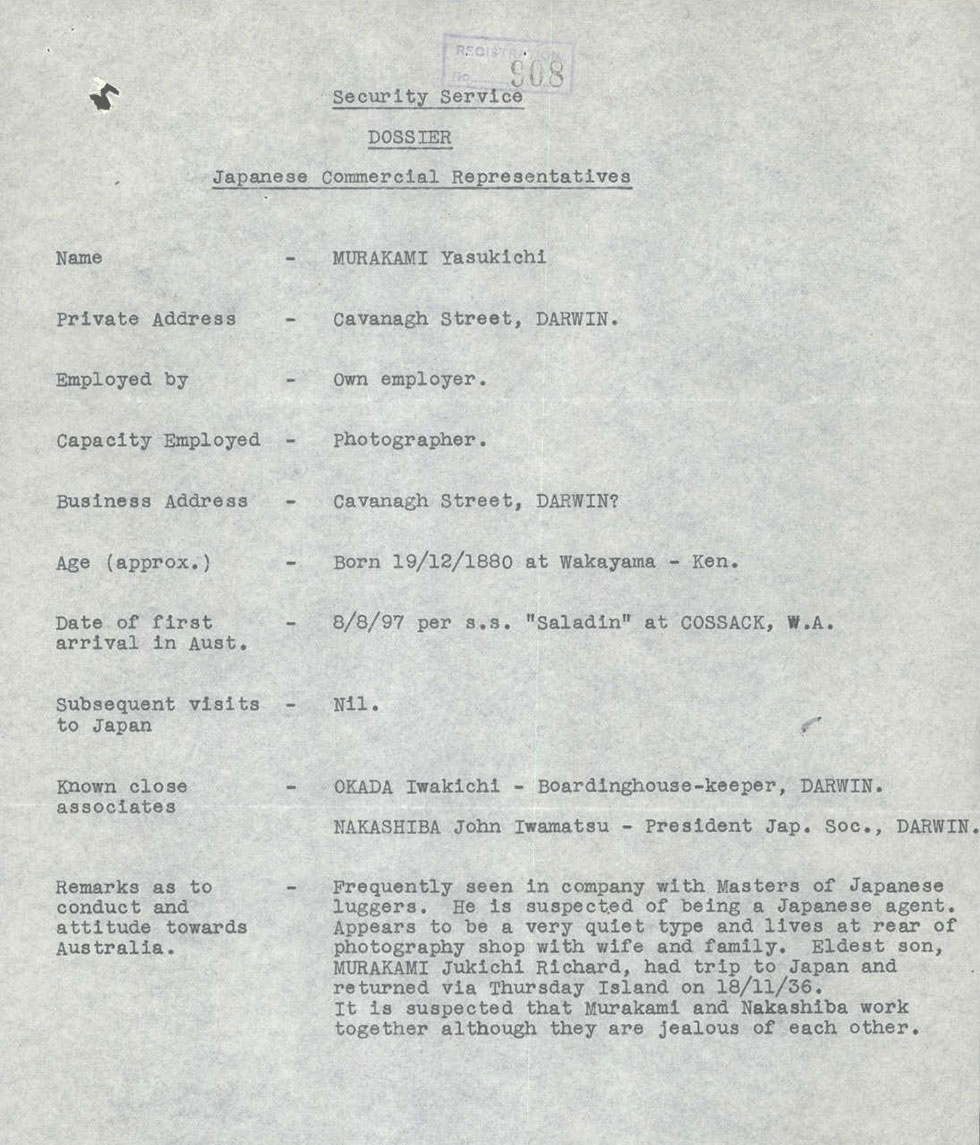
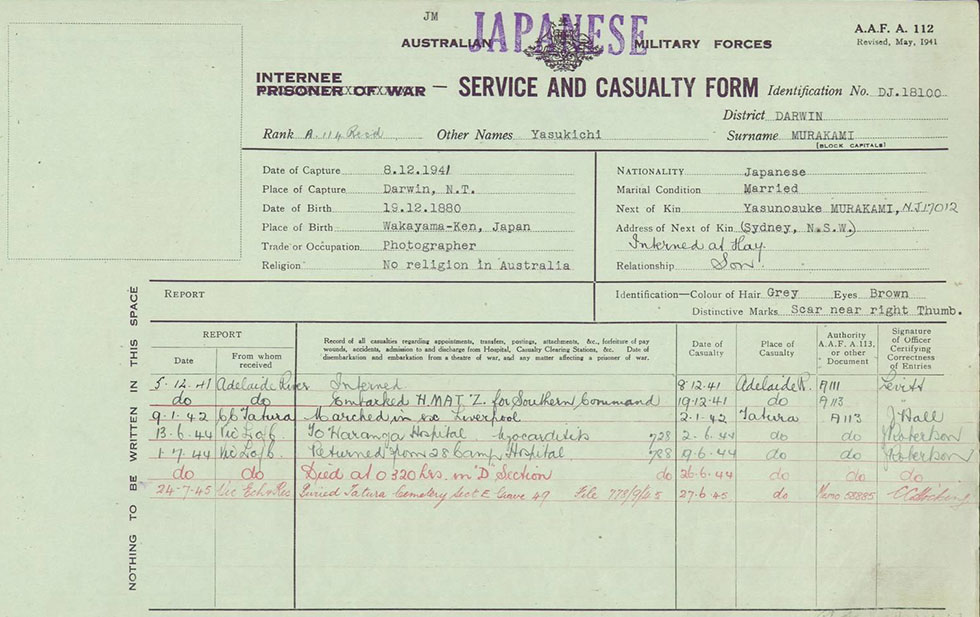
Yasukichi's paper trail of government records picks up again in 1941, when Japan entered the Second World War. As 'enemy aliens' (non-British subjects) he and his family were forced into the Tatura internment camp in Victoria, making him a prisoner of war. Yasukichi's prisoner of war documents include details about his work and family, a list of his property, and government suspicions he was a 'Japanese agent'. While incarcerated, Yasukichi's diving dress patent lapsed, and similar designs were produced by competitors.

Yasukichi died in the internment camp from heart disease in 1944. He was buried at a local cemetery and then re-interred in New South Wales at Cowra's Japanese war cemetery in the 1960s.

Yasukichi's story demonstrates the many challenges faced by migrants to Australia, especially during the White Australia policy. His life of struggles and successes is remembered through the records held in the national archival collection, and by his family. It has also inspired theatre performances, art projects and exhibitions.

For more insights into Yasukichi Murakami's inventions and other intrepid inventors, and stories of everyday to life changing inventions, visit our exhibition In real life: inventors, innovators and opportunists

Lucie Shawcross is Assistant Curator at National Archives of Australia.