For nearly 7 decades Holden made cars loved by Australians.
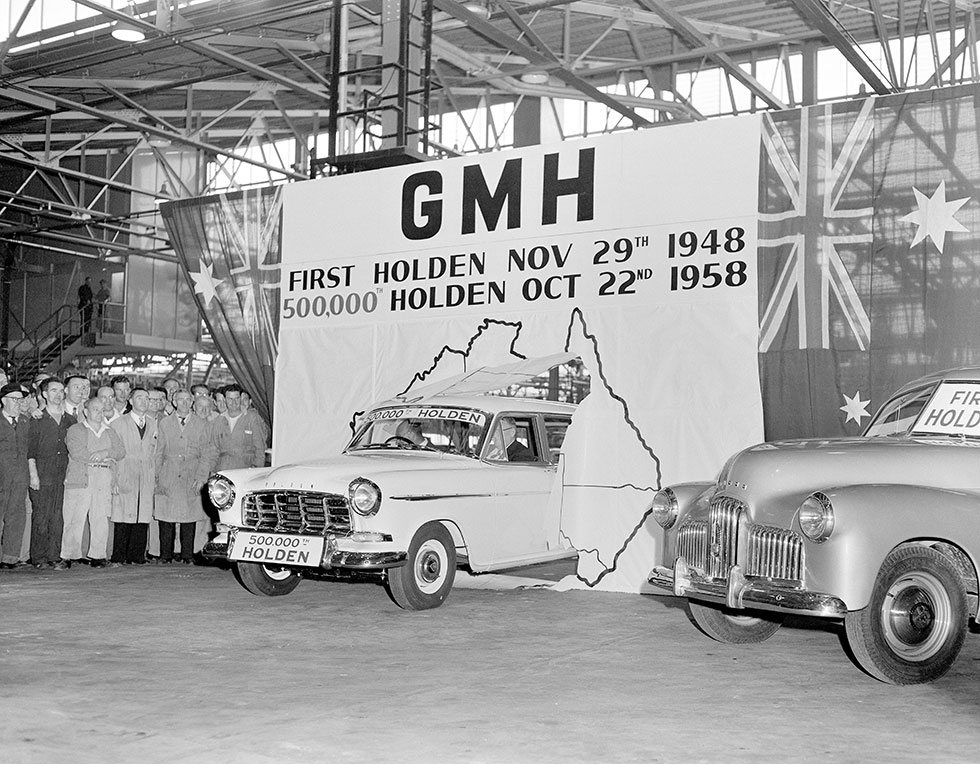
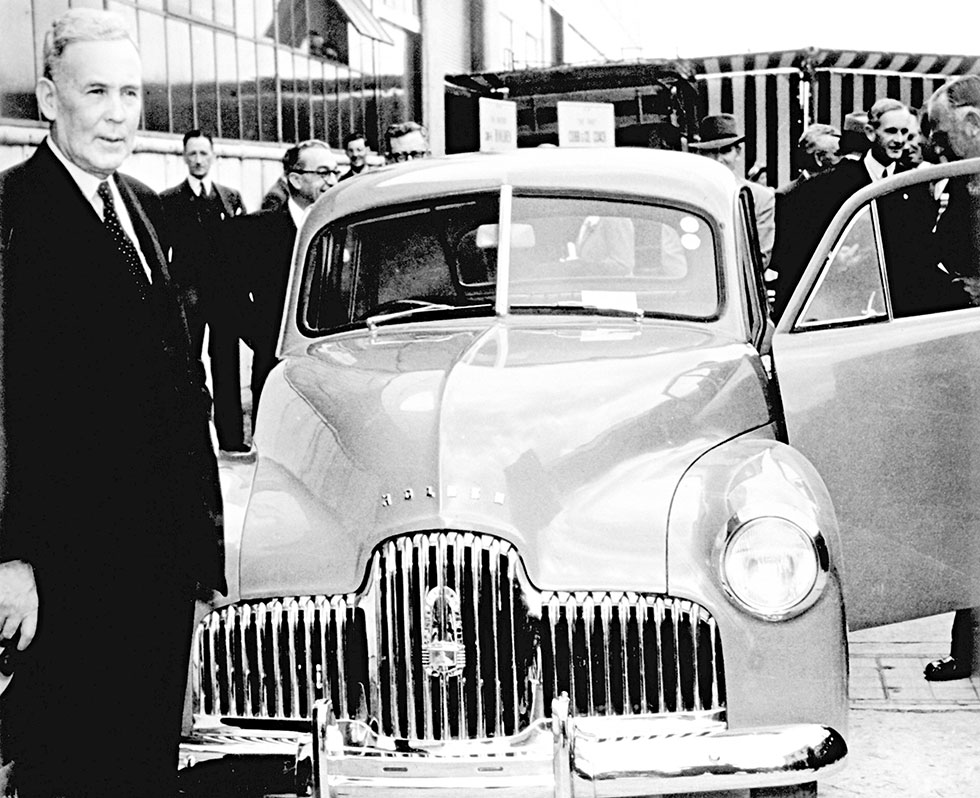
In 1948, the first car fully manufactured in Australia was launched by General Motors-Holden's Ltd (GMH). Officially named the Holden 48-215, it was known popularly as the FX. Nearly 70 years later, on 20 October 2017, the last Holden, a Commodore SS V Redline sedan, rolled off the assembly line marking the end of an era.
But there's another side to Holden that is less well known. Well before the launch of 'Australia's own car', the company had already achieved something equally extraordinary: helping to arm a nation at war.
Assembling for war
On Sunday 3 September 1939, 2 days after Nazi Germany attacked Poland, Great Britain and France declared war on Germany. The declaration meant that Australia, as a Commonwealth nation, was also at war.
The war cut off international supply lines to Australia, necessitating a massive pivot toward domestic manufacturing and self-sufficiency. This included the supply of munitions, machine tools, aircraft and military equipment needed to defend the country. In response Prime Minister Robert Menzies famously called for both industry and civilians to contribute to an 'all in' war effort.
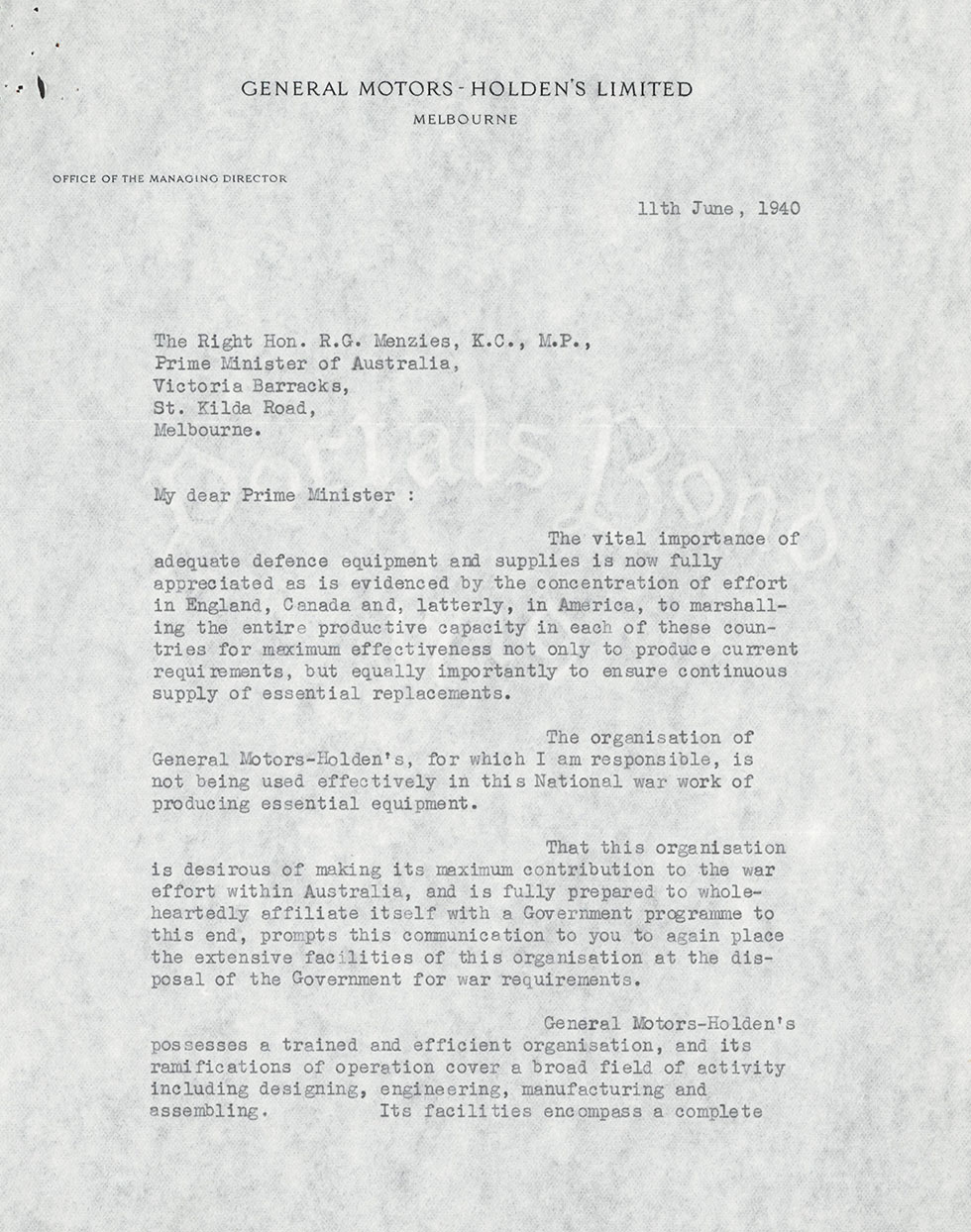
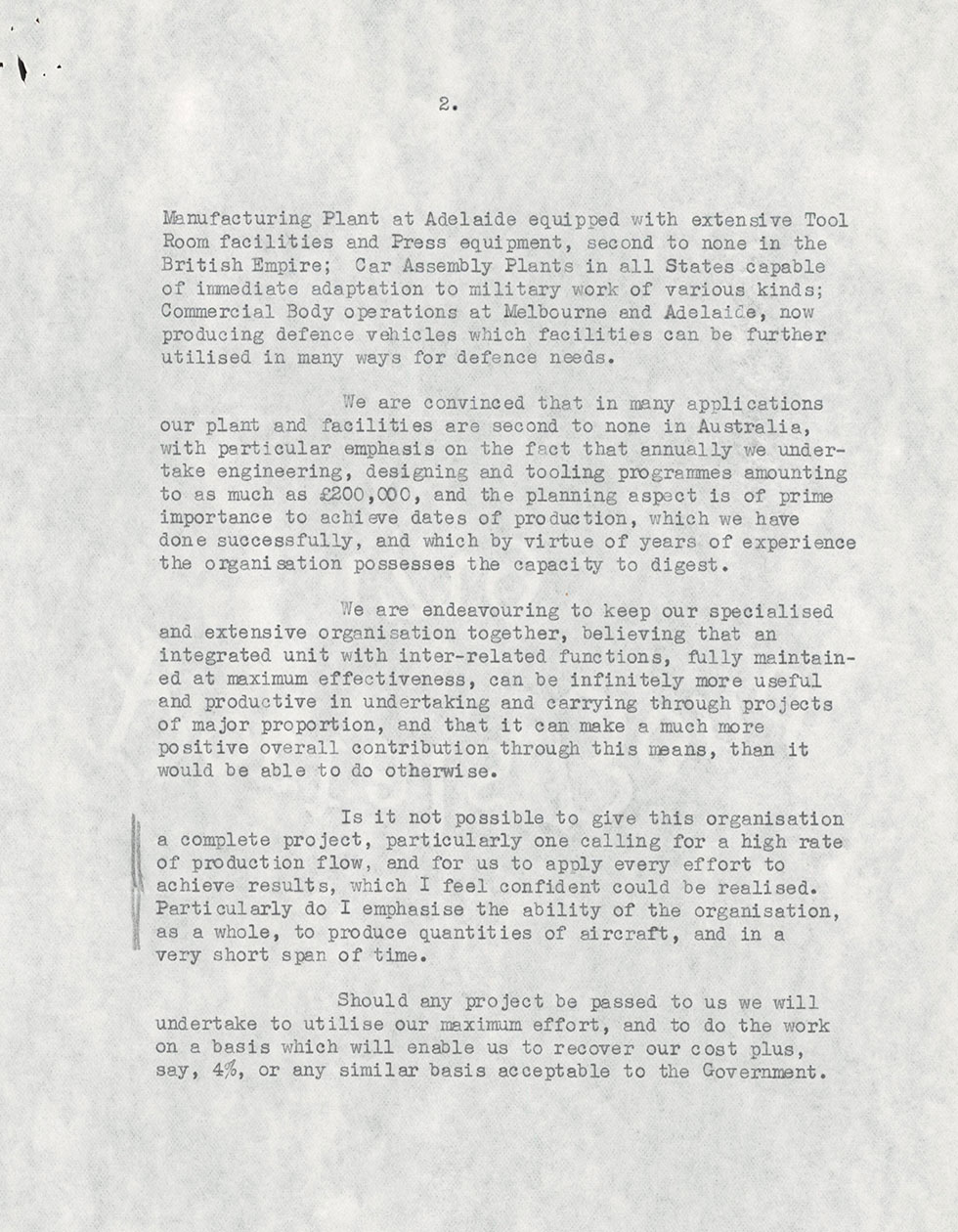
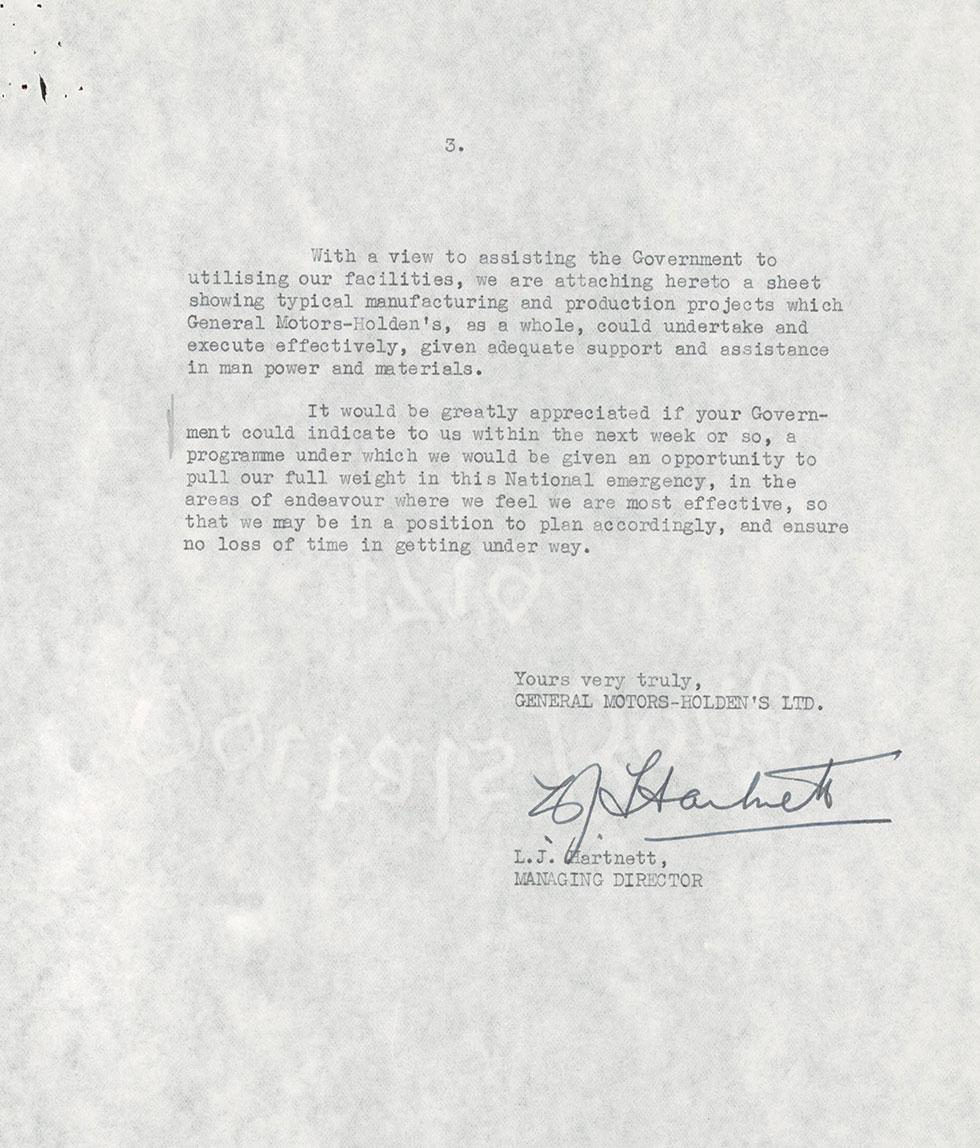
In June 1940 the Managing Director of GMH, Laurence Hartnett, wrote to Menzies offering GMH's services for the war effort. At this time GMH was Australia's largest and most technologically advanced car manufacturer. Under Hartnett's leadership, GMH pivoted almost completely from assembling car bodies (with imported engines), to producing advanced military hardware, becoming the cornerstone of the nation's rapid industrial mobilisation.
Gearing up
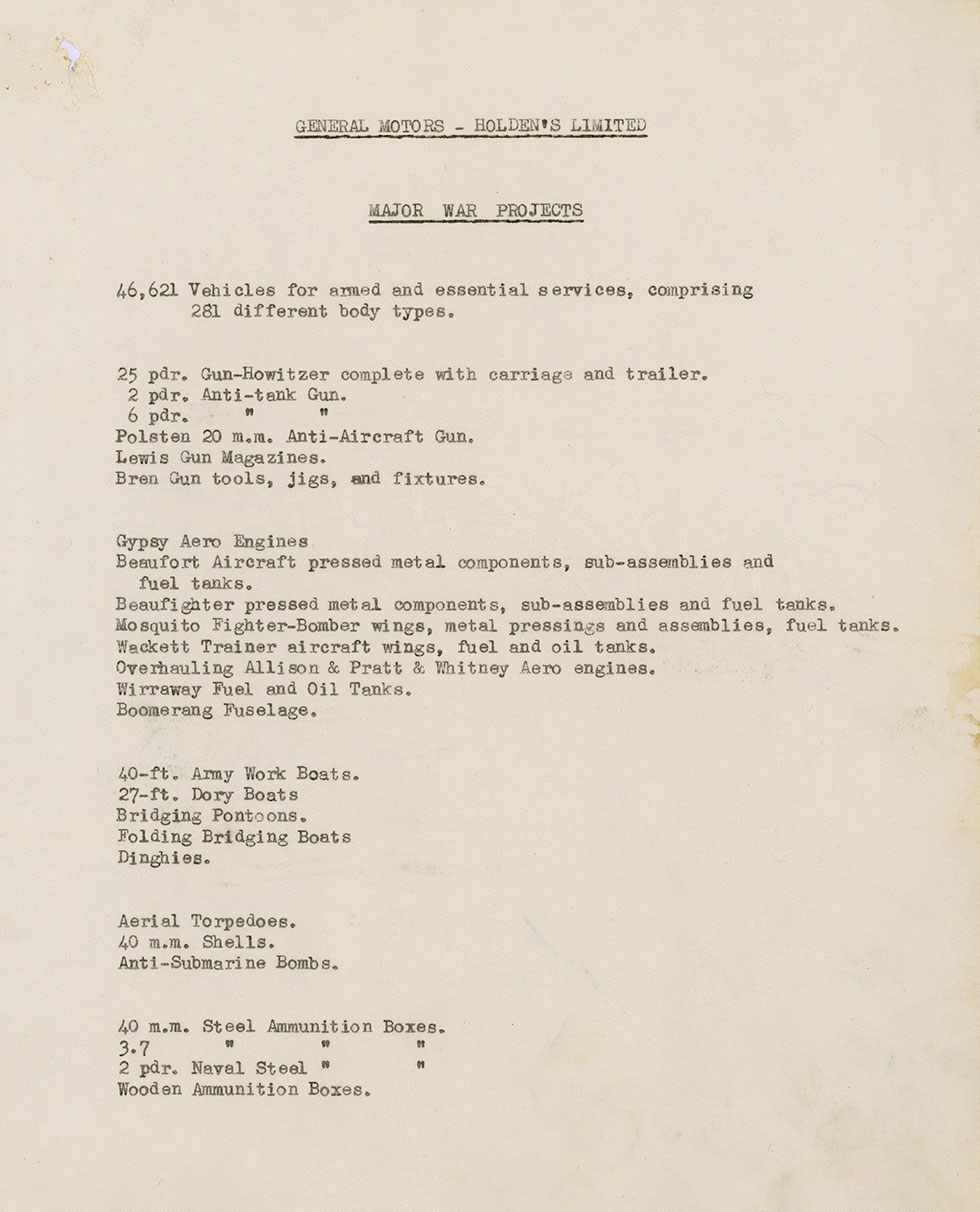
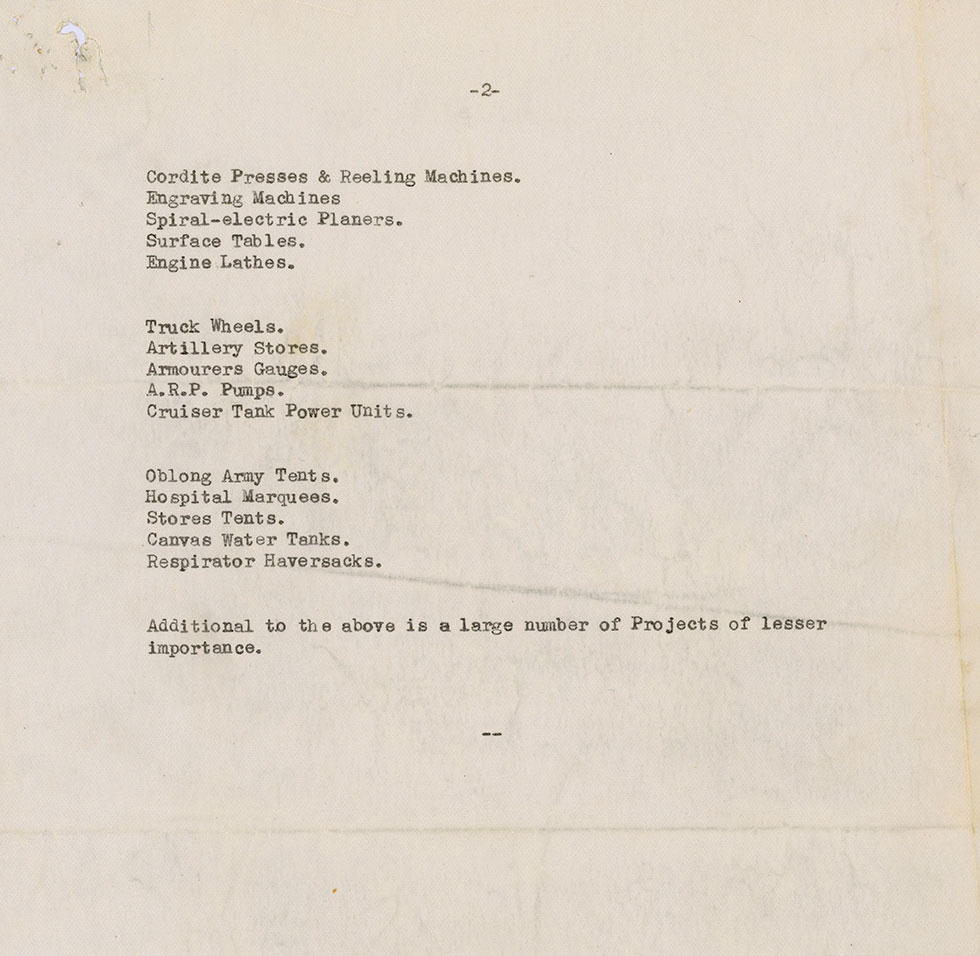
Between 1940 and 1945 GMH shifted 80 to 90 per cent of its production to meet the demands of war. The company manufactured 200 different types of military vehicles, while also producing aircraft engines, wings, anti-tank guns, artillery shells, bombs and more.
Anticipating that a single bomb could destroy a major factory, Hartnett designed a system where components were built by small, spread-out subcontractors and sent to central hubs for final assembly. GMH's expertise in coordinating complex manufacturing processes proved invaluable. By the end of the Second World War, GMH had factories in South Australia, Victoria, New South Wales, Queensland and Western Australia, each plant specialising in a different type of manufacturing and assembly.
GMH and the Beaufort bomber
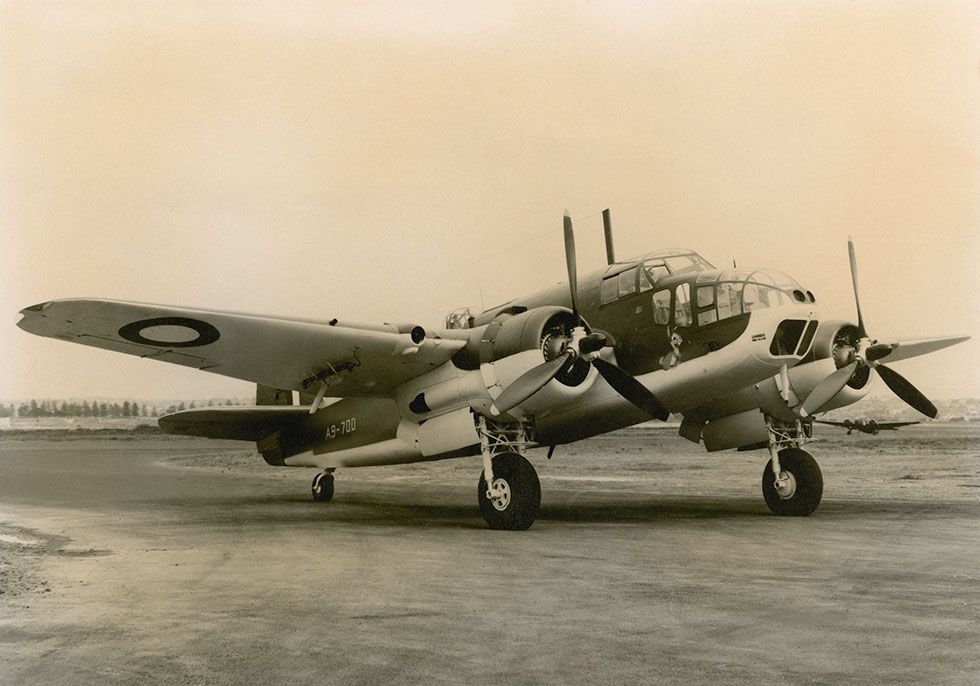
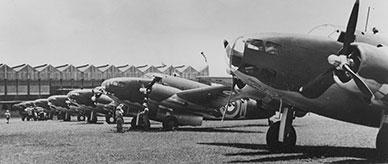
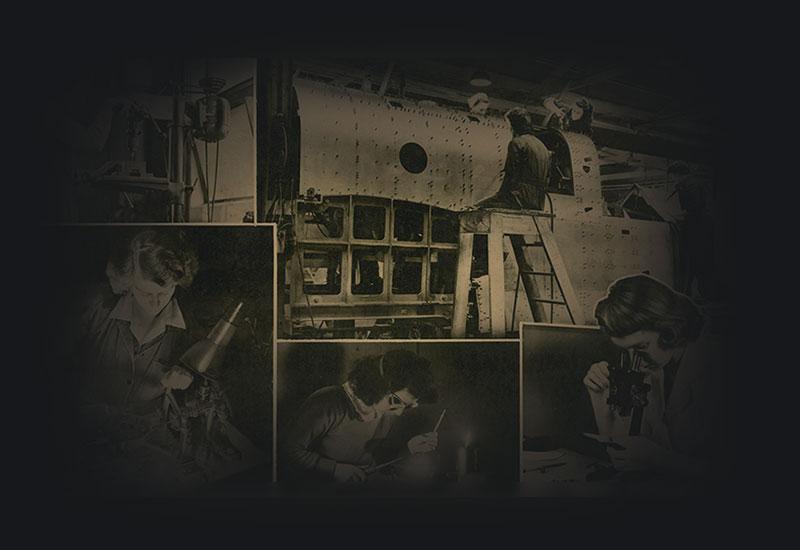
One example of wartime ingenuity was the making of the Bristol Beaufort bomber aircraft, considered one of Australia's greatest manufacturing achievements during the Second World War. When international supply lines were disrupted, the government embarked on an ambitious plan to build these twin-engine bombers on home soil, using components from 600 separate firms. GMH's Woodville plant became a critical cog in the Beaufort production network, producing approximately 9.59 million pressed parts and 910 fuel tanks over the course of the war.
Women in the workforce
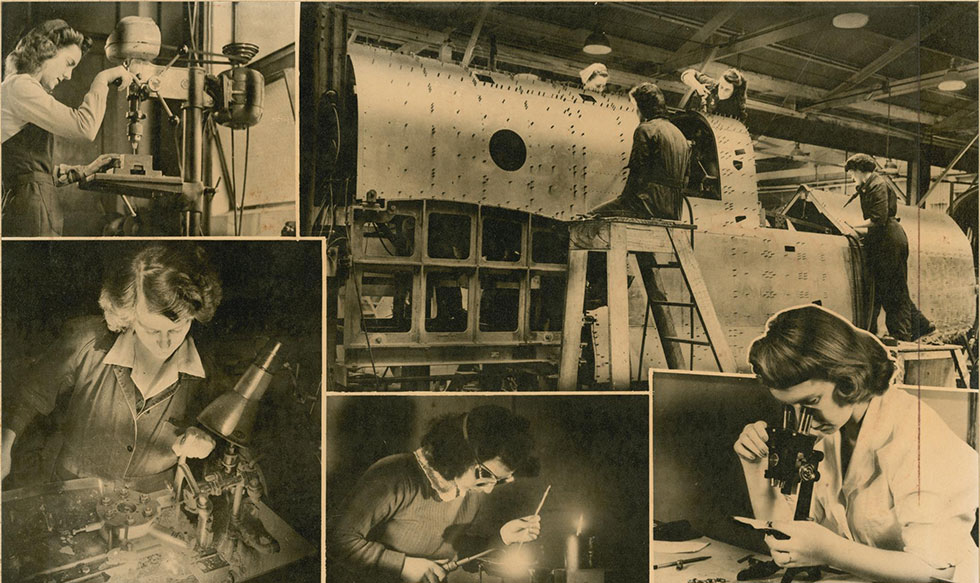
The Beaufort program created an unprecedented demand for workers, opening industrial opportunities for women, who ultimately comprised 35 per cent of the Beaufort workforce. While the women were doing the same work as the men, they were paid significantly less.
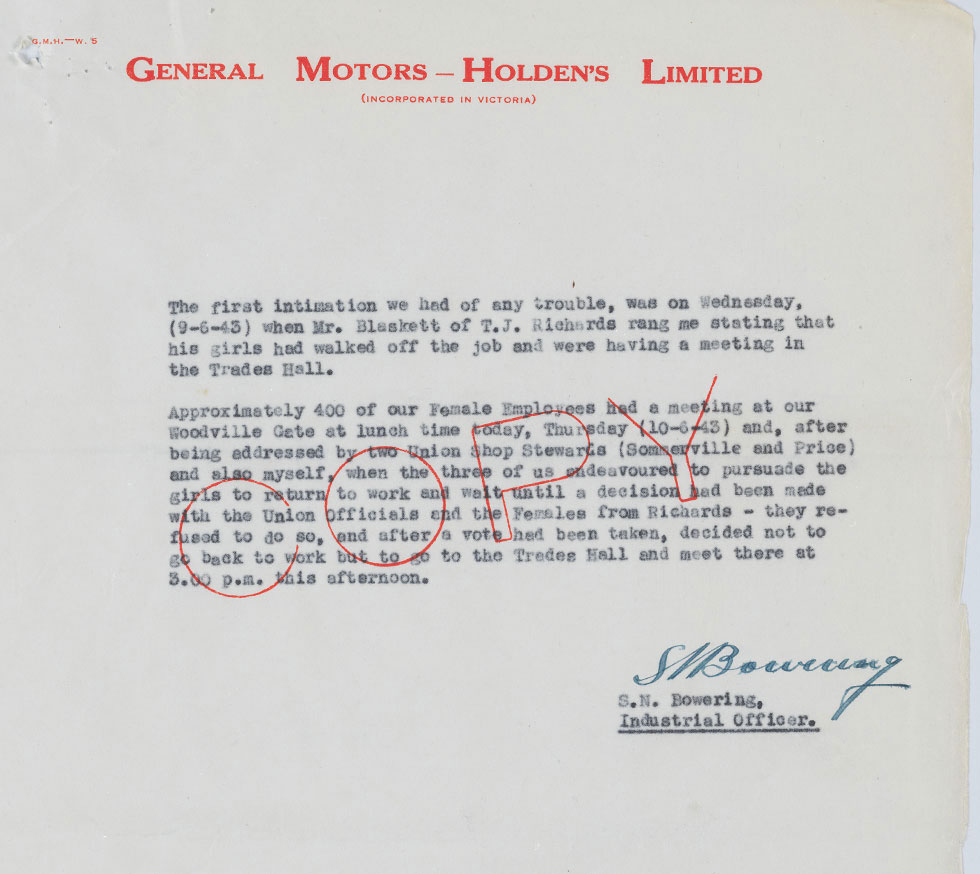
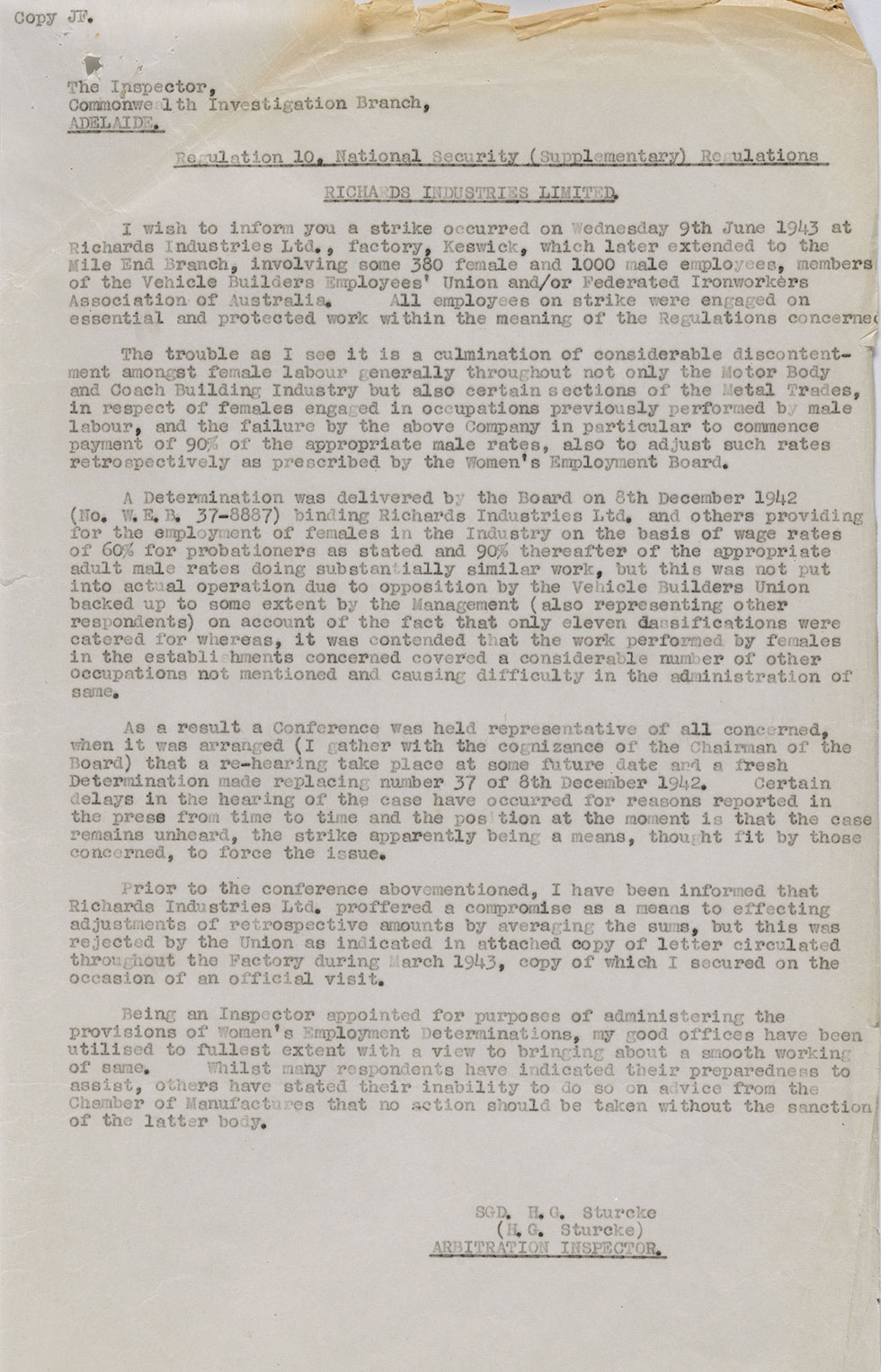
In a 1943 report, Industrial Officer SN Bowering reported women in the GMH Woodville plant going on strike in sympathy with women from Richards Industries Limited. While the Women's Employment Board had allocated that women should be paid 60 to 90 per cent of the salary paid to men in the same roles, Richards was paying significantly less. Women had to go on strike to be paid even a portion of the same rate as their male counterparts.
Post-war legacy
When peace finally came, GMH emerged from the conflict a different company: its factories were larger, its techniques more advanced, and its workforce more skilled than ever before. The technological and infrastructure boom GMH experienced during the war directly paved the way for its post-war success.
The manufacturing capabilities built under the pressure of war gave GMH exactly what it needed to build its own car from scratch, something Australia had never done before. In 1948 the first fully-Australian-built car marked the beginning of the Australian car industry and the launch of an industry legend.
For more stories about Holden in Australia, visit our exhibition Rear vision: The Holden Collection, on now at our National Office.
Anna Edmundson is Exhibitions Curator at National Archives of Australia.