A government in exile

Cara Downes
Tuesday, 7 April 2026

In 1944, Australia became home to an exiled government.

The Netherlands East Indies had fallen to the Japanese in 1942, but by 1943 the Dutch had hopes of taking back control. First, they would need a base to stage their return. The Australian government had just the thing: a vacant United States army camp in Brisbane.

The Dutch East Indies

At the dawn of the Second World War, the Dutch East Indies or Netherlands East Indies (NEI) was a colony comprising most of modern-day Indonesia. Its valuable exports included oil and rubber, both commodities in high demand during war time.

Japan invaded the country in January 1942. By March, the Dutch had surrendered. Many NEI citizens evacuated to Australia, and Dutch warships started operating out of Broome in Western Australia. However, by 1943, there were hopes the war in the Pacific was reaching its end.

The Dutch government began planning its return to the NEI, to ensure they reclaimed the territory as soon as the Japanese were defeated. For this, they needed somewhere nearby to plan and stage their return.
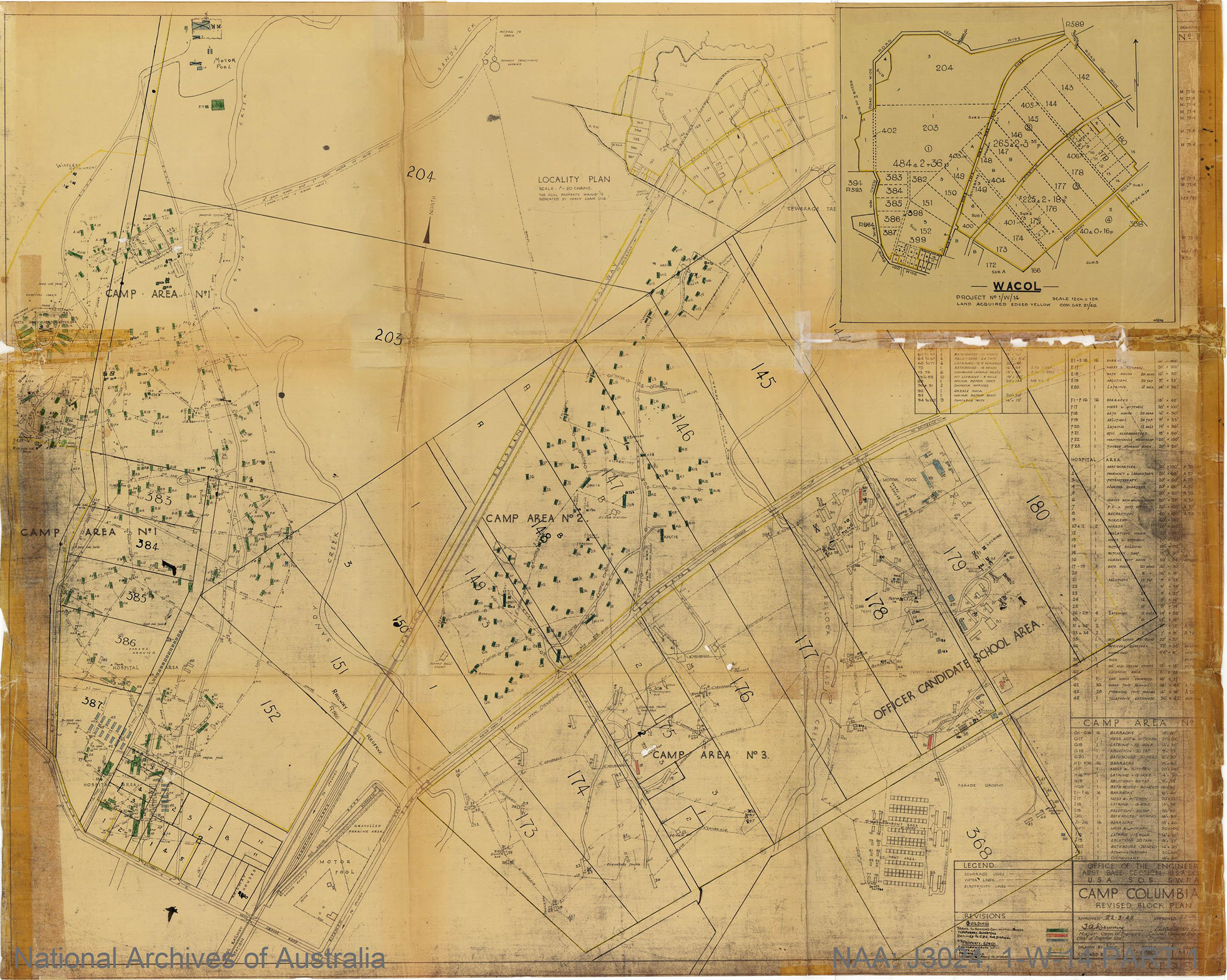
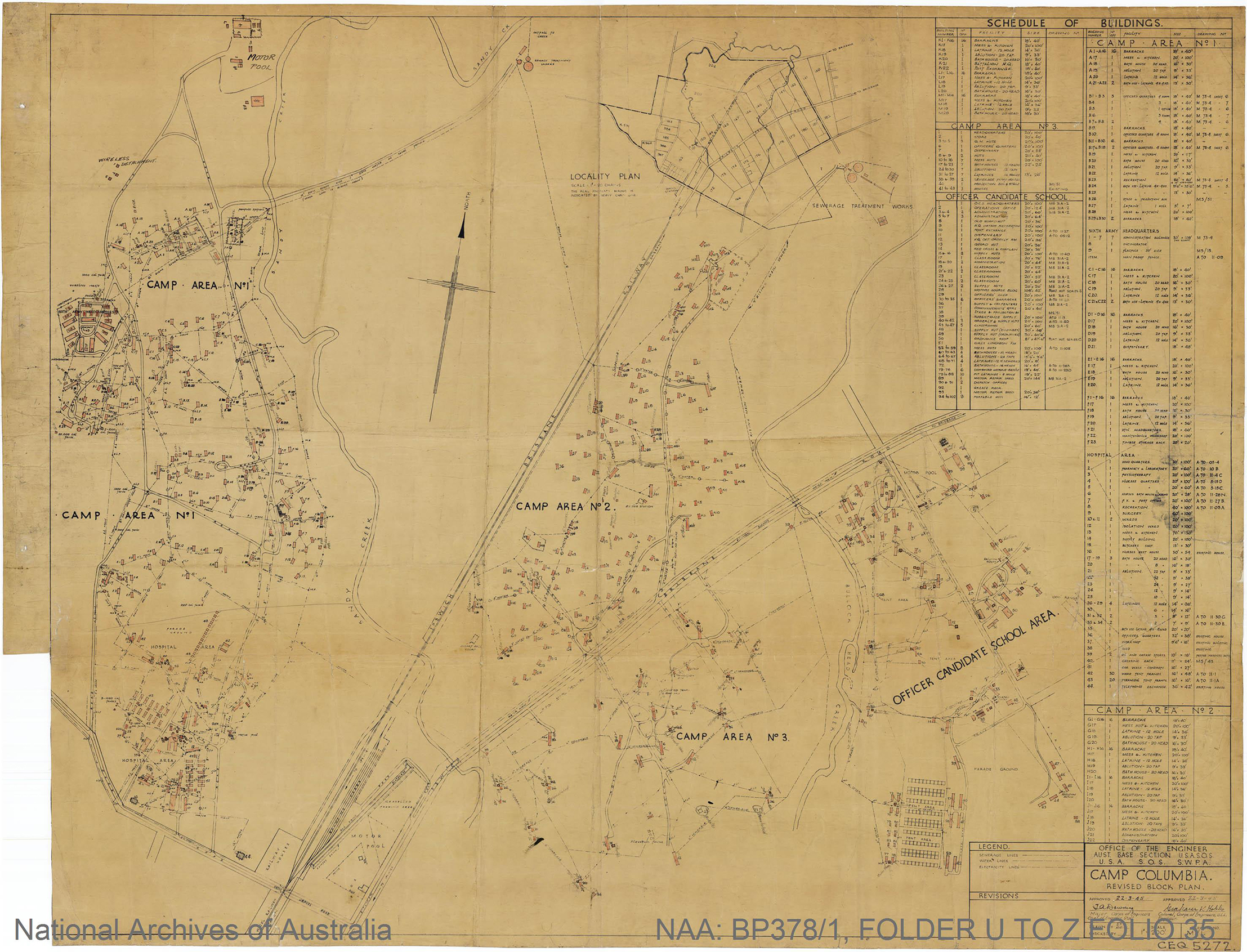
Camp Colombia

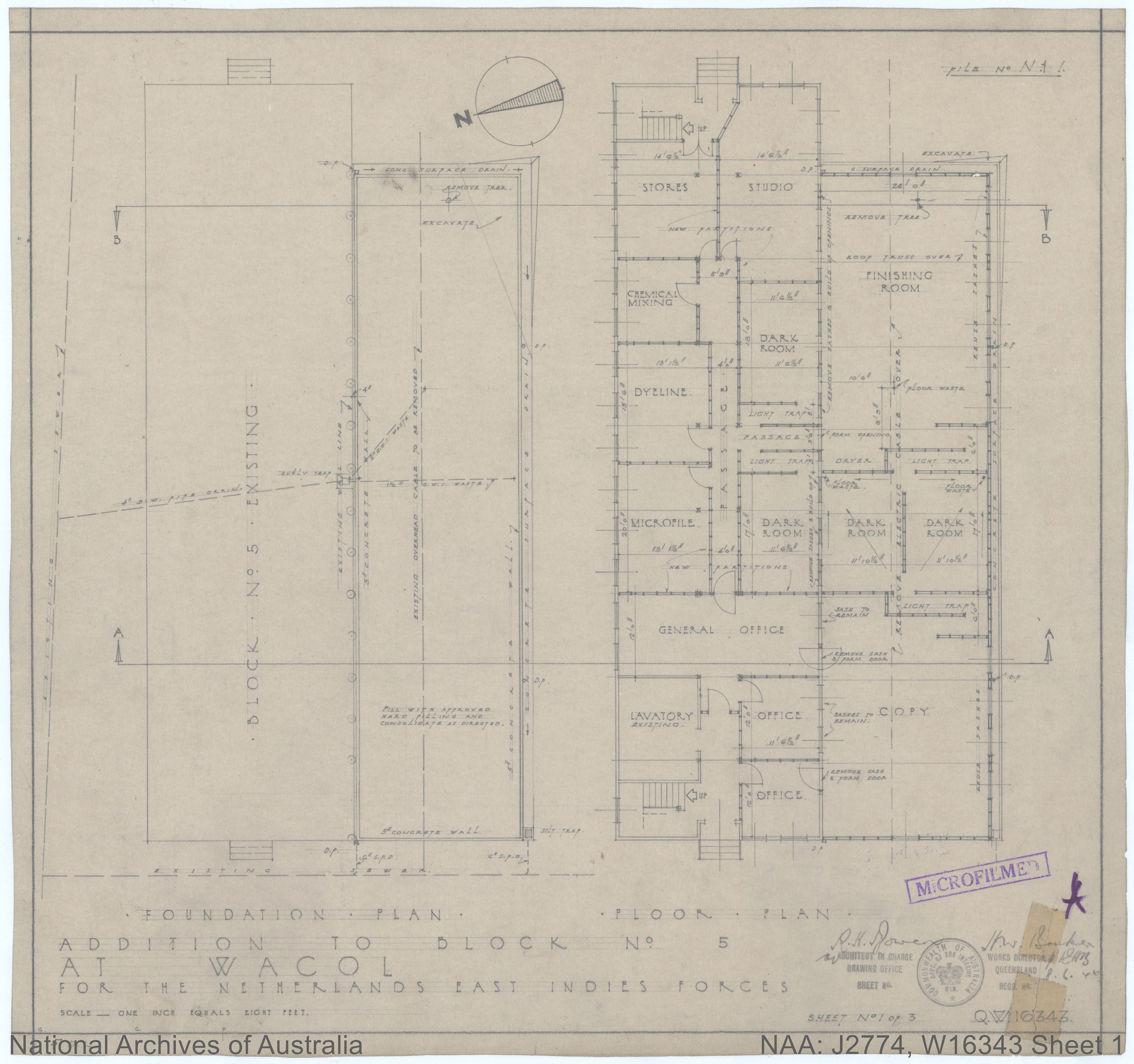
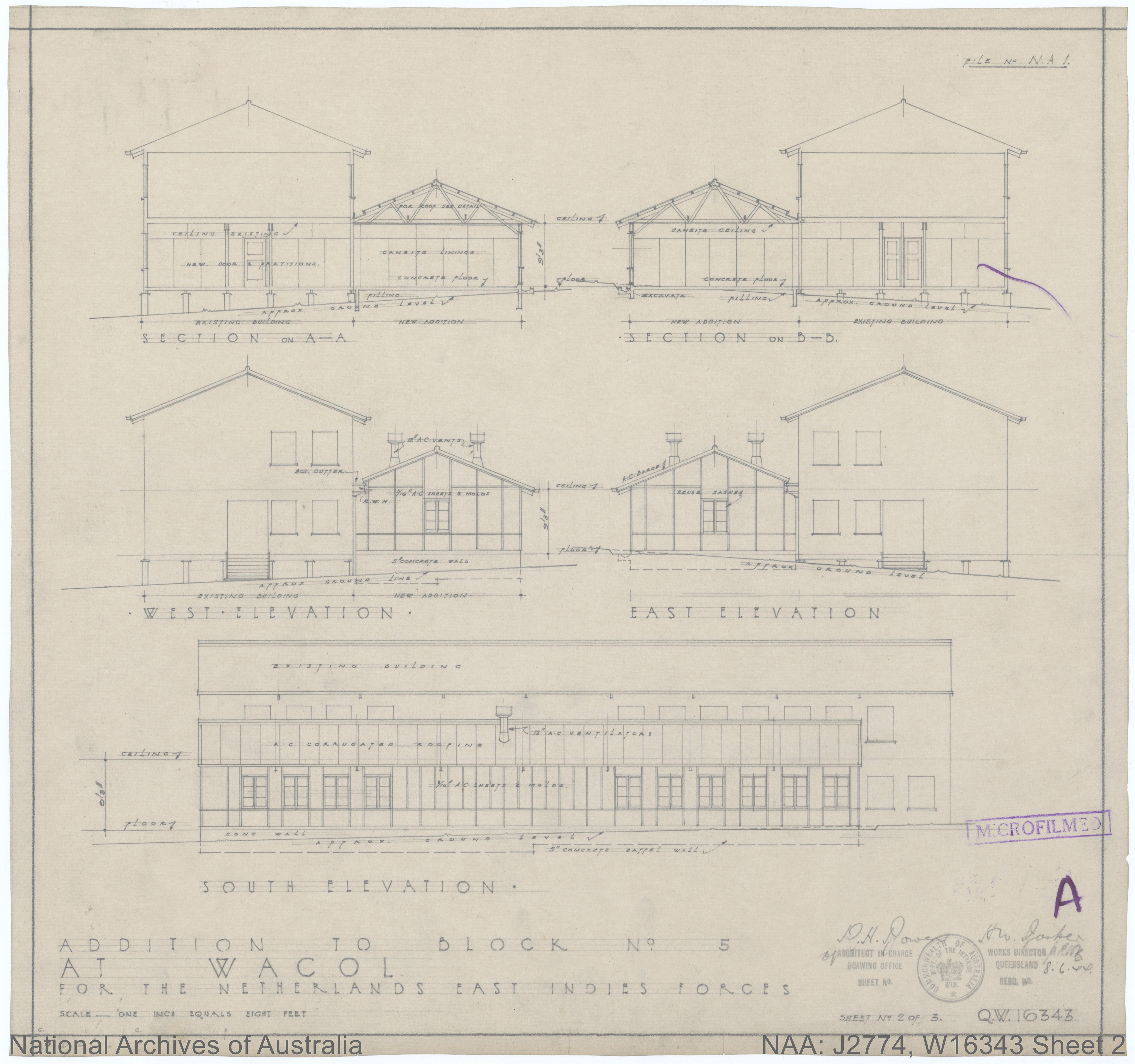
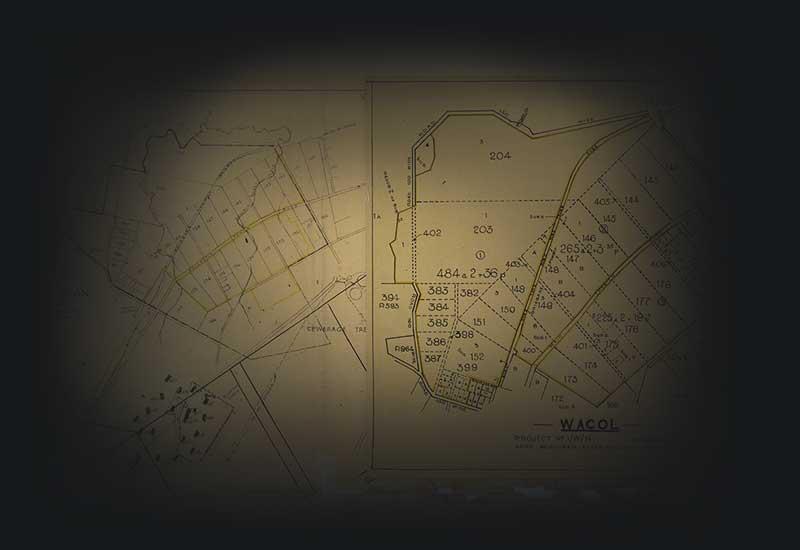
In 1942, the United States Army built Camp Colombia in Wacol, Brisbane, as a staging camp for the war in the Pacific. The 6th Army moved in during 1943. But by July 1944, the 6th army has been redeployed to New Guinea. The camp and all its facilities were vacant. In other words, it was ideal.

An agreement was reached between the Dutch and Australian governments to establish a government in exile: the Netherlands Indies Civil Administration (NICA). From Australia, NICA would plan the recolonisation and post-war reconstruction of the Netherlands East Indies.

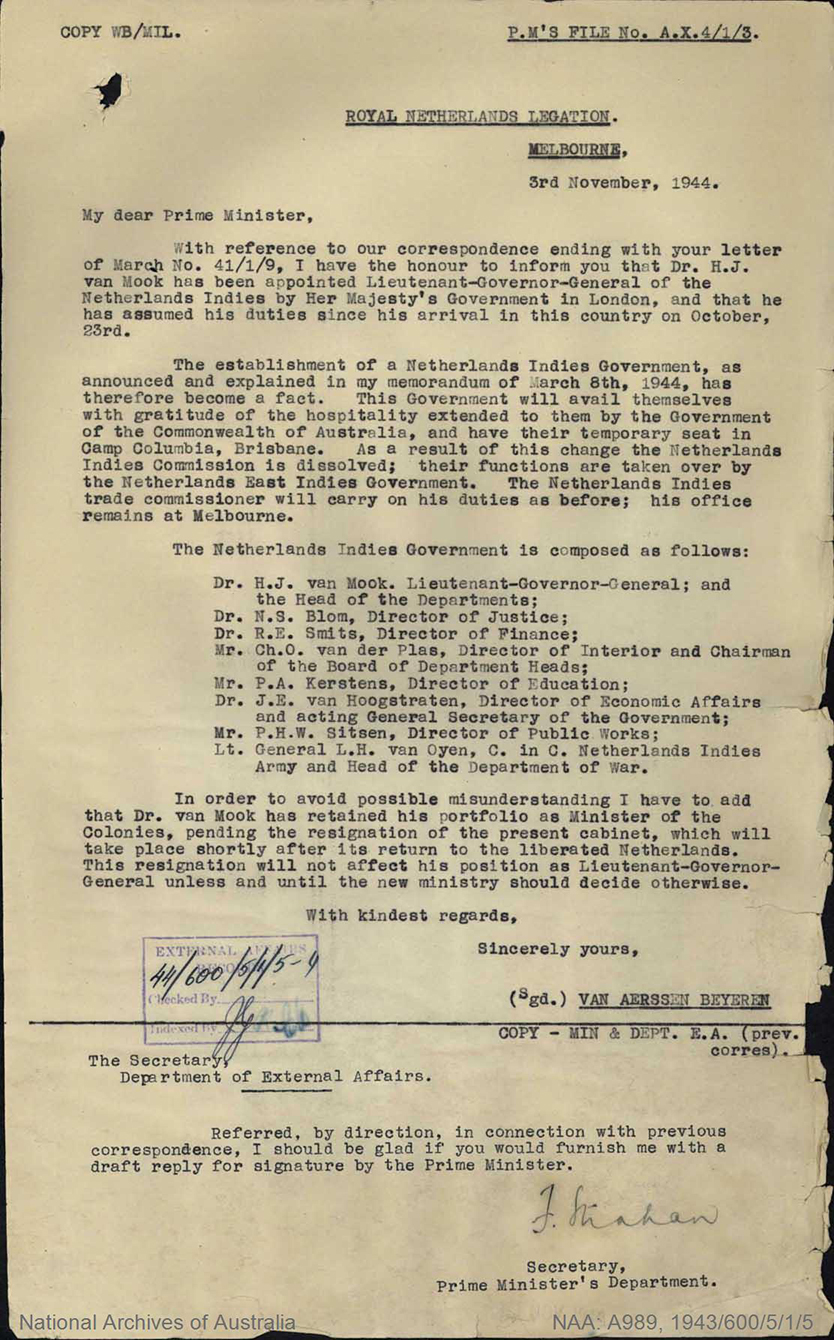
Dutch envoy Baron van Aerssen wrote to Prime Minister John Curtin in November 1944:

The establishment of a Netherlands Indies Government … has therefore become a fact. This Government will avail themselves with gratitude of the hospitality extended to them by the Government of the Commonwealth of Australia, and have their temporary seat in Camp Columbia, Brisbane.

Camp Colombia was provided to the Dutch rent-free in a Reciprocal Lend Lease agreement.

The Dutch move in

NEI government members started moving in to Camp Colombia in August 1944, under Lieutenant Governor-General Van Mook. While the Dutch army would be staged at Camp Colombia, the Royal Netherlands Navy and Air Force were based in Melbourne.

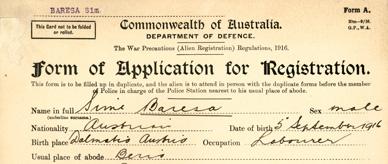
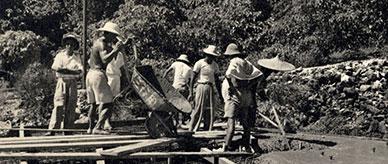
The NEI Labour Battalion was used to refurbish the camp. The Labour Battalion comprised interned non-European Netherlands East Indies nationals and Indonesians that opposed Dutch rule, overseen by Dutch officers.

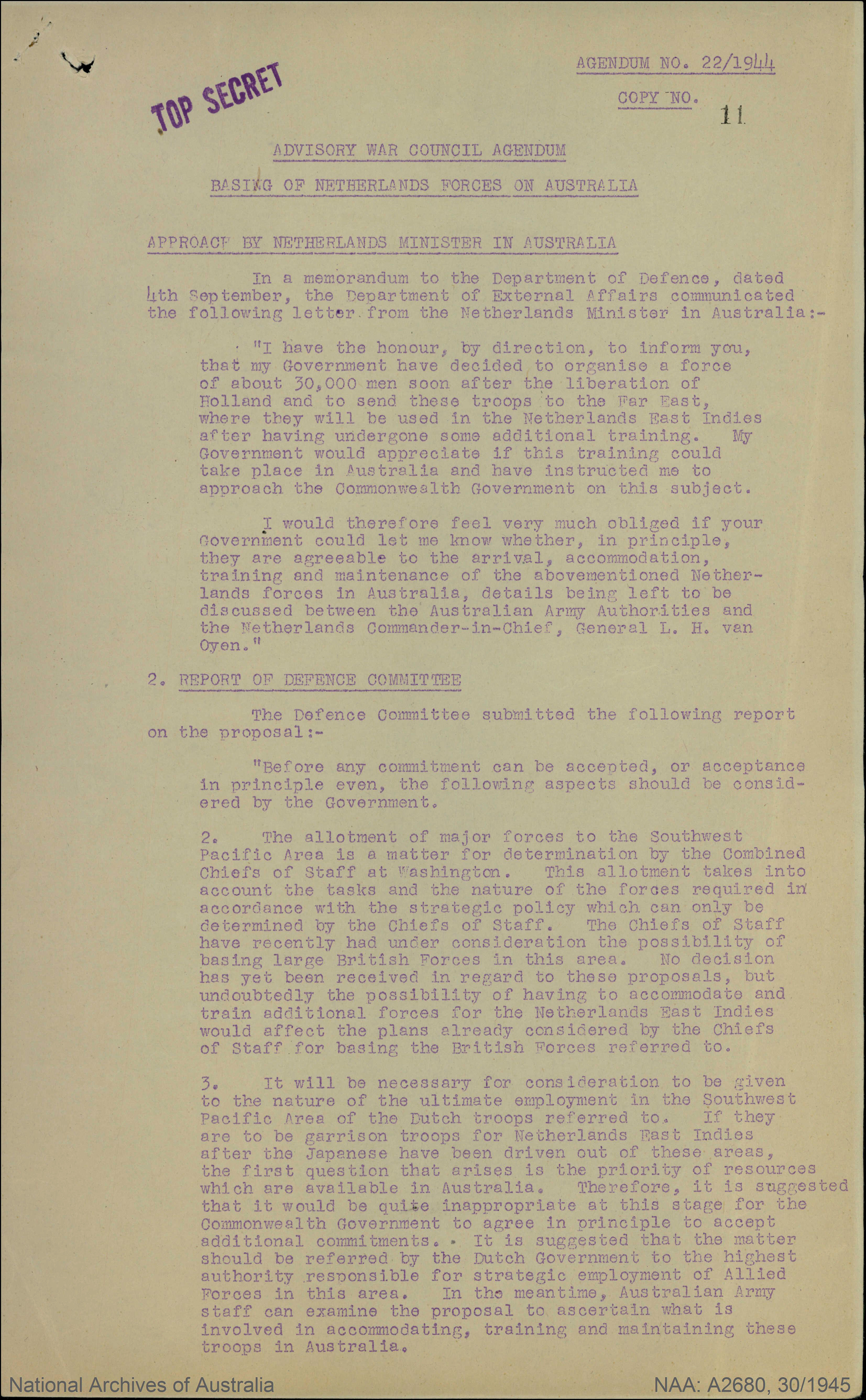
The Dutch government also began to negotiate the potential of establishing 30,000 Dutch Army personnel in Australia. These men would be trained on Australian soil and supplied with Australian uniforms, arms, and equipment, before being deployed to the NEI.

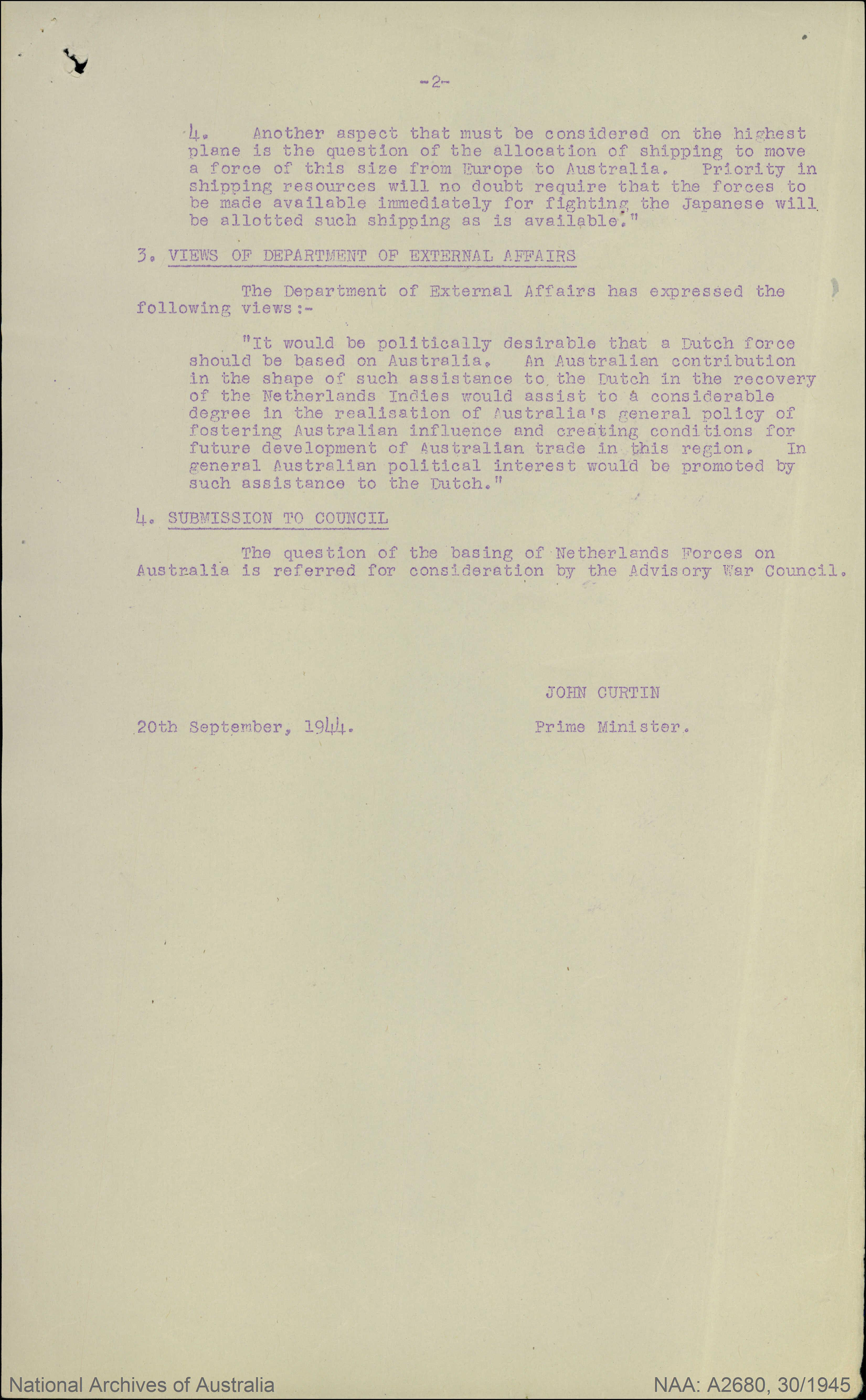
Initially, the Australian government agreed, in September 1944, that 'It would be politically desirable that a Dutch force should be based in Australia … [it] would assist to a considerable degree in the realisation of Australia's general policy of fostering Australian influence and creating future development of Australian trade in this region.'

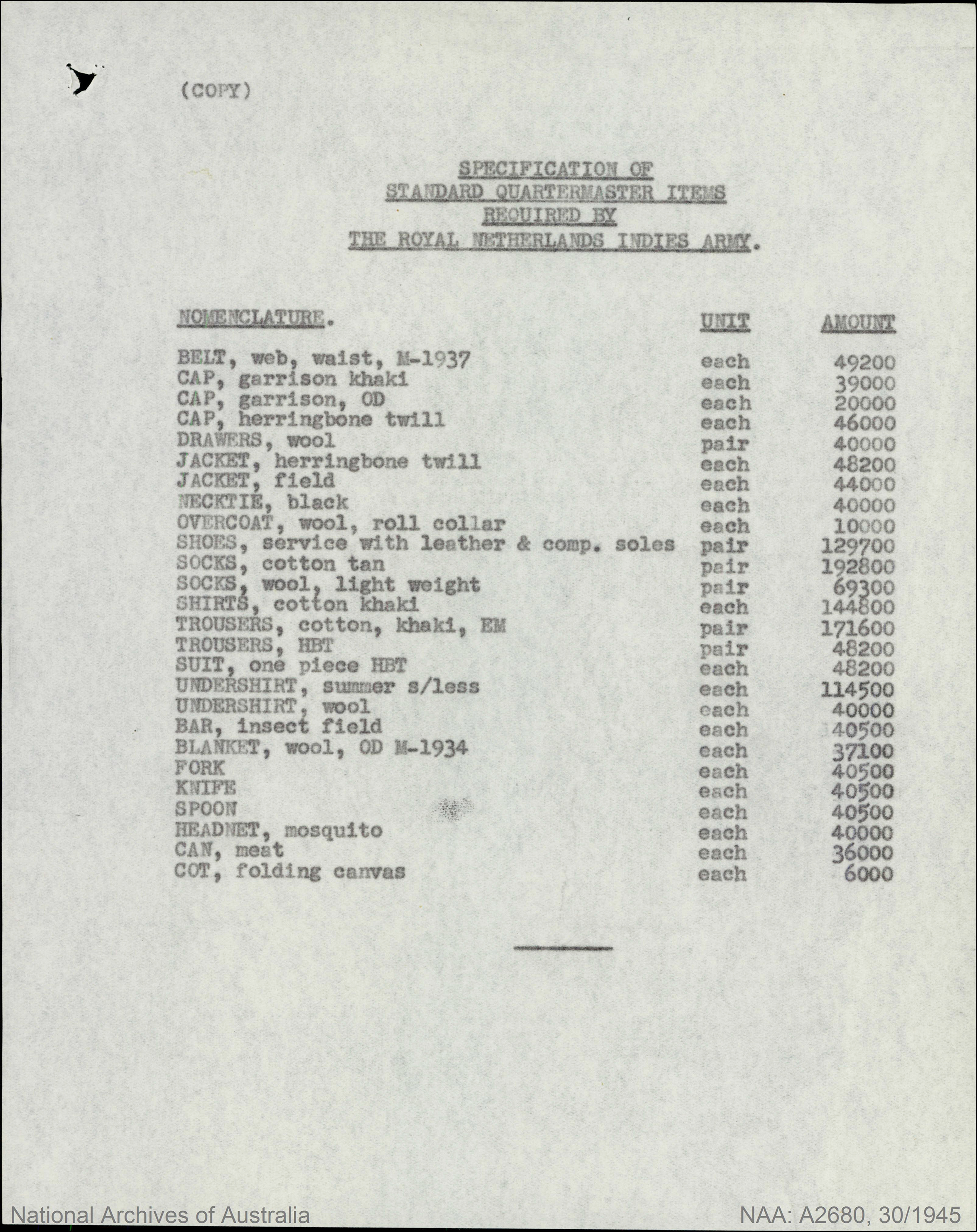
Files in National Archives' collection show the planning required to prepare for such a force. A list of items requested by the Royal Netherland Indies Army included 193,000 pairs of tan cotton socks, 40,000 mosquito head nets, and 40,500 spoons.

Refugees and withdrawal

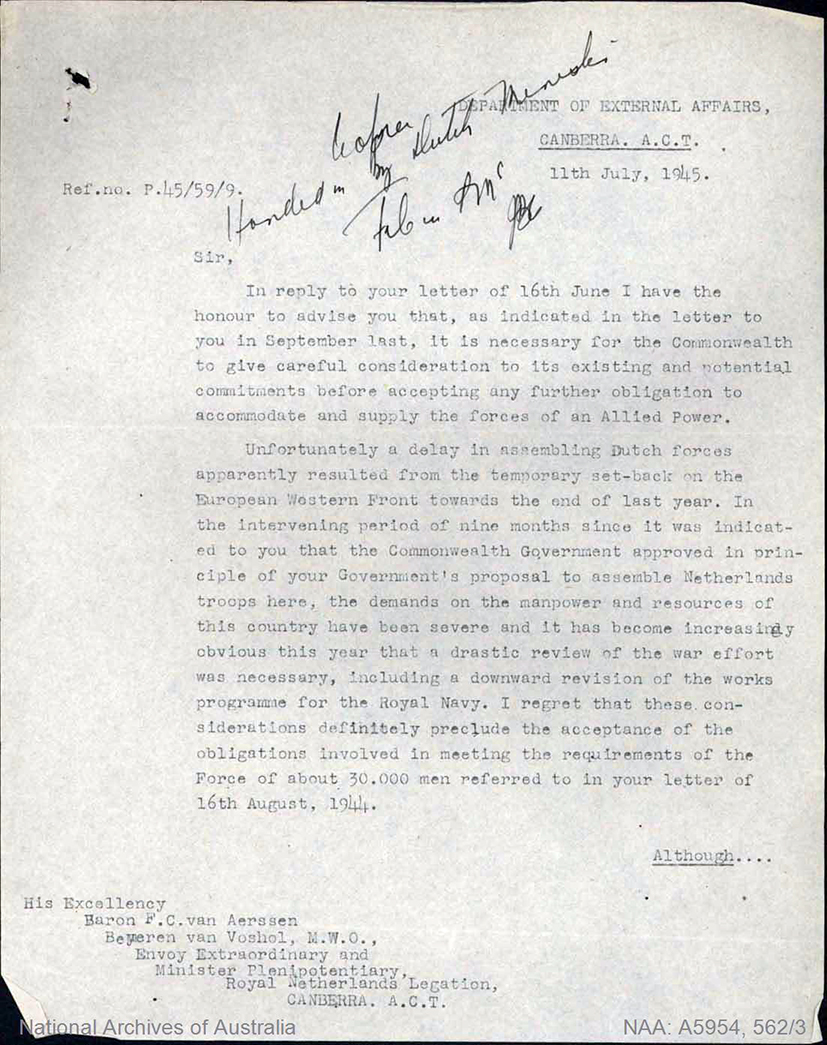
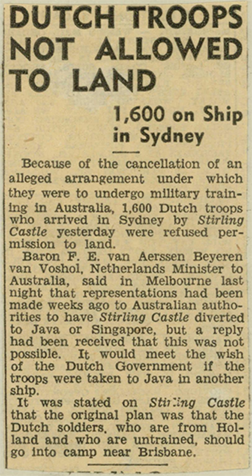
By 1945, the Australian position on hosting Dutch troops had changed. On 28 June 1945, the Australian War Cabinet rejected their approval to accept the 30,000 Dutch troops. The Department of External Affairs wrote to Baron von Aerssen confirming that it would no longer be possible due to increased resourcing demands in Australia. This meant that 1600 Dutch troops who were already on their way were denied landing in Australia in November 1945.

The Dutch had planned to stay in Camp Columbia until the liberation of sizeable towns in the NEI. But after the Japanese surrendered in August 1945, the Indonesians declared independence. This would lead to a long and violent struggle, with Indonesian independence acknowledged by the Dutch in 1949.

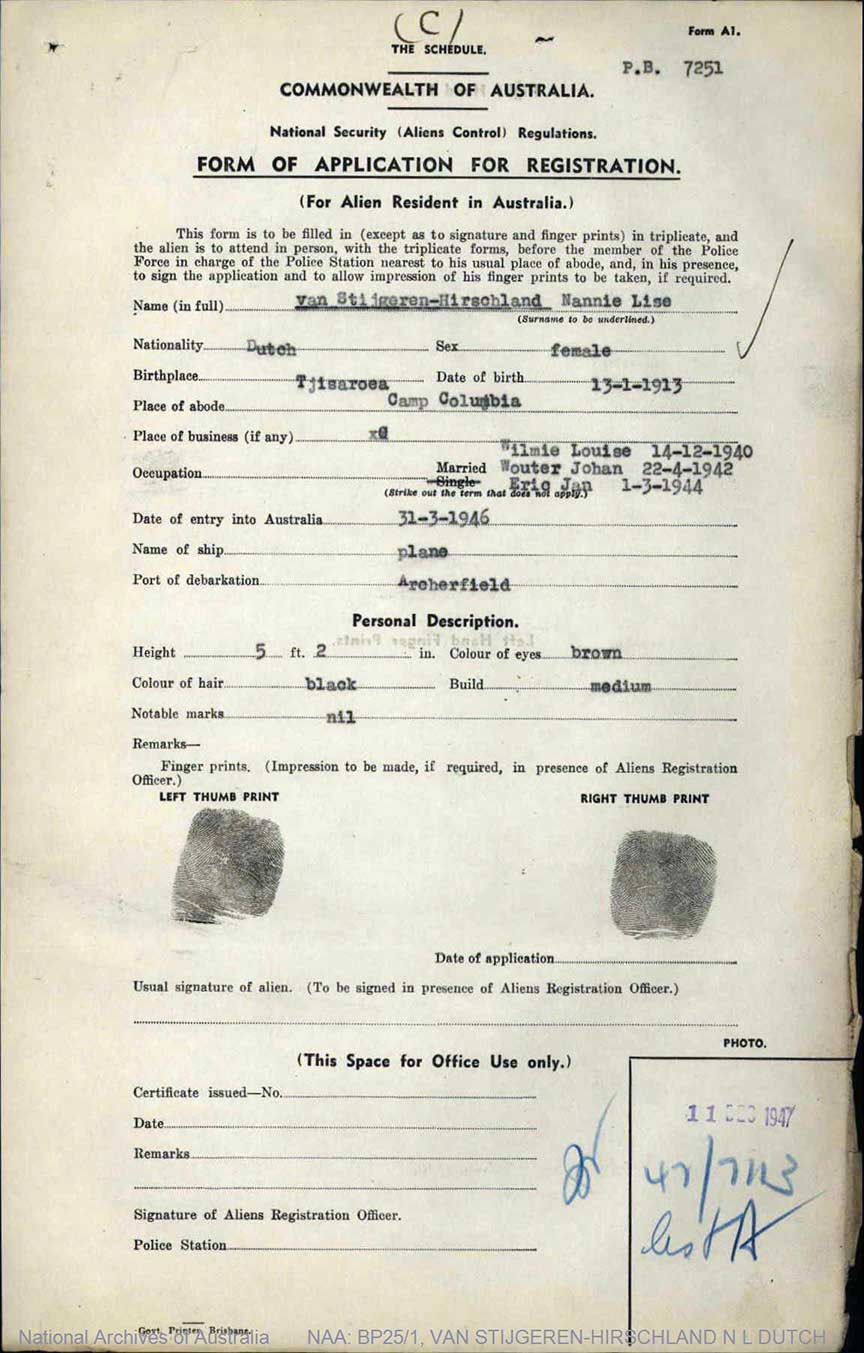
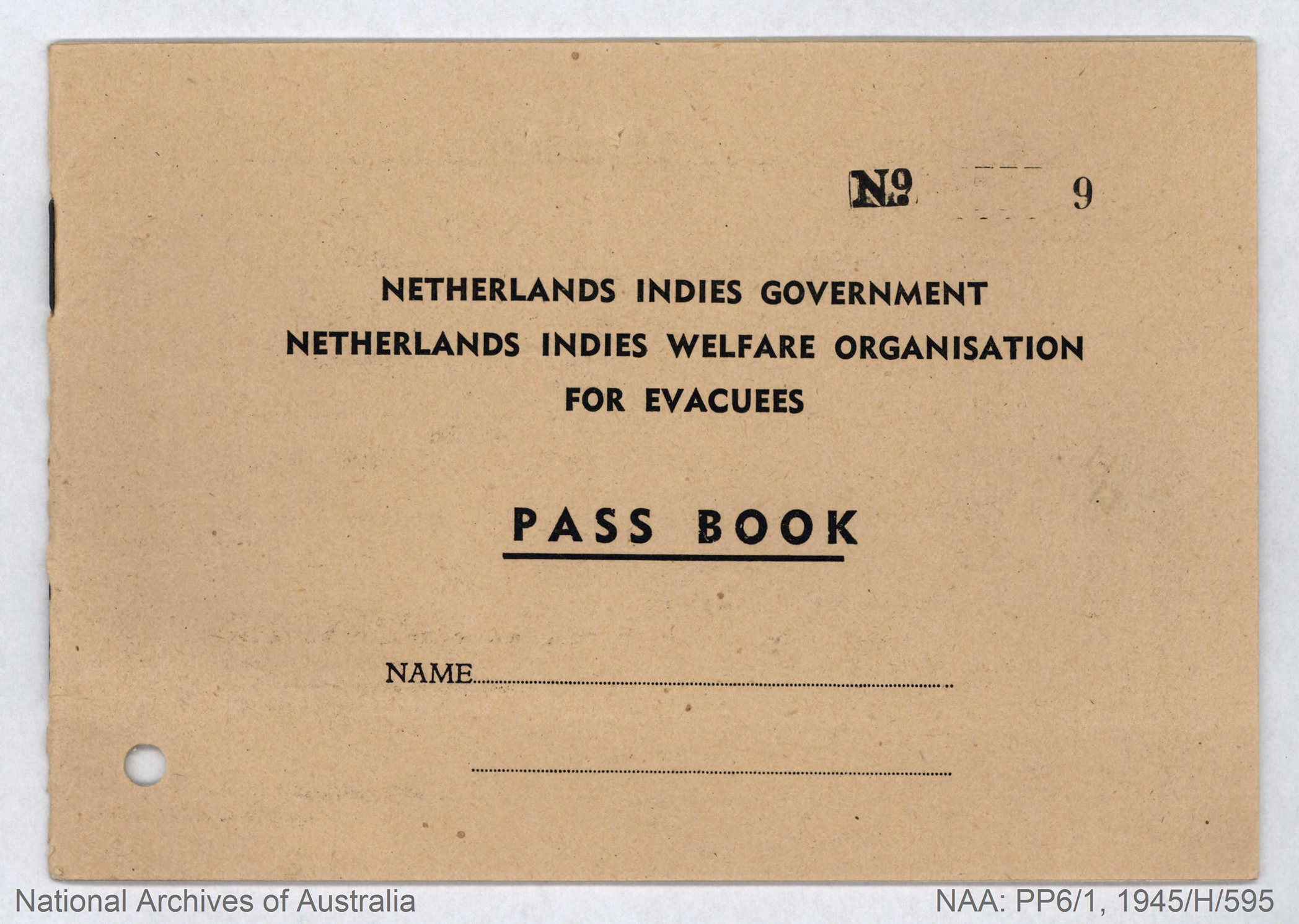
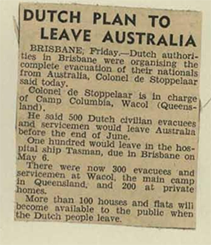
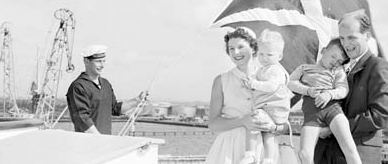
The NEI government-in-exile remained at Camp Colombia until the war's end in September 1945. The site remained in use by the Dutch until mid 1946. This included hosting some of the thousands of refugees from the NEI who fled to Australia. They were accommodated temporarily in Camp Columbia before being spread out in hotels, boarding houses and other unused establishments, before eventually going home.

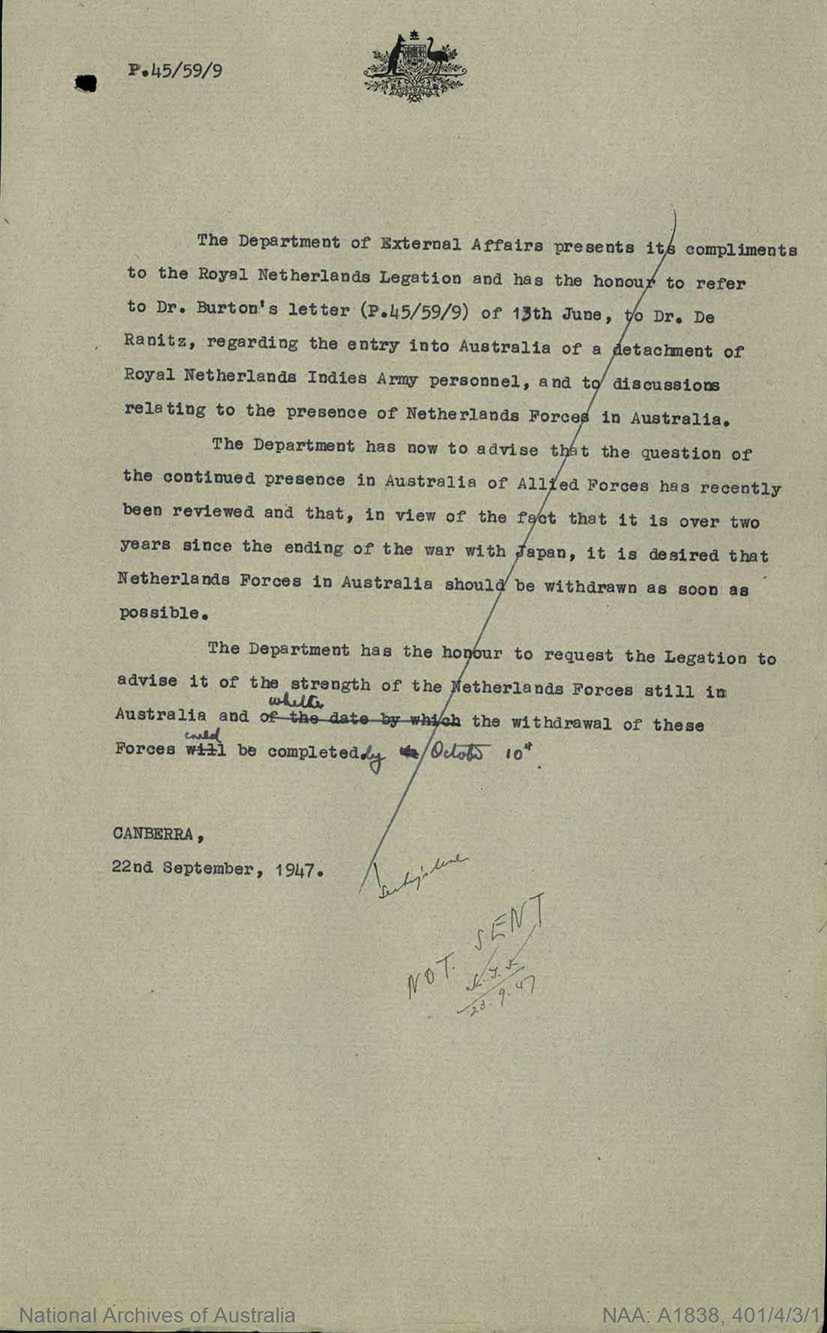
The last of the Dutch forces withdrew from Australia in 1947.

This fascinating period of history, documented extensively in National Archives, remains the only time Australia has ever hosted a foreign government in exile.

Cara Downes is Director Communications, Marketing, Partnerships and Events at National Archives of Australia.