Corset wars

Juliana Want, Eve Terry and Peita-Maree Clark
Thursday, 29 January 2026

The corset: has any other fashion item had such a complicated legacy? In its long and fascinating history, it has undergone many changes and controversies. National Archives of Australia contains one part of its story – when two titans of Australian corsetry faced off in a battle for patent supremacy.

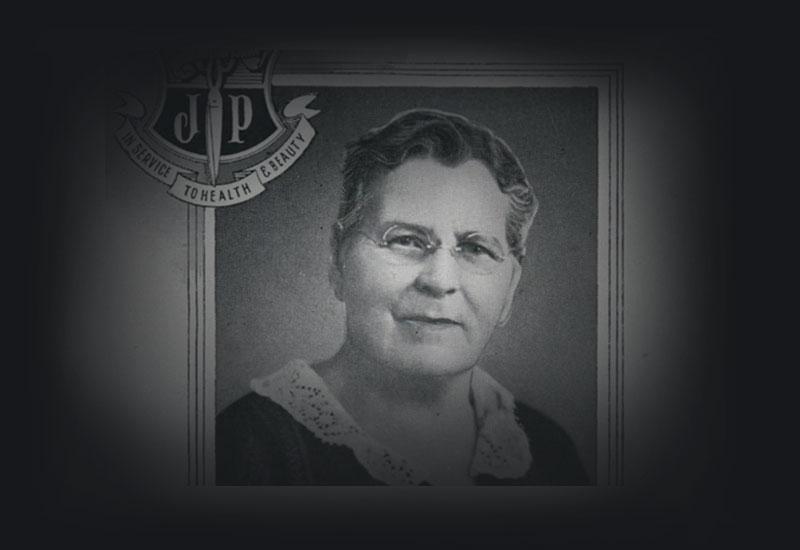
Sarah Ann Jenyns

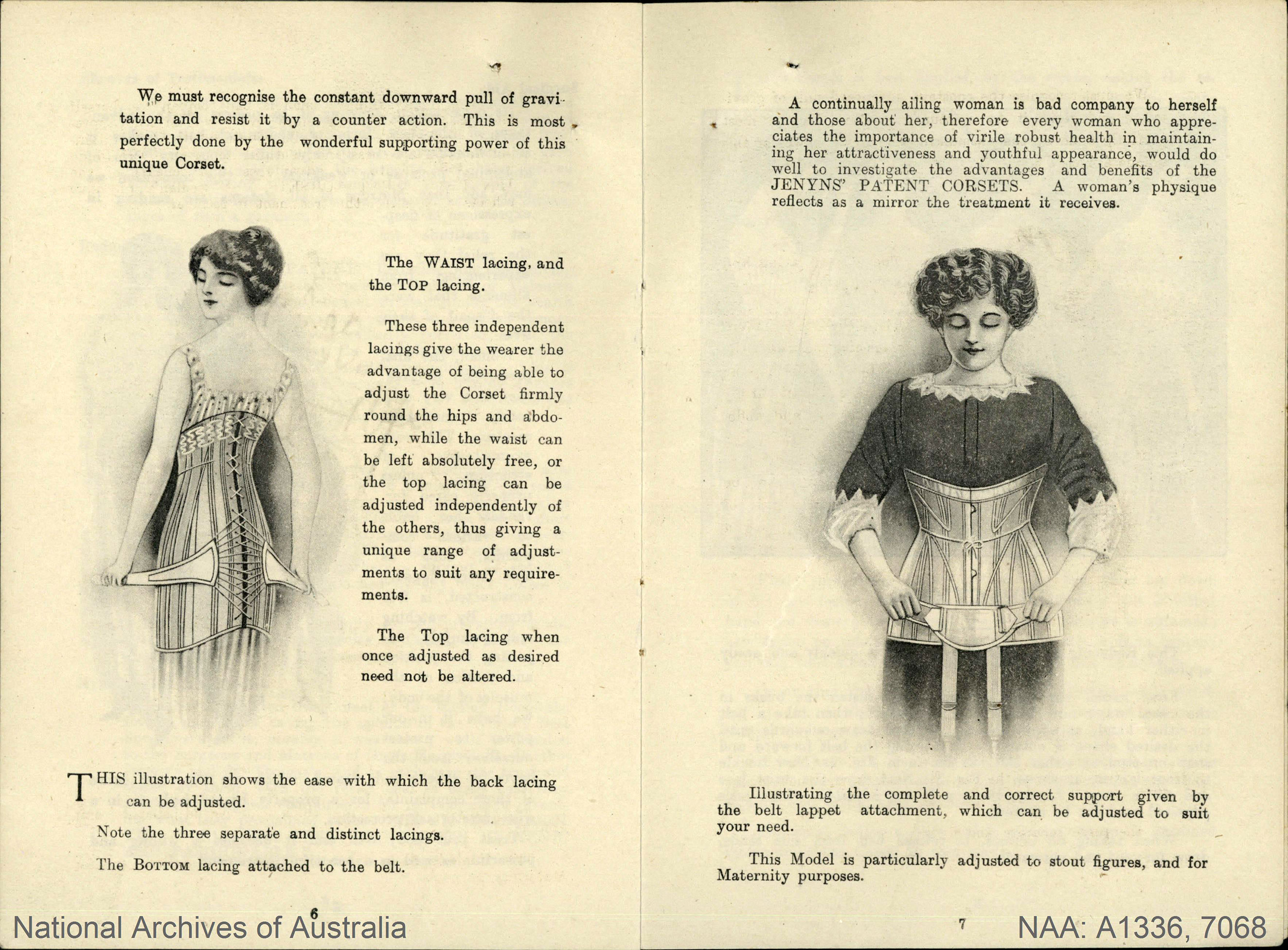
Born in 1865, Sarah Ann Jenyns trained as a nurse while raising her children with her husband, surgical instrument maker and preacher Ebenezer Randolph Jenyns. 

In 1886, Sarah and her family relocated from the New South Wales coalfields, where Ebenezer had been preaching, to Brisbane. It was around this time that concerns were being raised about the effects of corsets on women's health. 

Sarah would have worn the short, steel-boned, hour-glass shaped corsets that were common during the period. Doctors were beginning to identify health issues associated with the use of these corsets: damage to the organs, respiratory complications, birth defects and rib deformity. Although there is ongoing contention among fashion historians about the validity of these claims, Sarah herself had no doubts. Something had to change. 

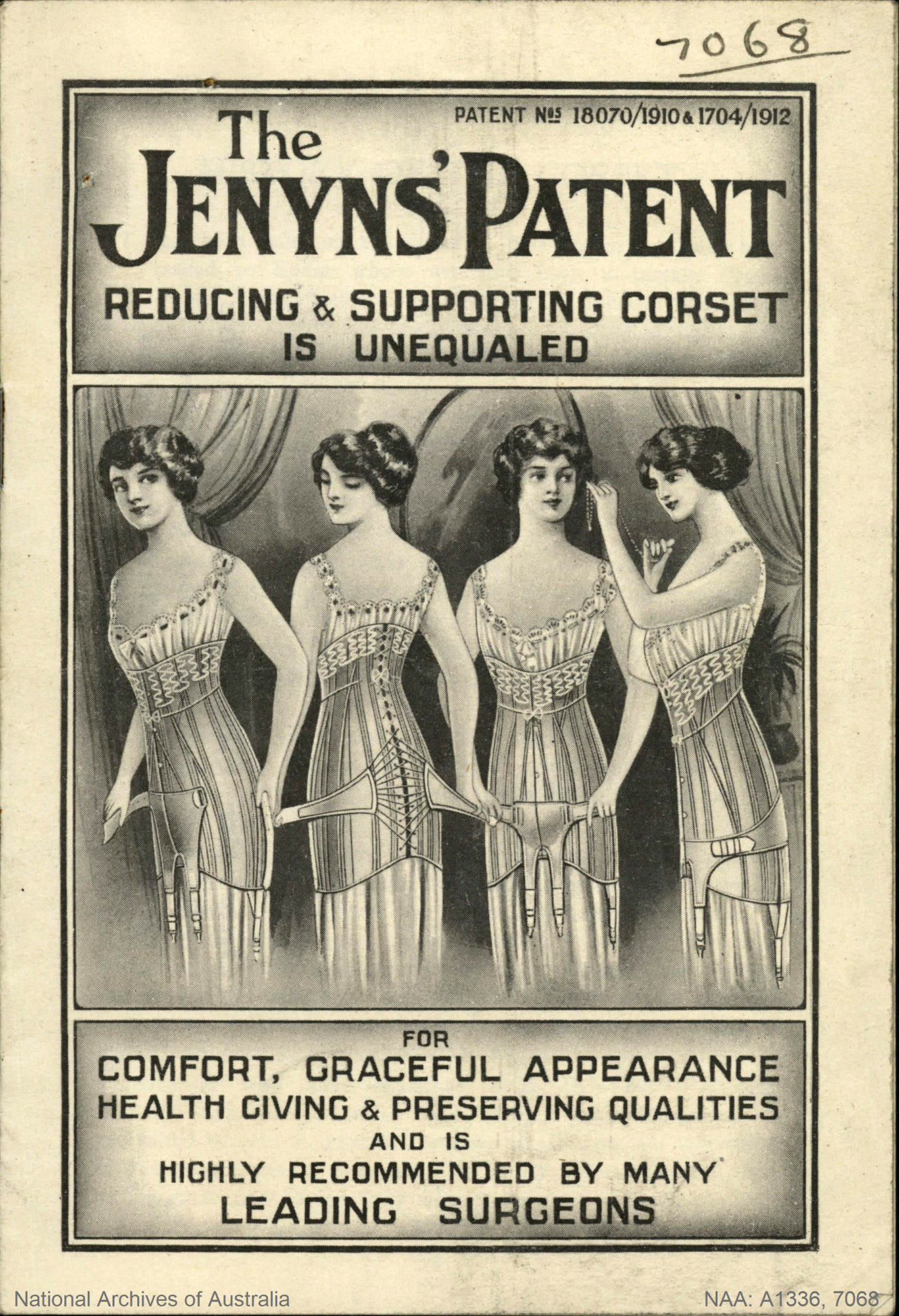
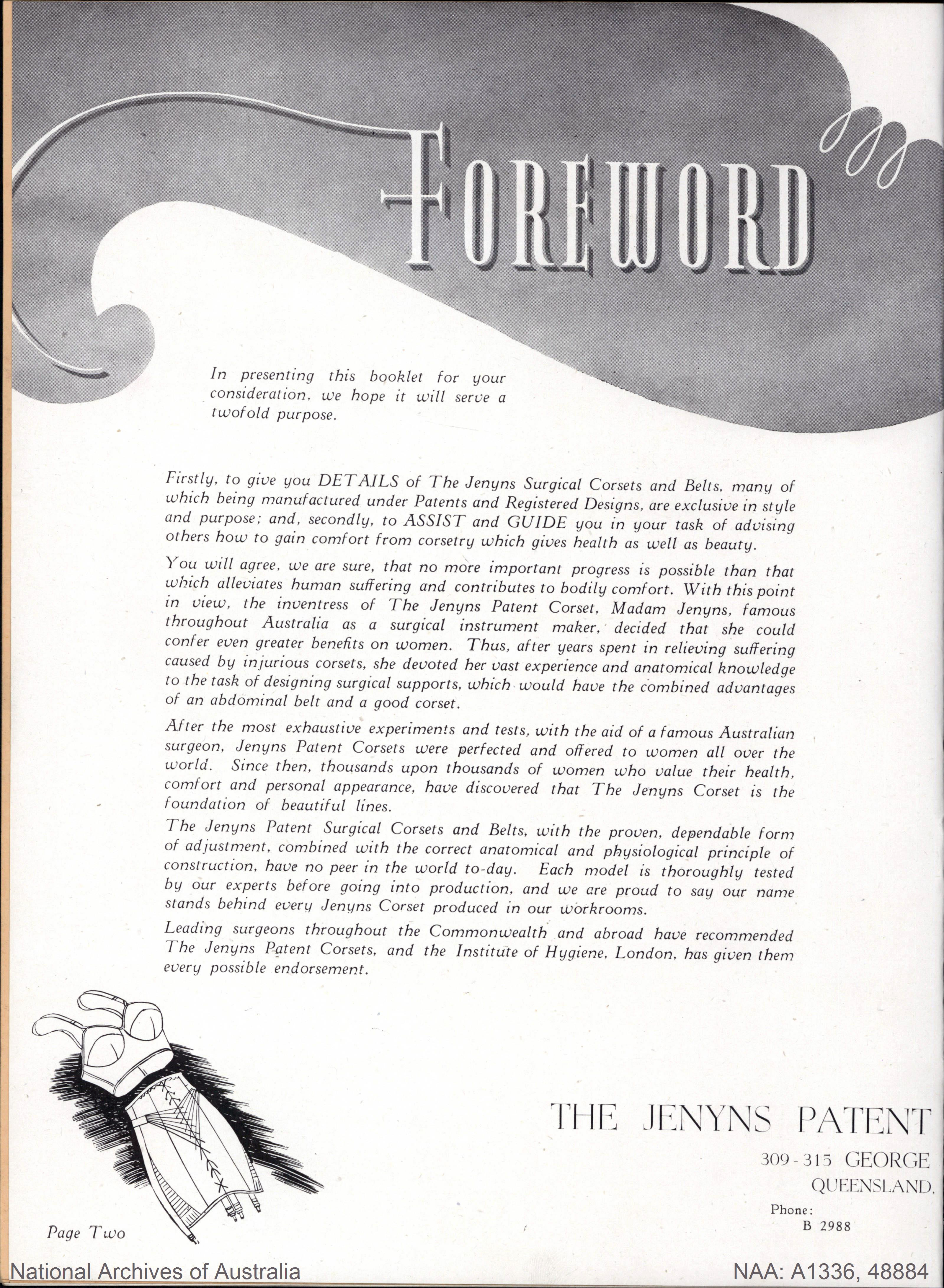
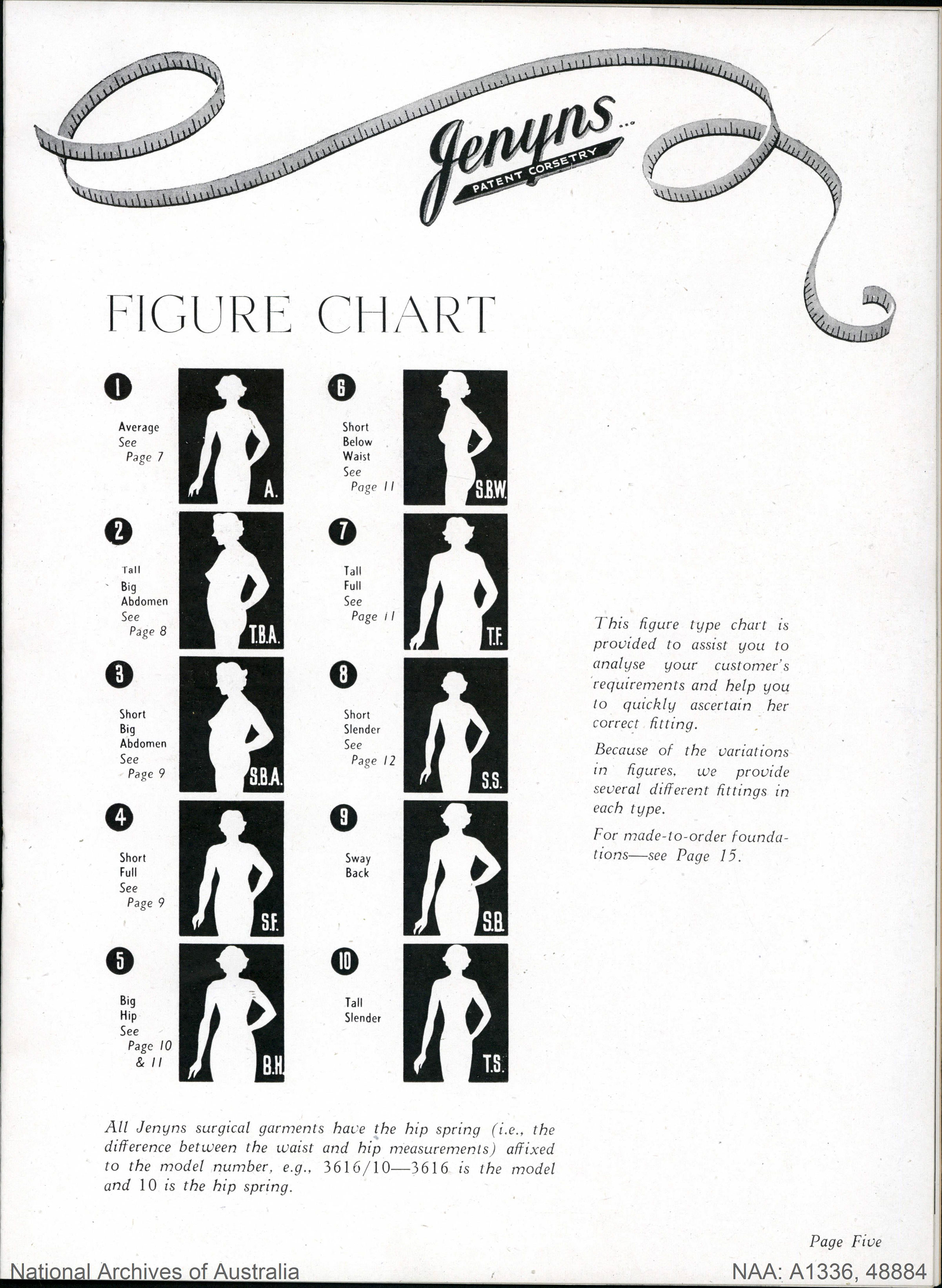
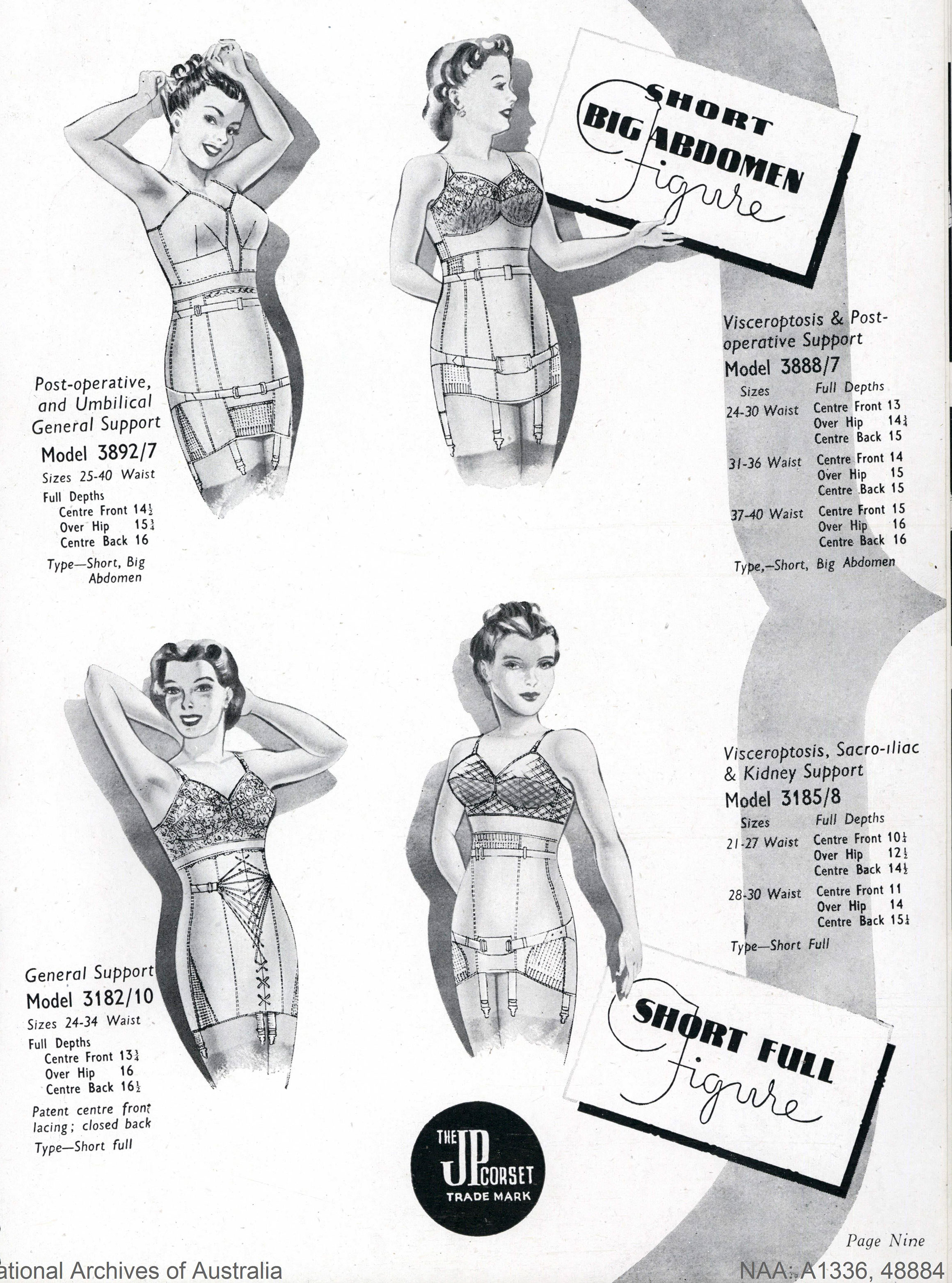
Using her nursing background, Sarah created a series of corsets and surgical belts that were designed to reduce back pain and assist in post-surgical recovery. She replaced the traditional steel or whale corset boning with a new structural mesh called 'Vertabrella'. This new material allowed the garment to move with women's bodies while still providing support. While most corsets were only available in a single shape, her product was suitable for 12 different figure types.

Sarah and her husband started their business selling Sarah's designs in 1907, and by 1909 Jenyns Patent Corsets Pty Ltd was so successful that they had to move to larger premises. 
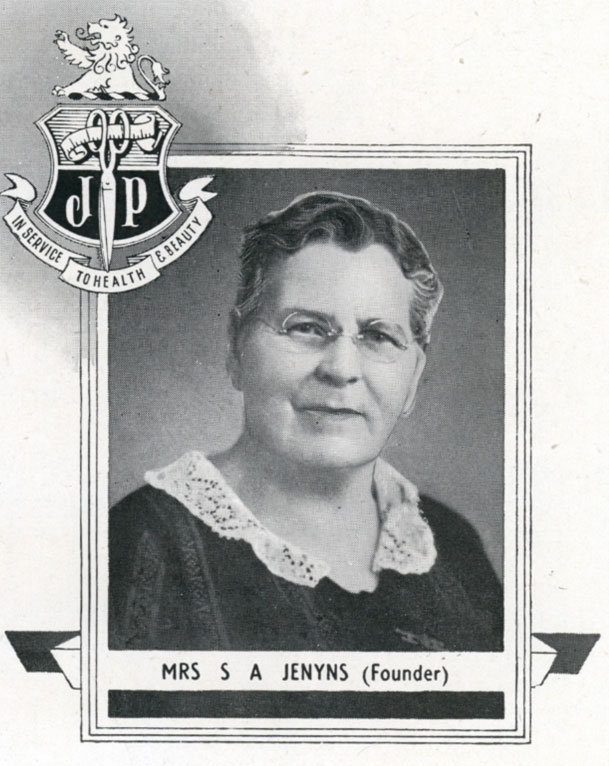
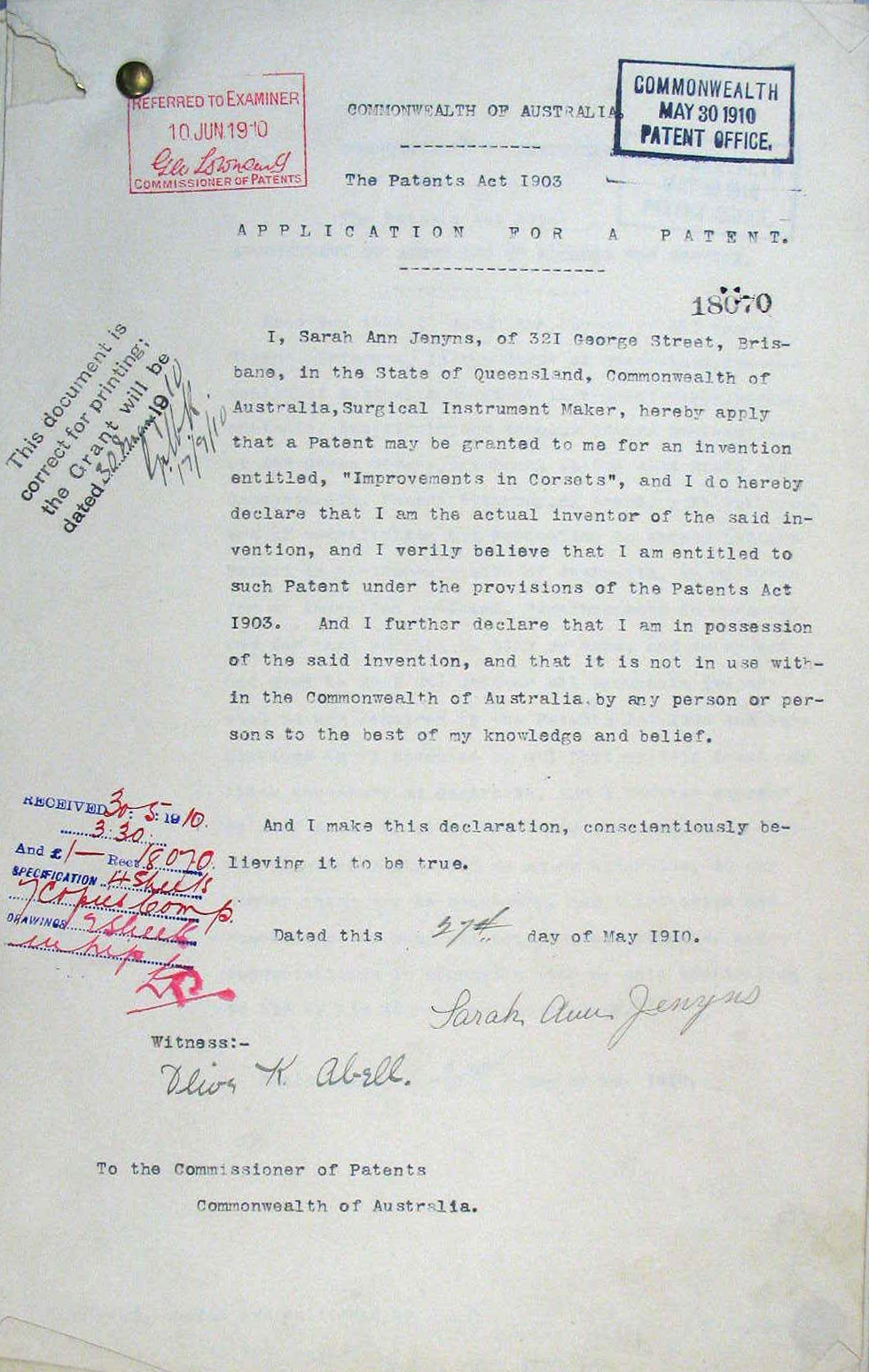
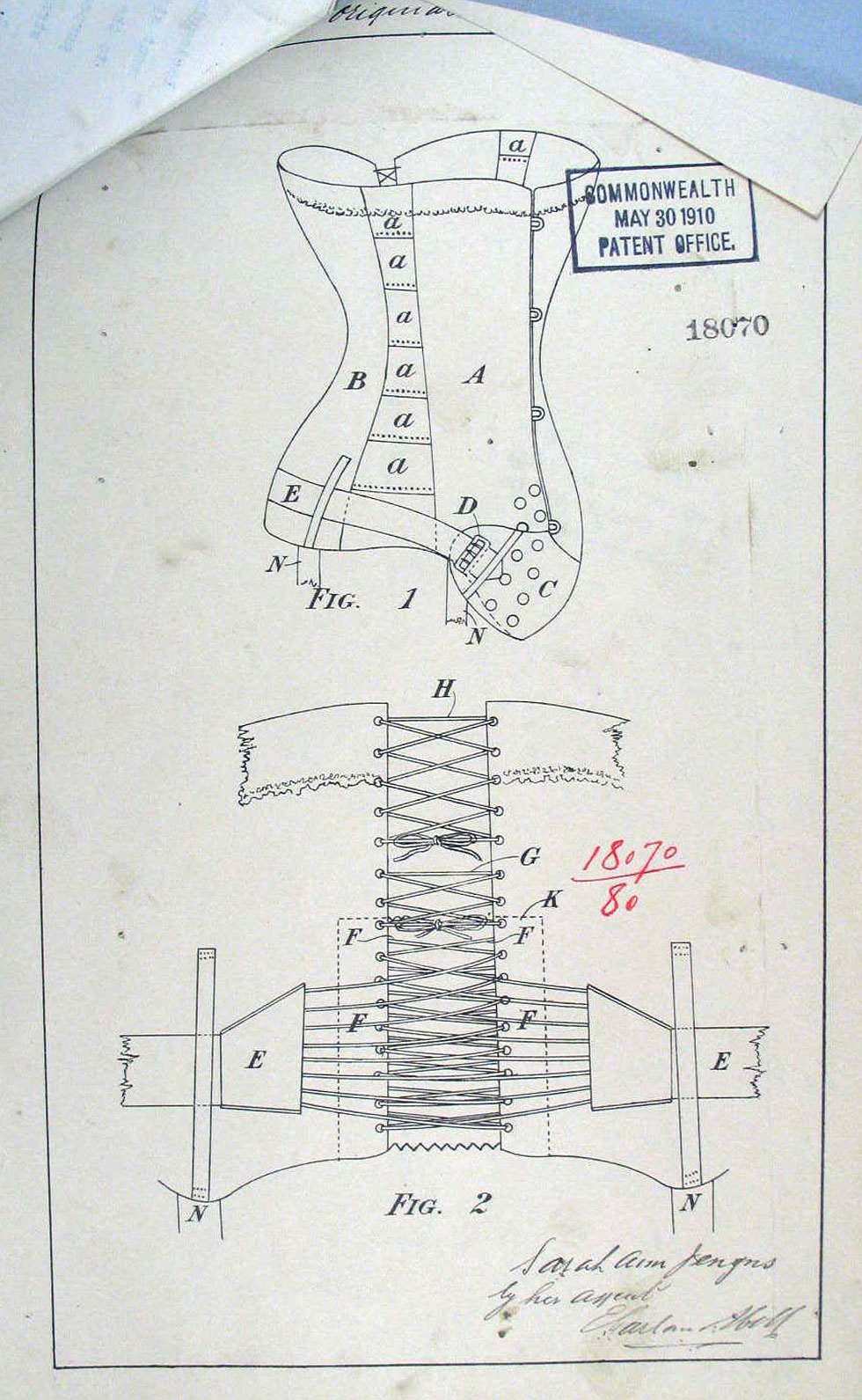
Sarah would continue to innovate, as traditional corsets laced at the back, requiring assistance to put them on. In 1910, Sarah submitted a patent application for her 'Improvements in Corsets' to the Commonwealth Patent Office, introducing one of the world's first side-lacing corsets. She then built upon the design with a new patent in 1912. These new side-lacing corsets meant that women would be able to put corsets on themselves without assistance – in under a minute!

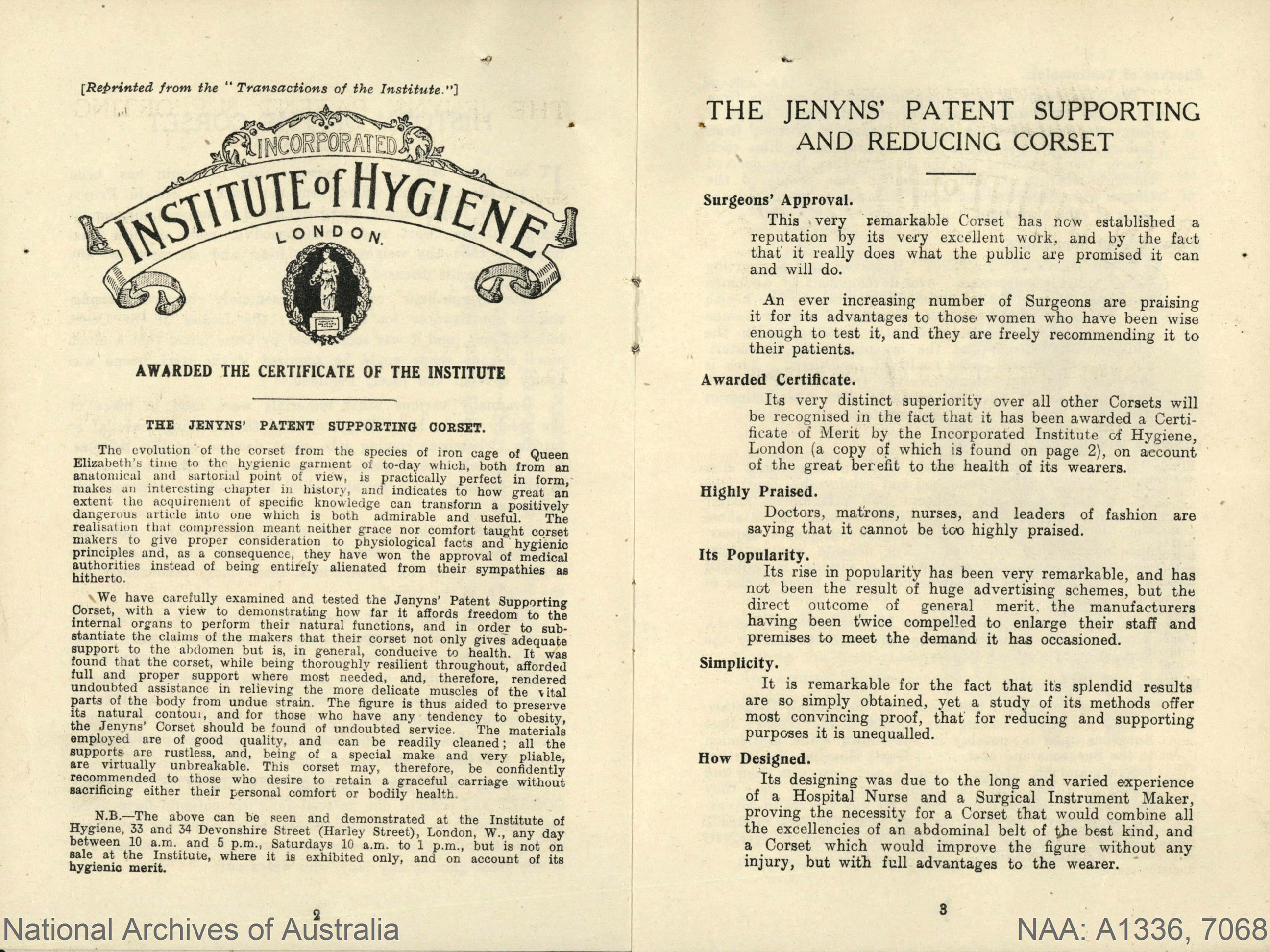
Sarah also patented her inventions in Britain, and had her surgical corsets endorsed by the London Institute of Hygiene. Orthopaedic surgeons praised it as 'the best corset the world has seen'.

But competition was coming.

Berlei

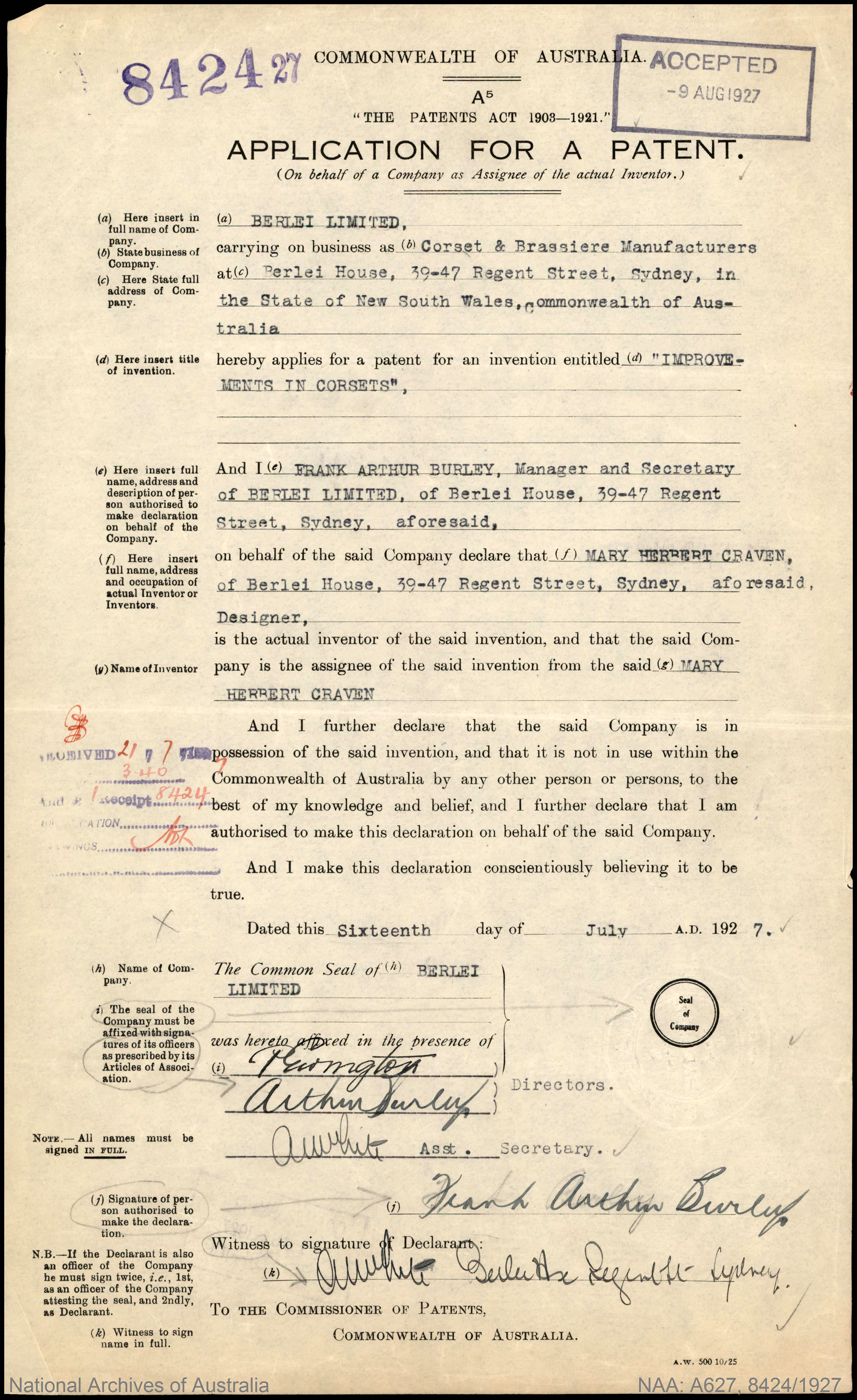
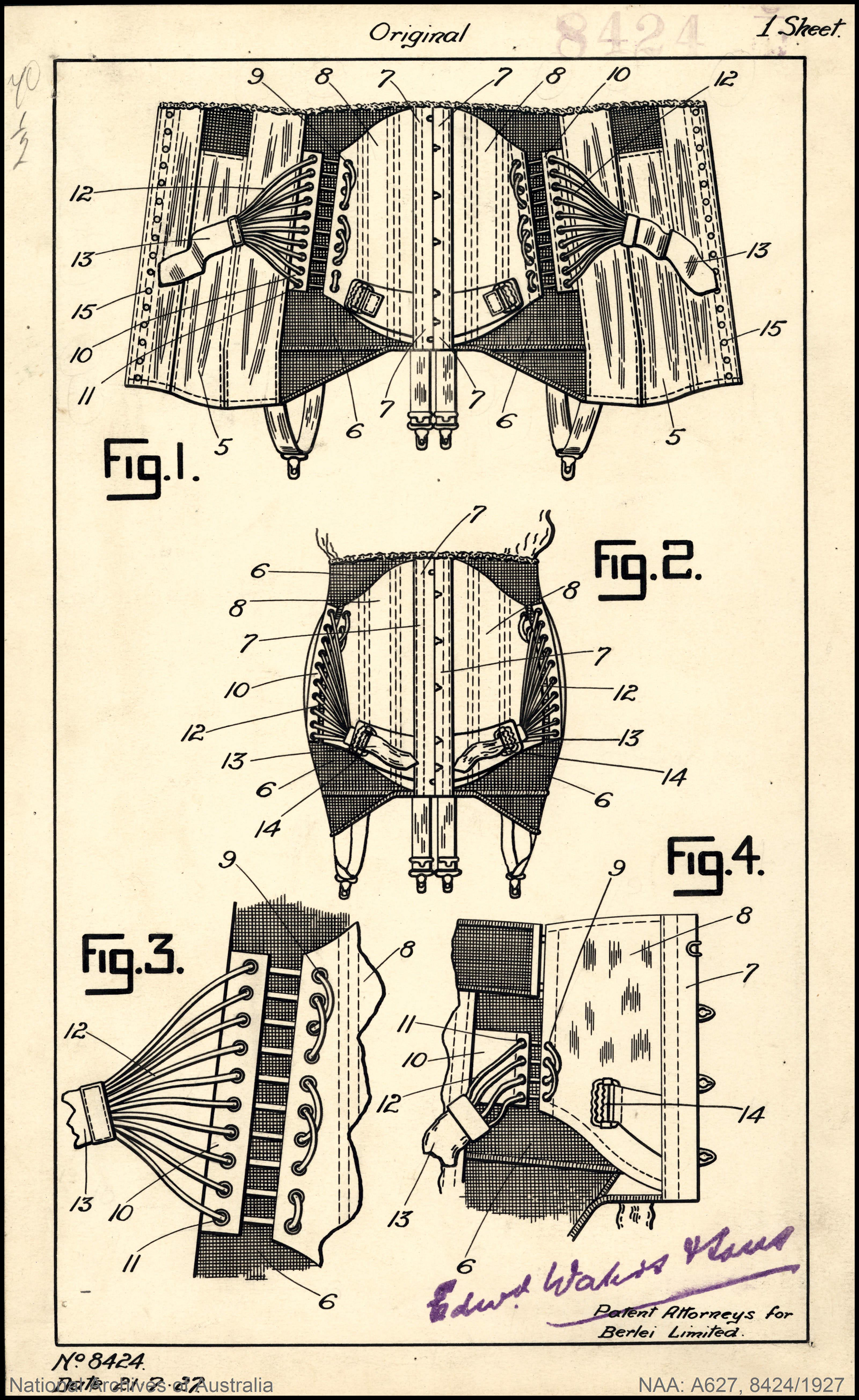
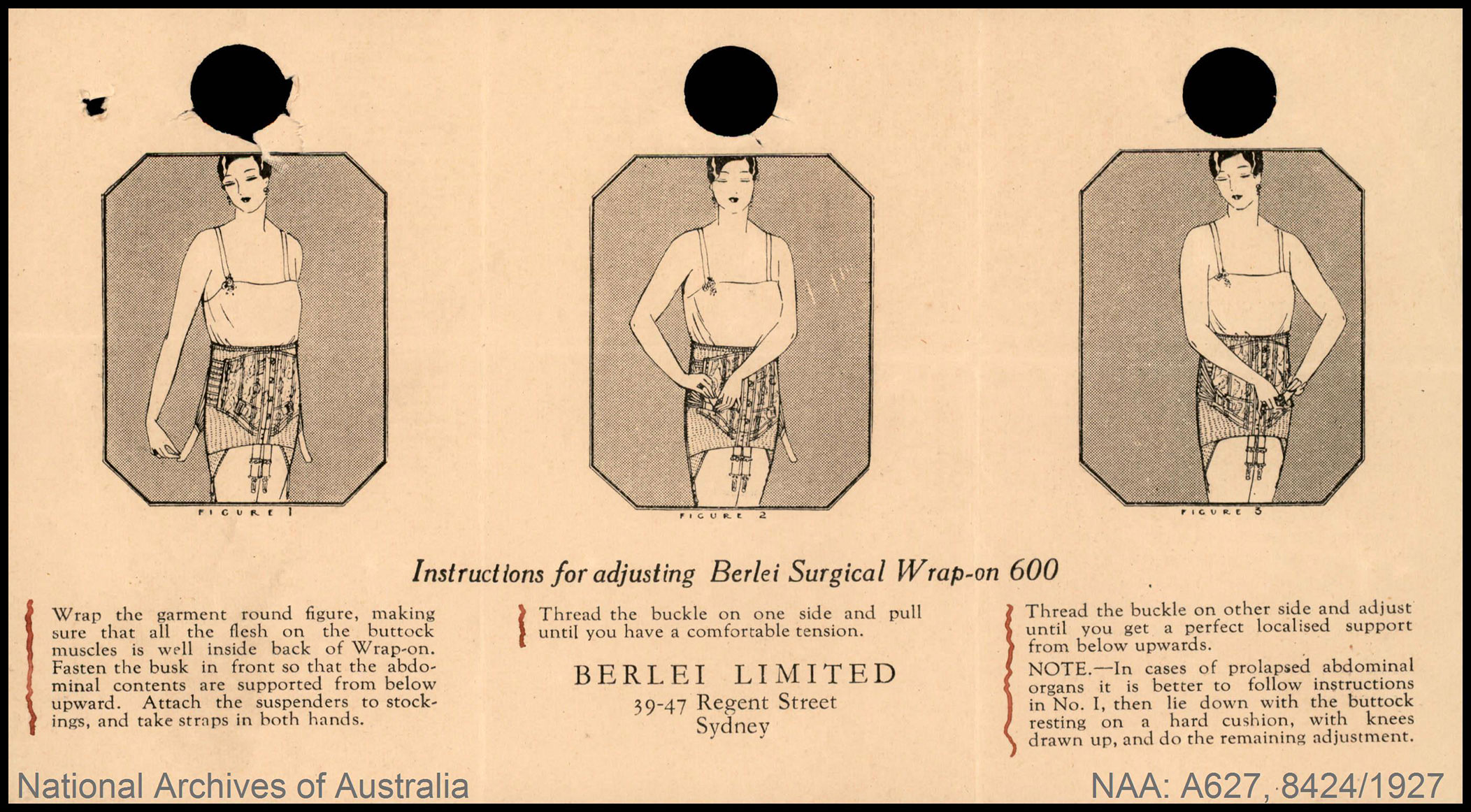
In 1920, Sydney corset company United Corsets rebranded to a glamorous, French-inspired new name: Berlei. In 1927, Berlei designer Mary Herbert Craven submitted her own patent application. It advertised improvements devised to provide 'a corset suitable for wear by persons having weakened abdominal muscles of for use in pregnancy.' This looked a little too familiar to Sarah's designs.

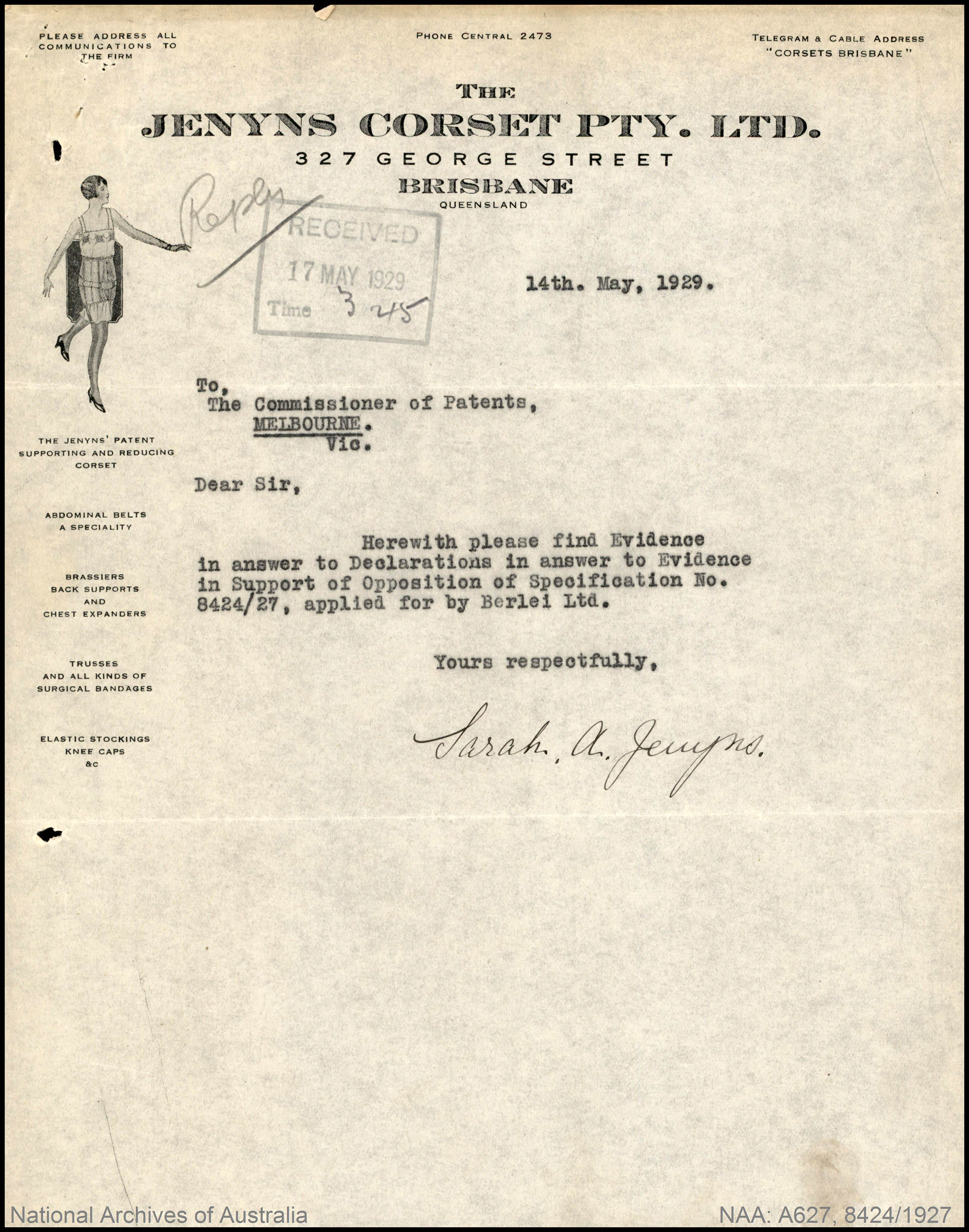
In 1928, she wrote to the Patent Office to make her complaint known. She began 'I desire to point out there is nothing new …' describing similarities between the Berlei patent and samples of her own corsets. Her letter concluded cuttingly:

If the manufacturer of the corset … is able to prove advantages to the wearer over those already on the market as shown in sample corsets manufactured by the Jenyns Patent Corset company, I will be pleased to learn. I am always pleased to congratulate an inventor on a new invention that will be of assistance to the public. Believe me!

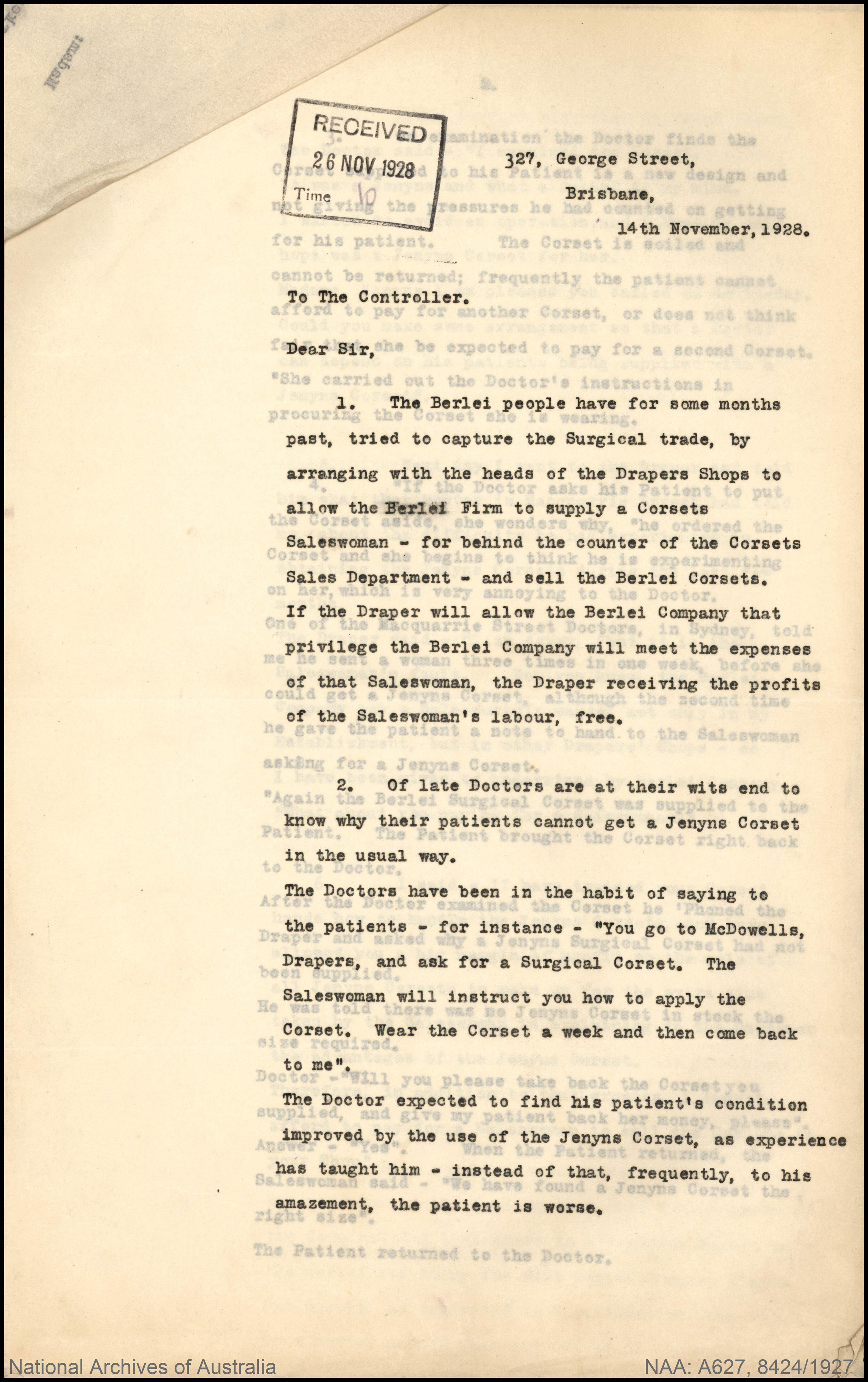
Sarah also complained in her letter to the Commissioner of Patents that Berlei was unfairly attempting to capture the surgical corset trade.

Both Jenyns and Berlei corsets were sold in drapers, a type of shop for clothing or fabric. Sarah informed the Commissioner that Berlei was offering drapers free saleswomen to sell Berlei corsets: ' …the Berlei Company will meet the expenses of that Saleswoman, the Draper receiving the profits of the Saleswoman’s labour ...' This meant that unless Jenyns corsets were specifically asked for, Berlei corsets were suggested to customers by default.

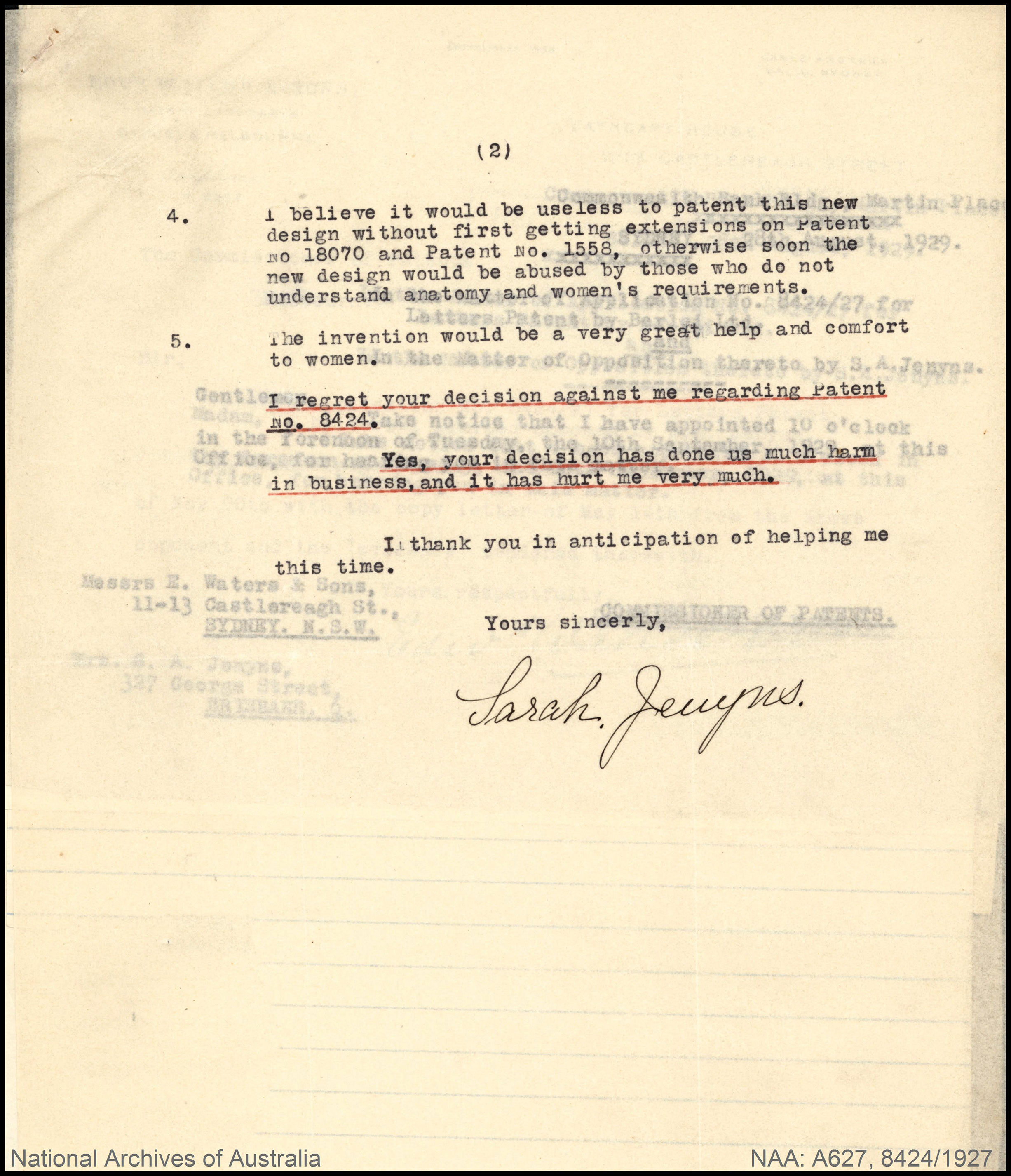
These were only the first salvos in an ongoing fight, with Sarah Jenyns writing numerous letters opposing Berlei's designs. But in 1930, Berlei's patent was granted. The Commissioner stated that the opposition had been conducted in 'a most irregular manner', and that 'the opponent has not provided any evidence which would…justify me in refusing to grant Letters Patent.' In response, Jenyns wrote to the patent commissioner: 'I regret your decision against me…Yes, your decision has done us much harm in business, and it has hurt me very much.'

Legacy

Despite Sarah's unsuccessful fight with Berlei, Jenyns Patent Corsets continued to be a success, diversifying into bras and surgical instrument production. Although Sarah died in 1952, her children and grandchildren continued to operate the business until 1992. The bra manufacturing arm of the company was sold to international brand Triumph in 1969, and the brand name was ultimately retired in the nineties. 

Sarah Jenyns was inducted into the Queensland Business Leaders Hall of Fame in 2014.

Australian-grown Berlei continues to operate to this day, now with international owners.

For the story of another intrepid corsetier, Myra Juliet Farrell, and more tales of Australian patents and inventions, visit our exhibition In real life: inventors, innovators and opportunists now on in Canberra.