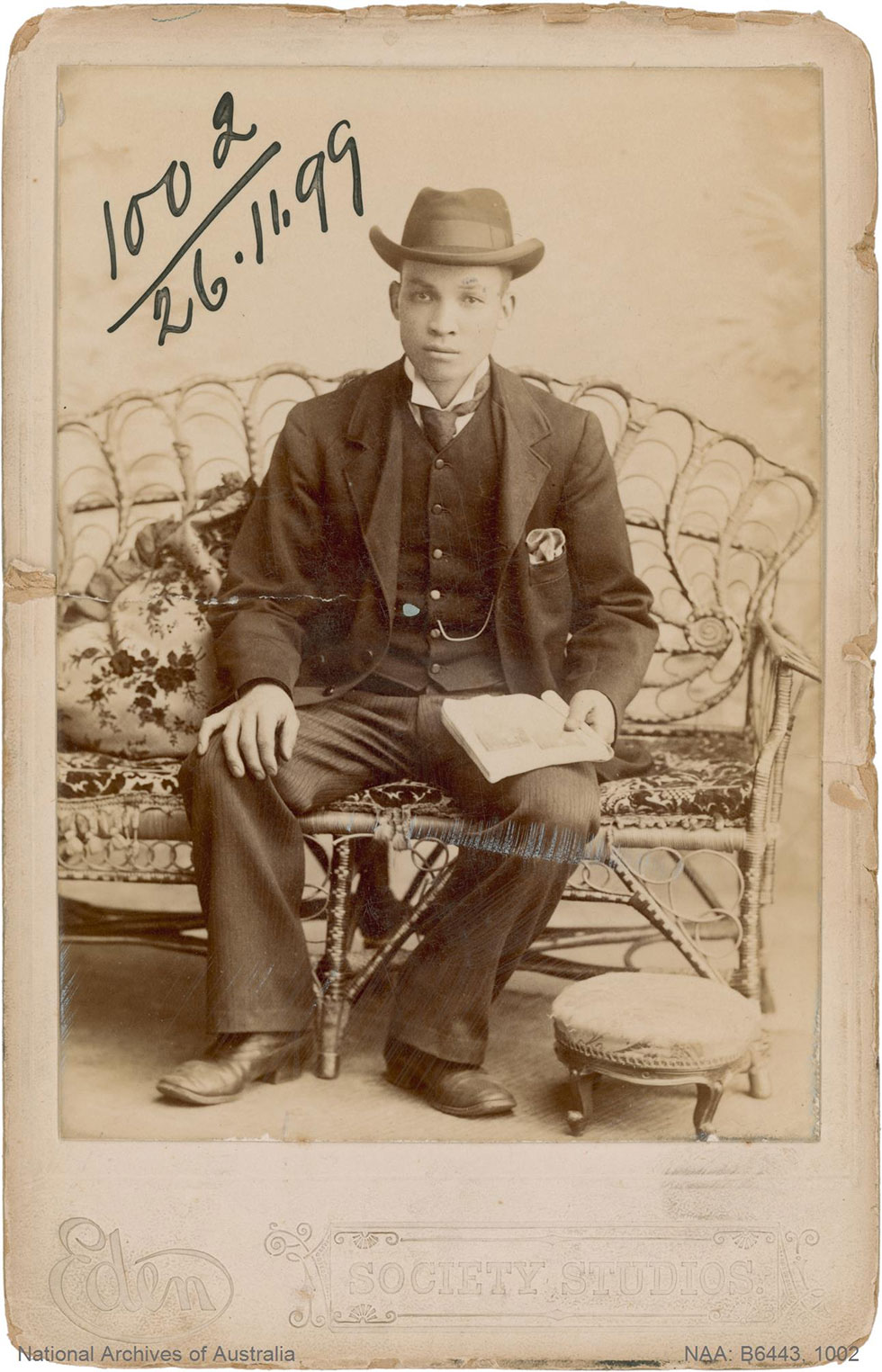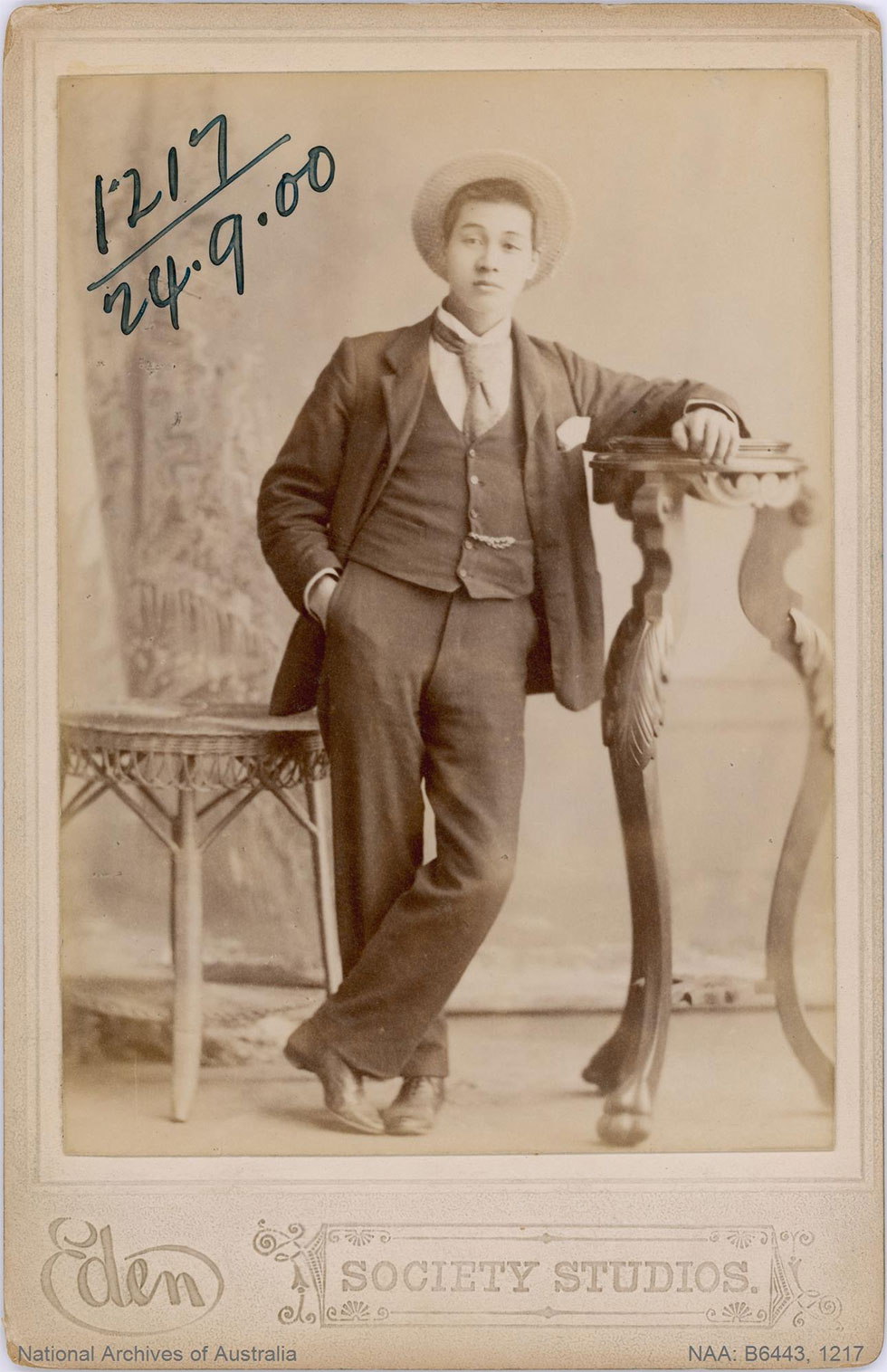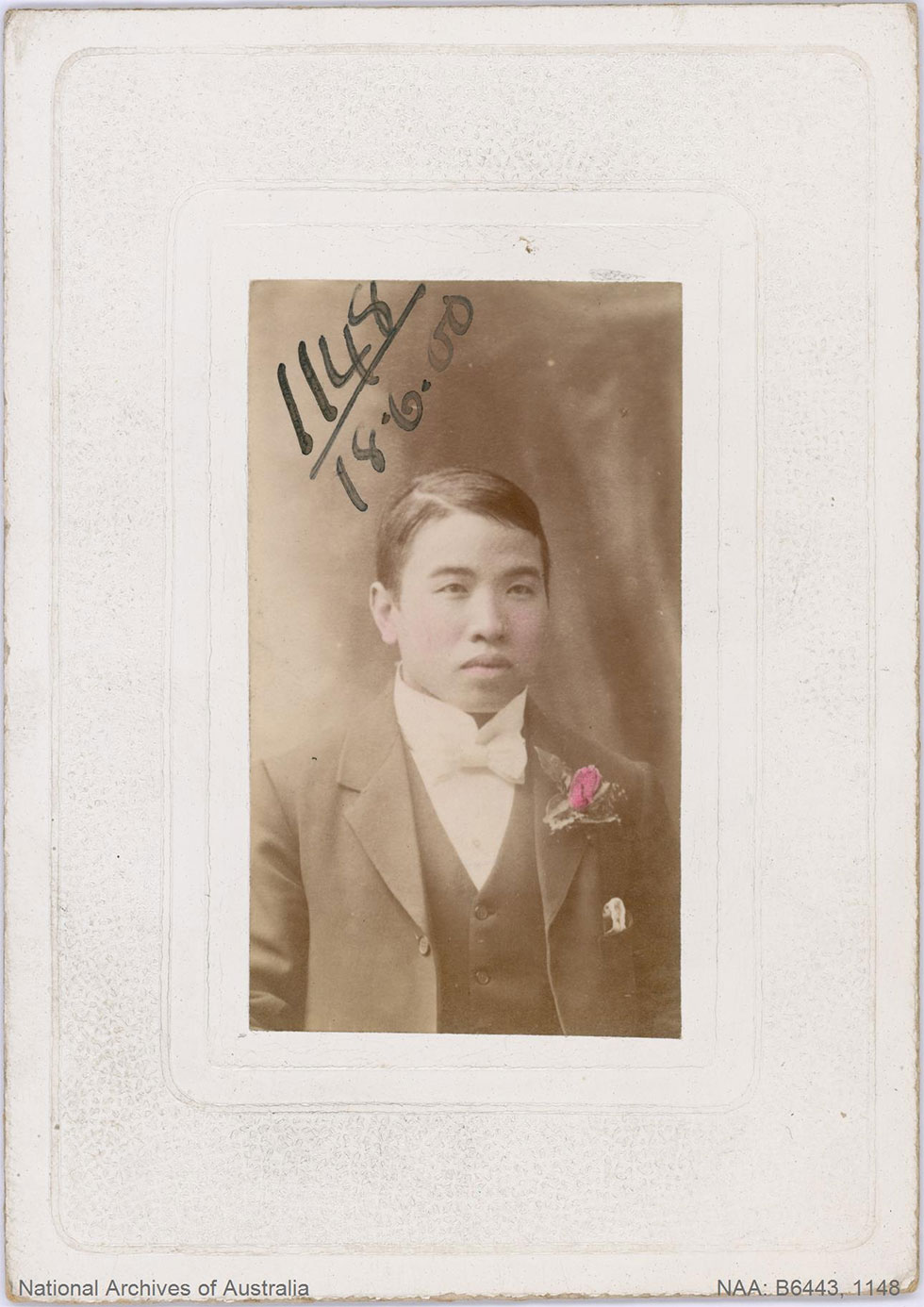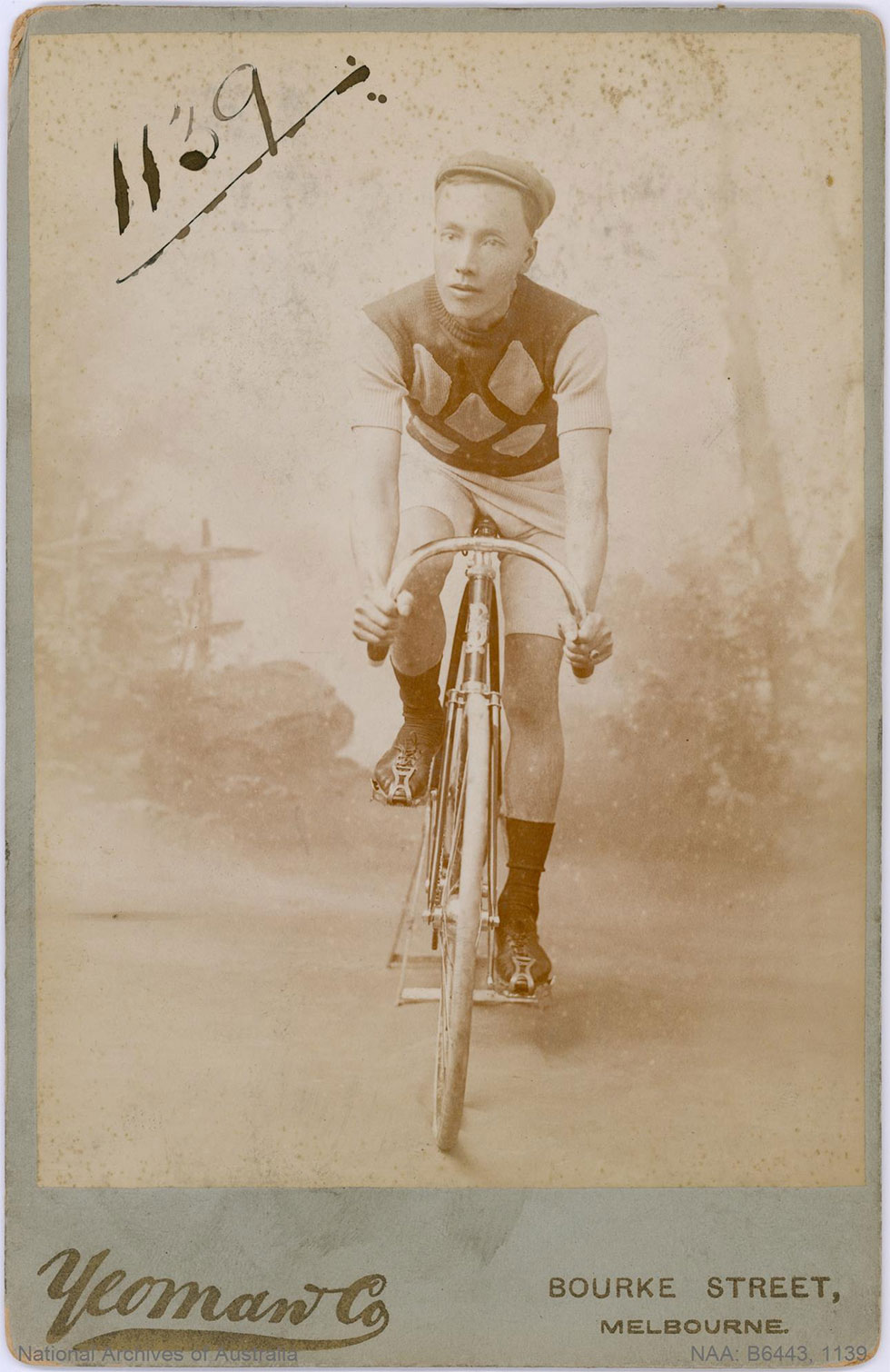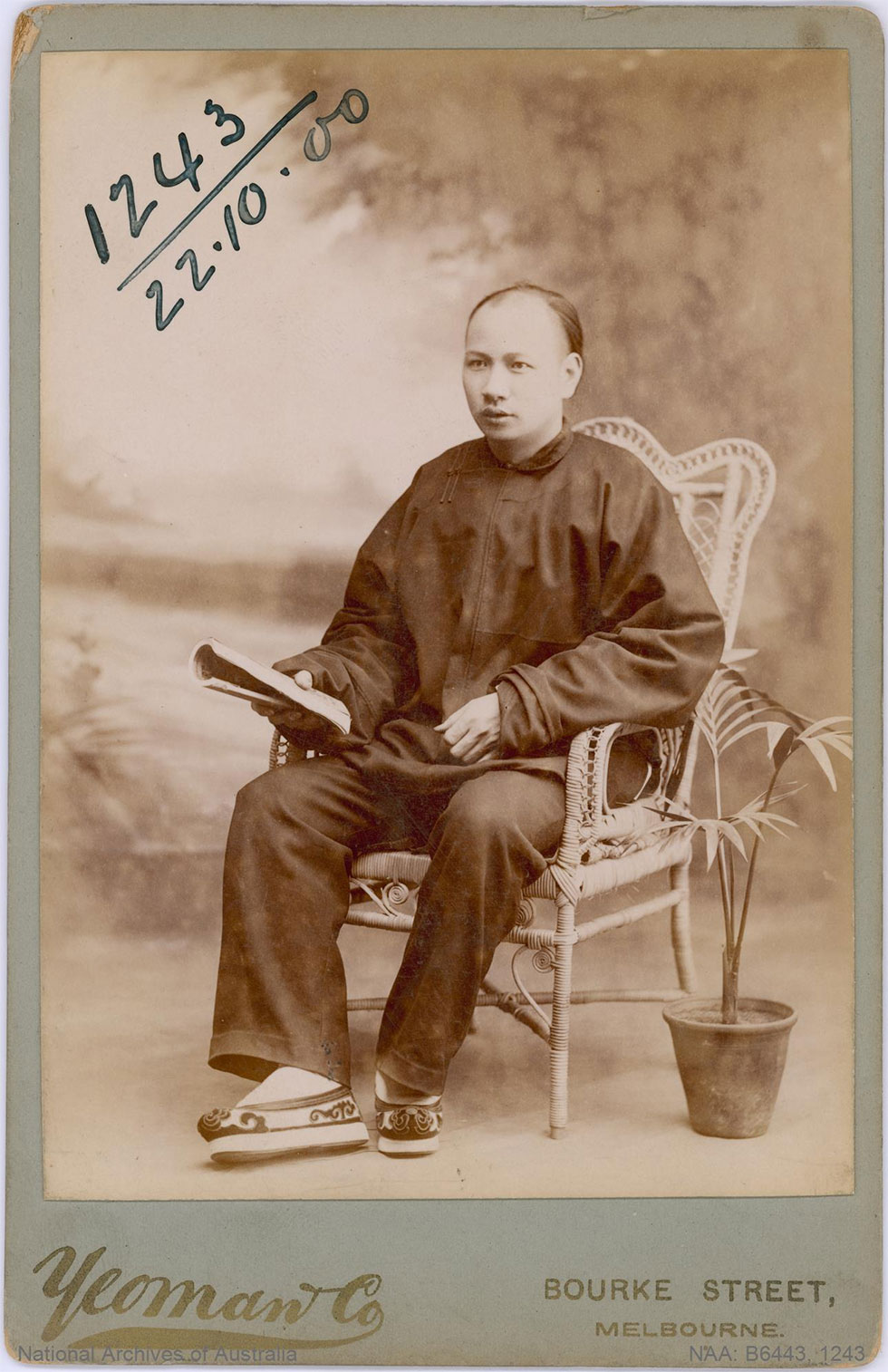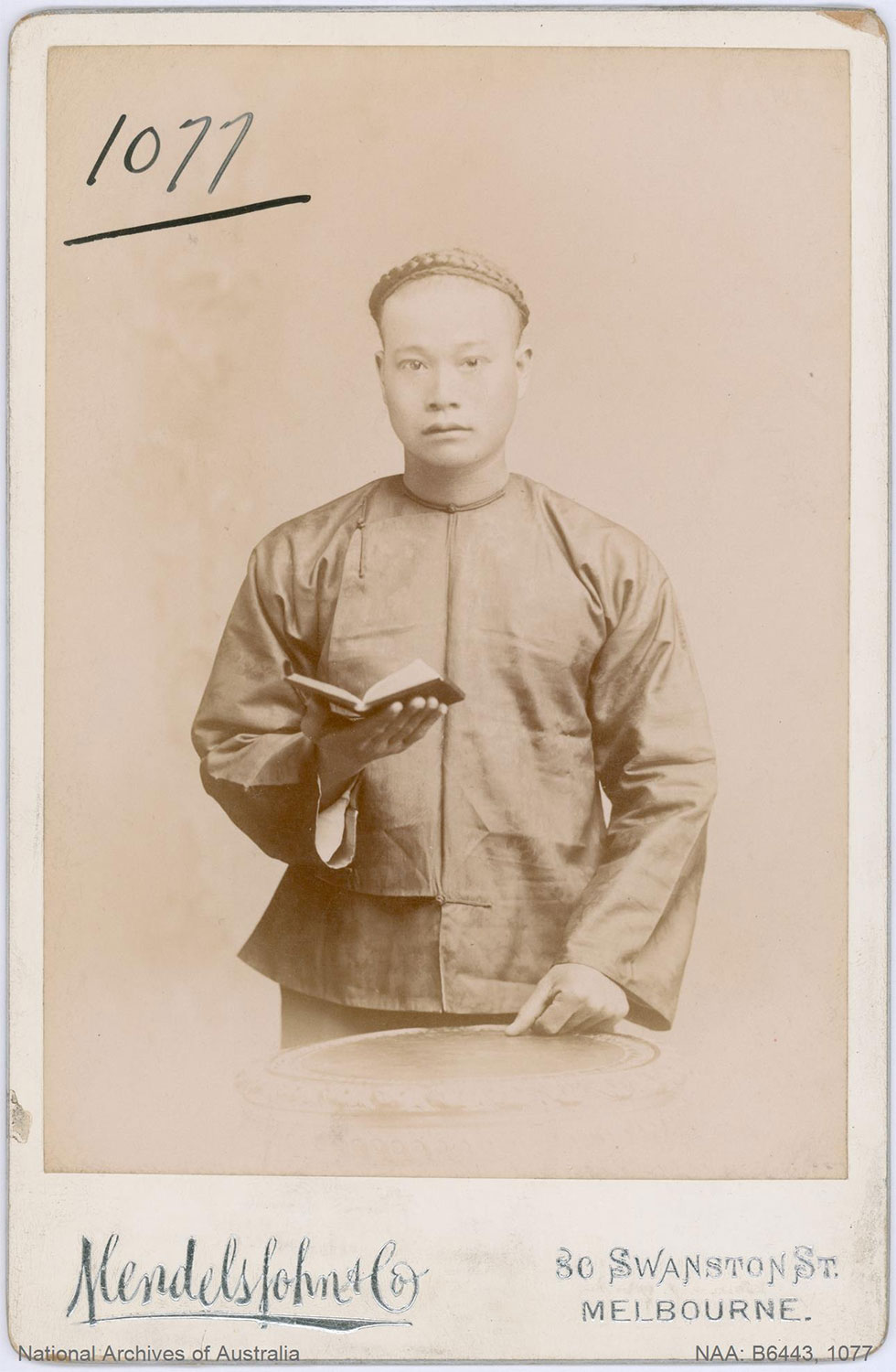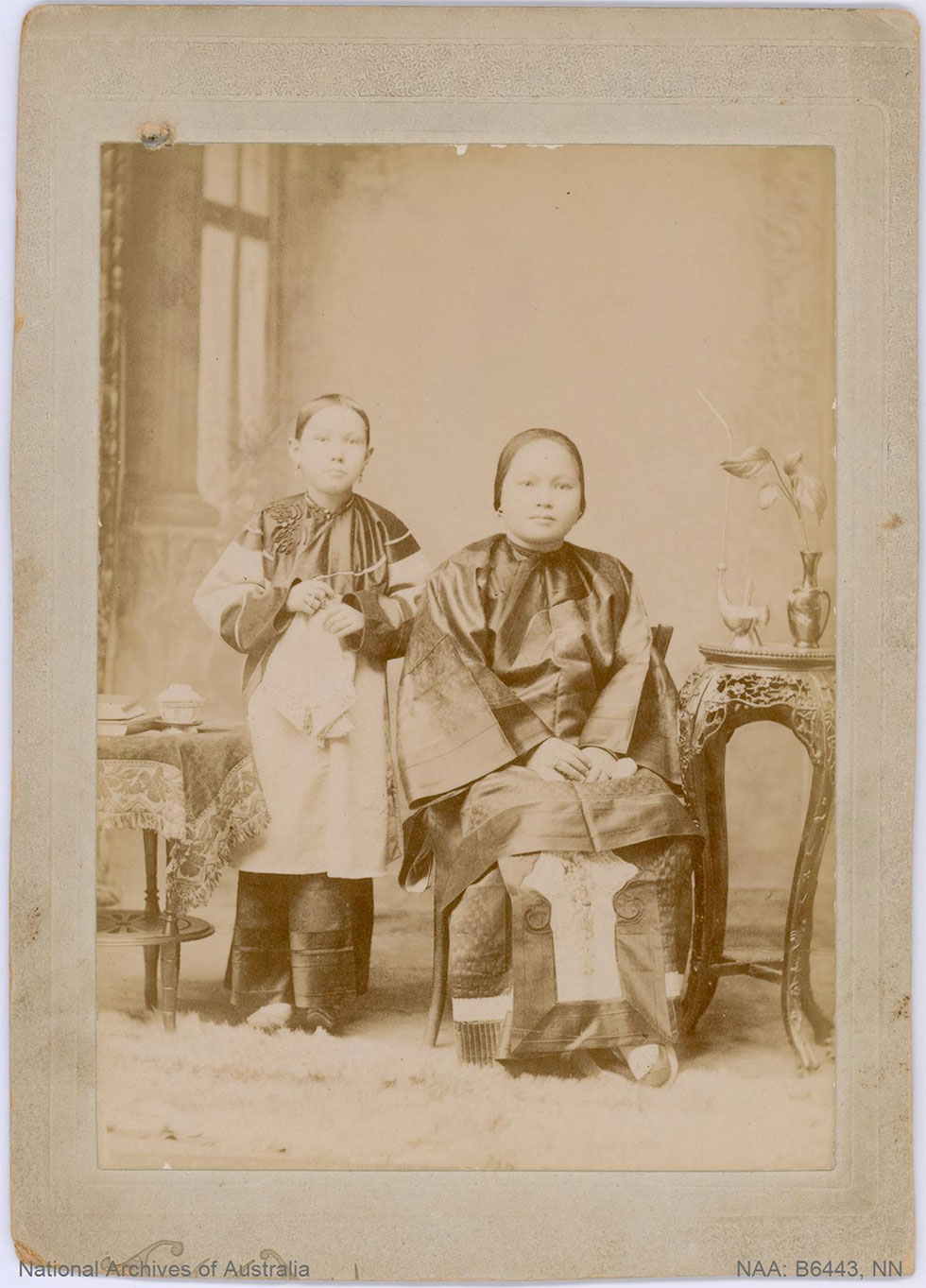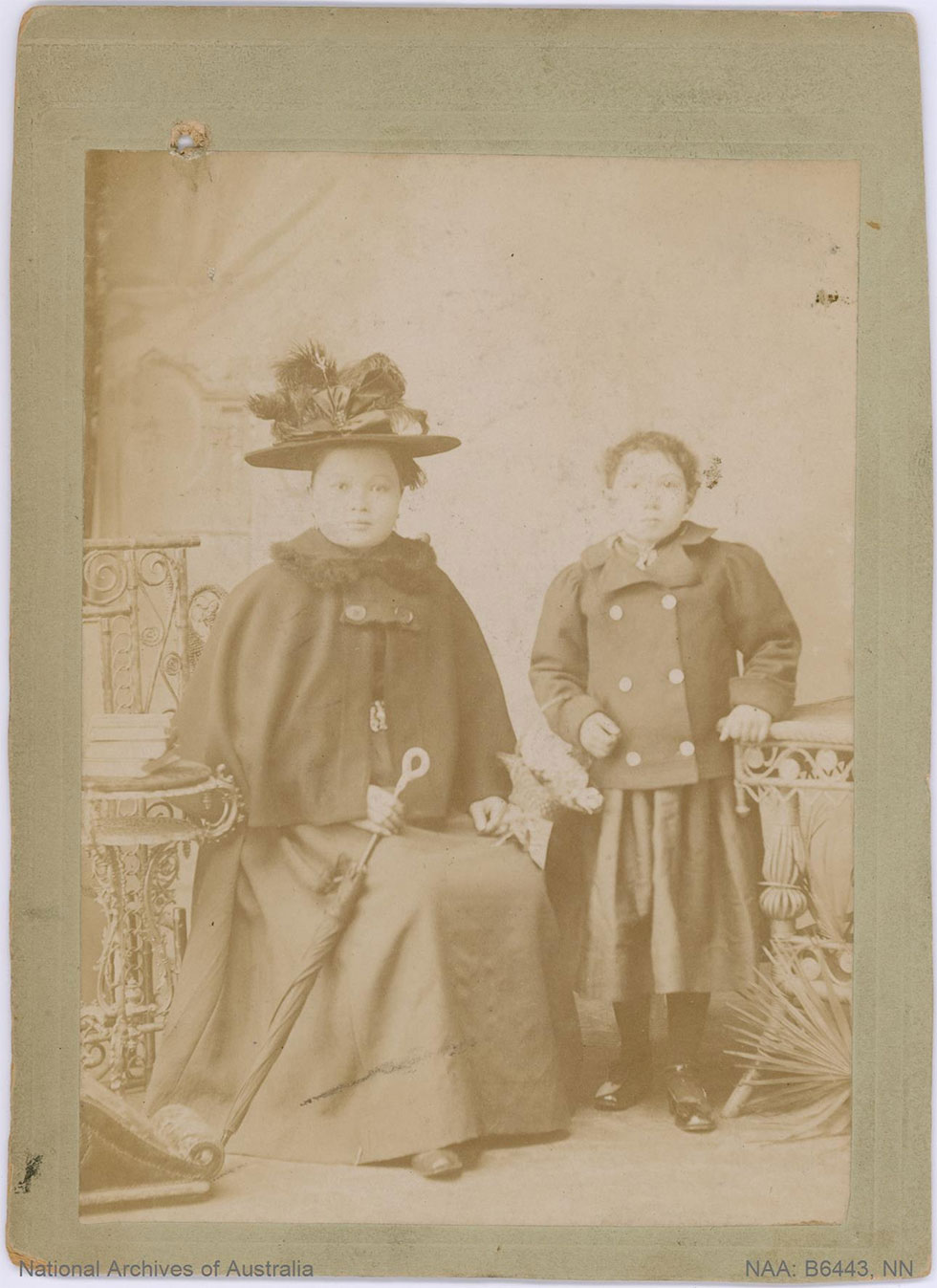
For more than 150 years, Chinese migrants have made a significant contribution to Australian society. Yet they were once subjected to discriminatory migration policies based on racism and prejudice. Rare photographs digitised by National Archives show how Chinese migrants in the late 1800s and early 1900s sought to counter negative stereotypes and present positives images of themselves.
The photographs
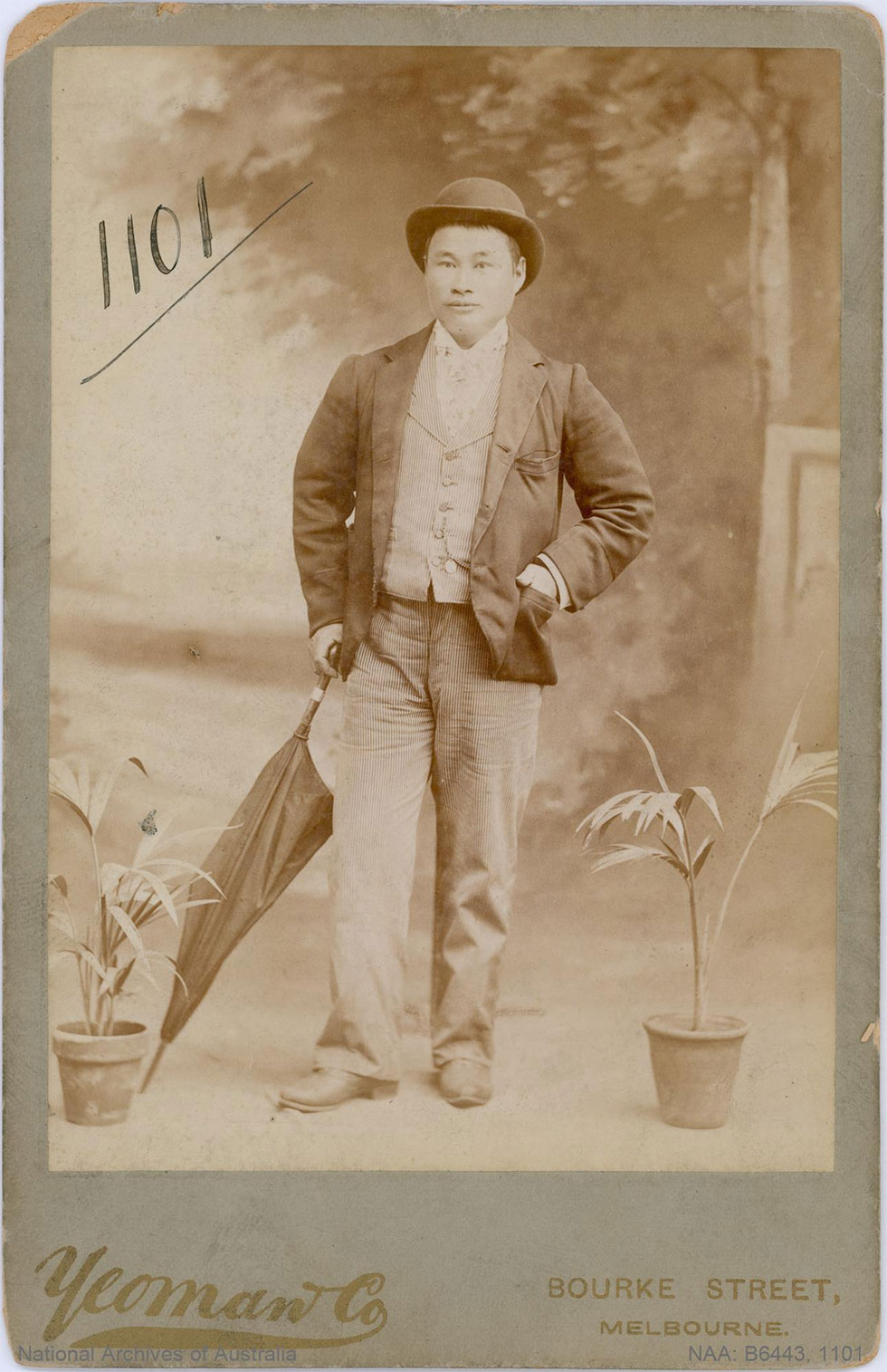
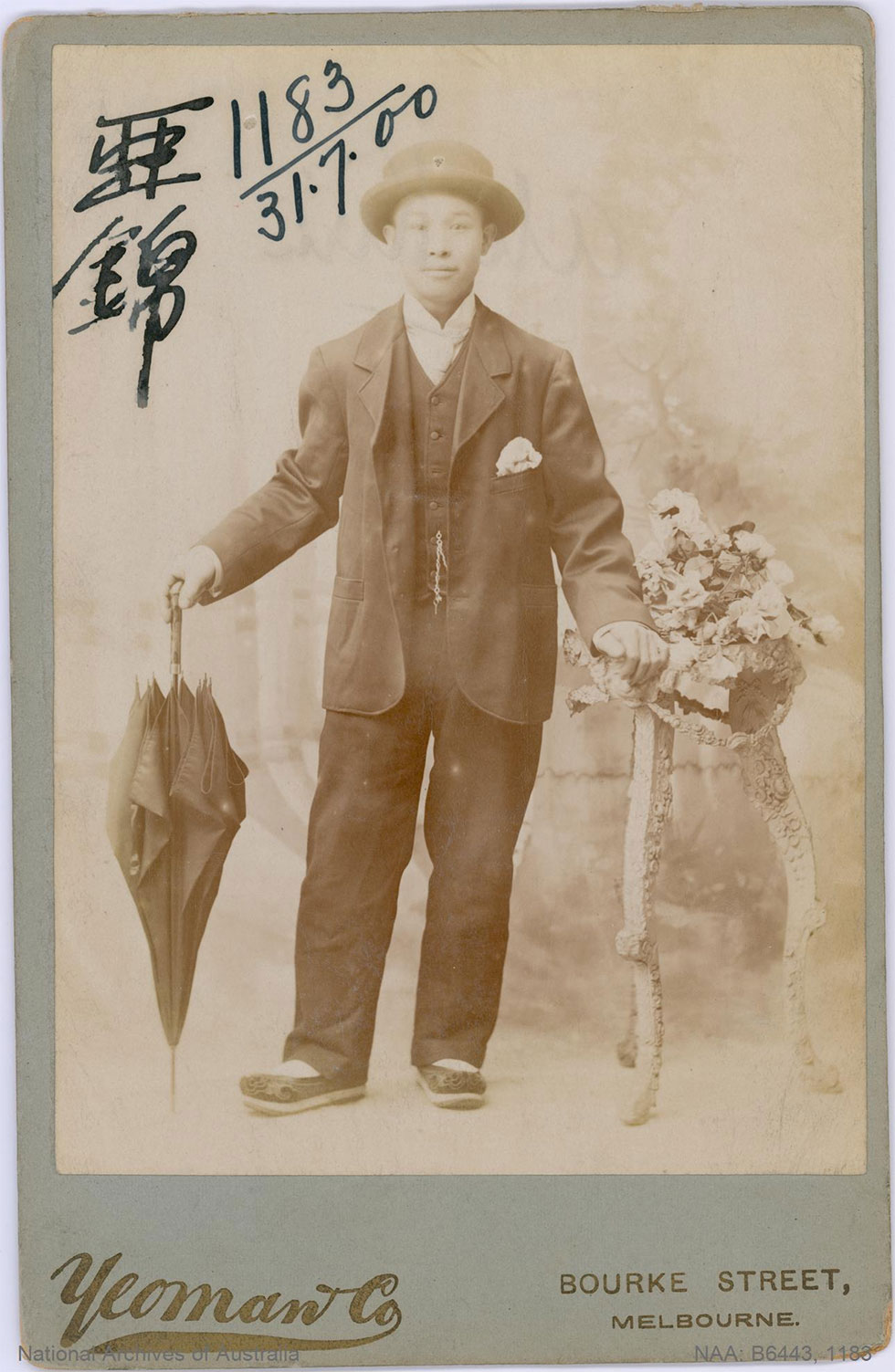
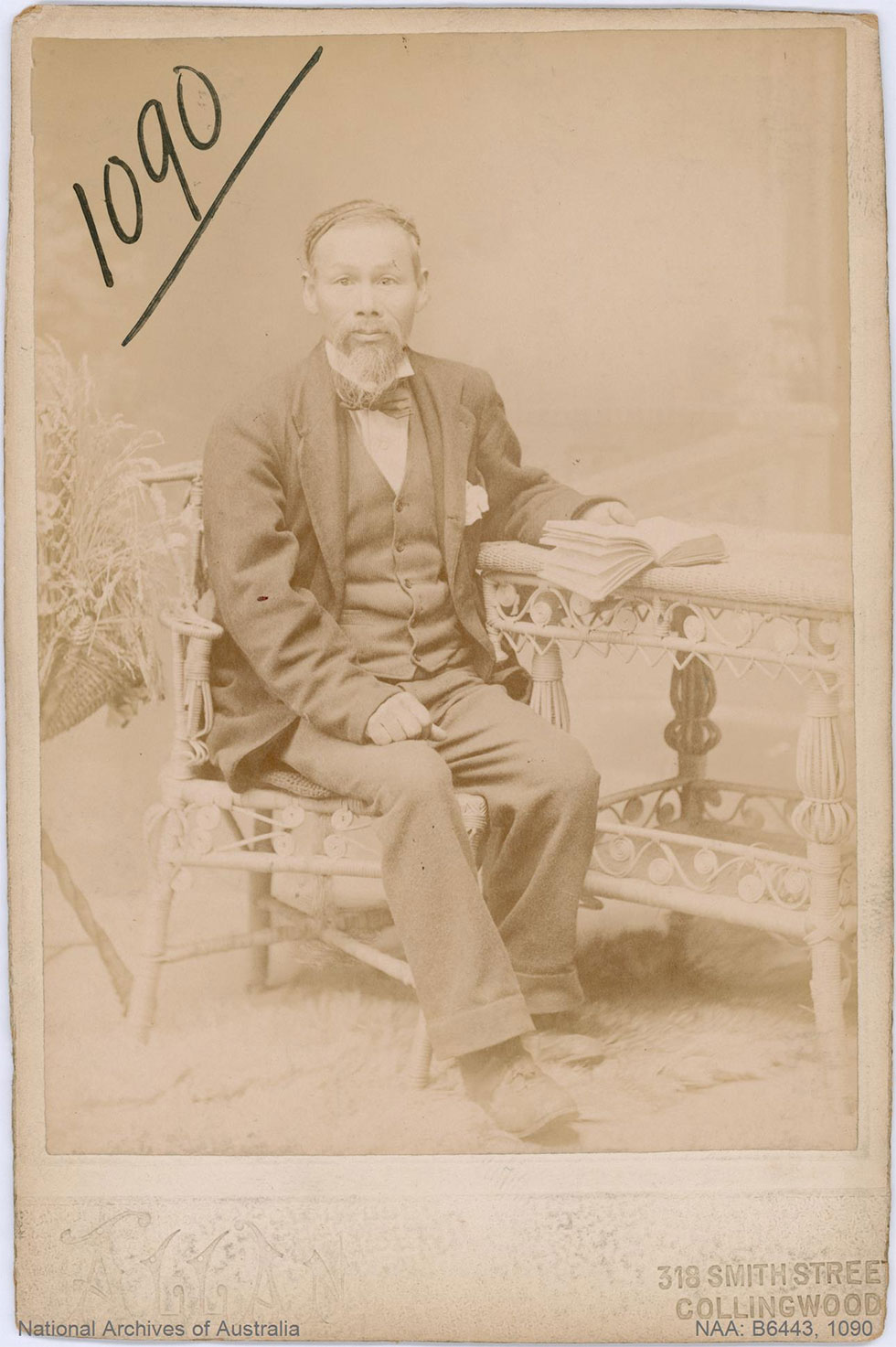
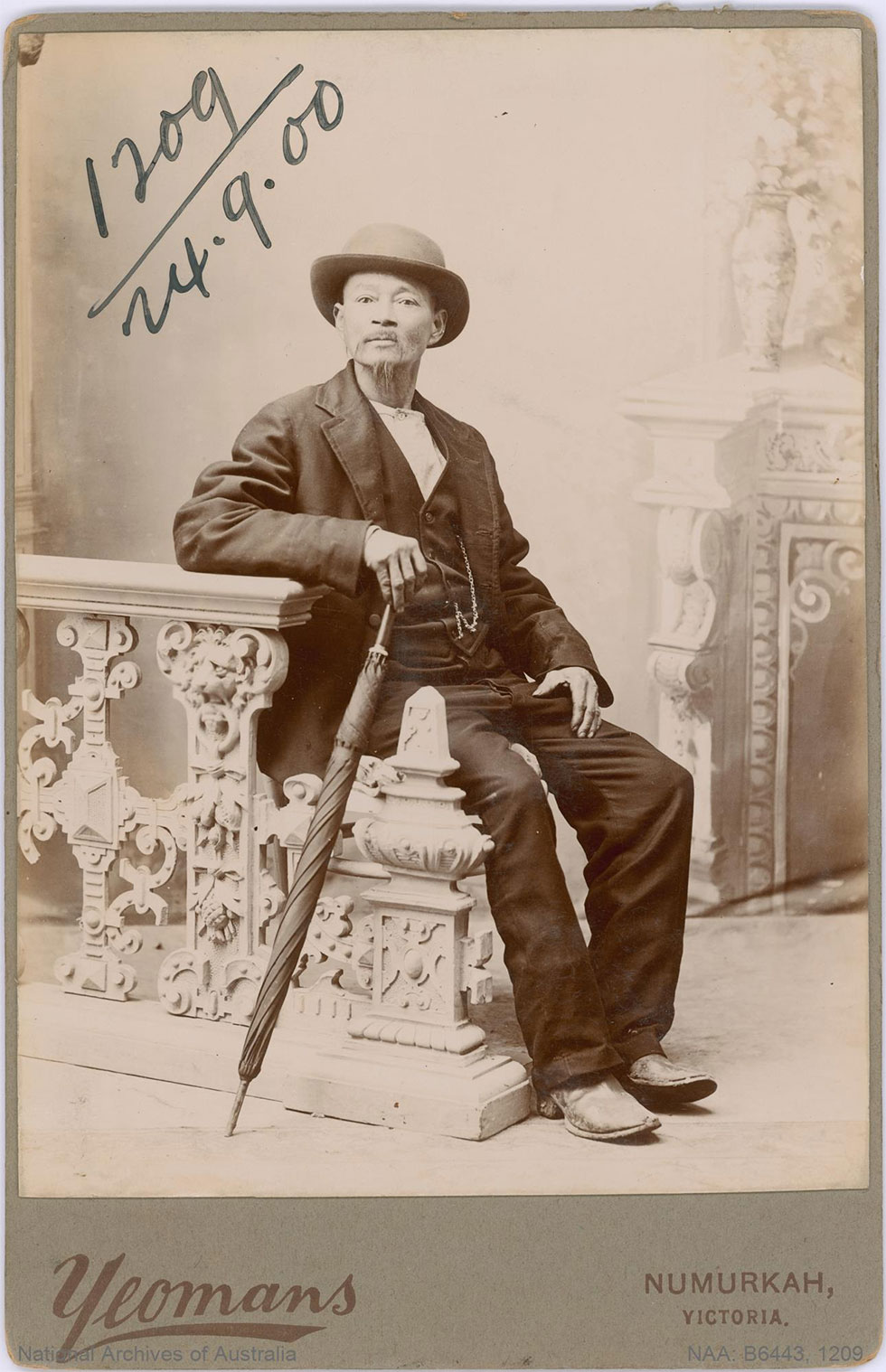
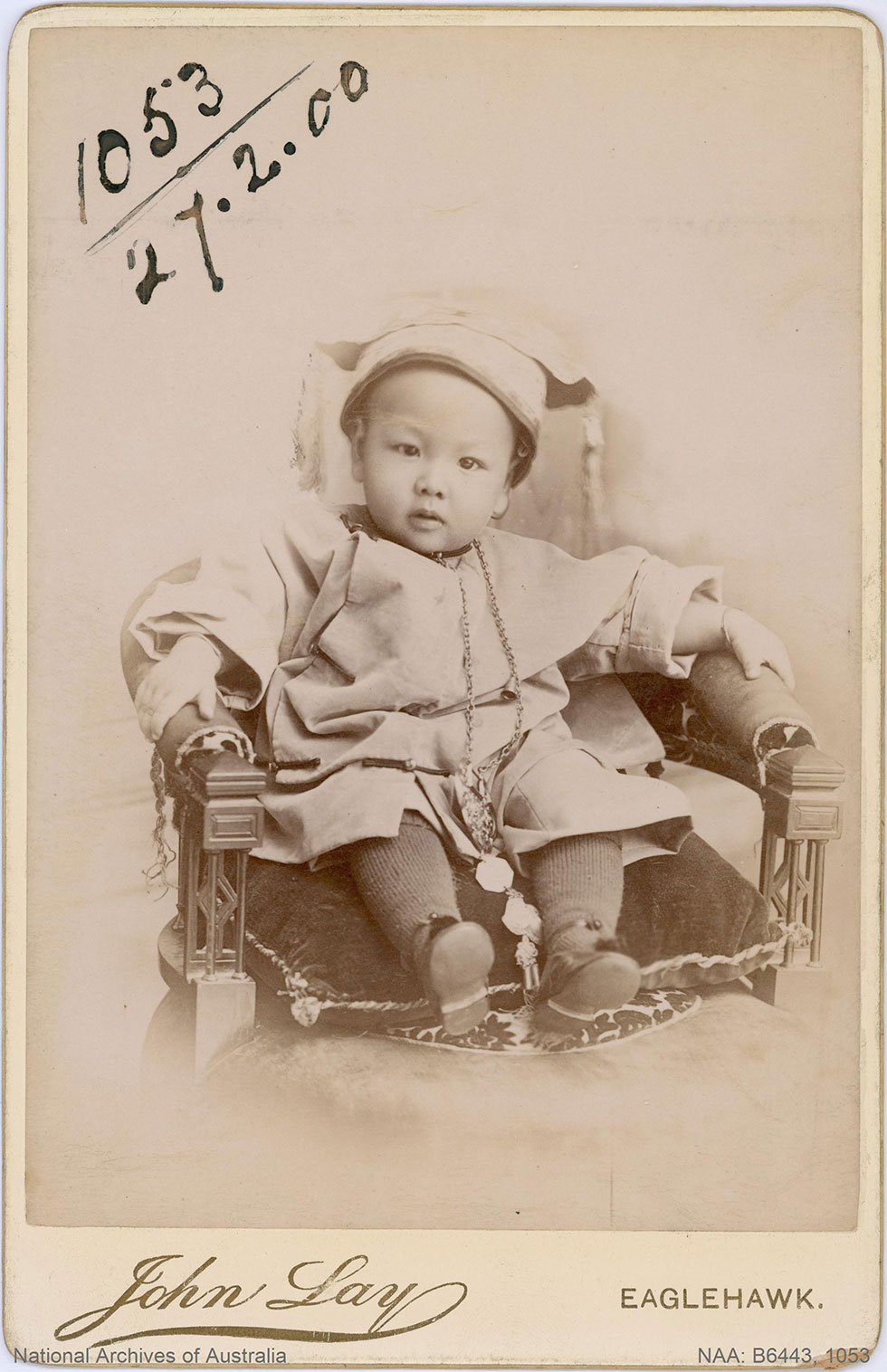
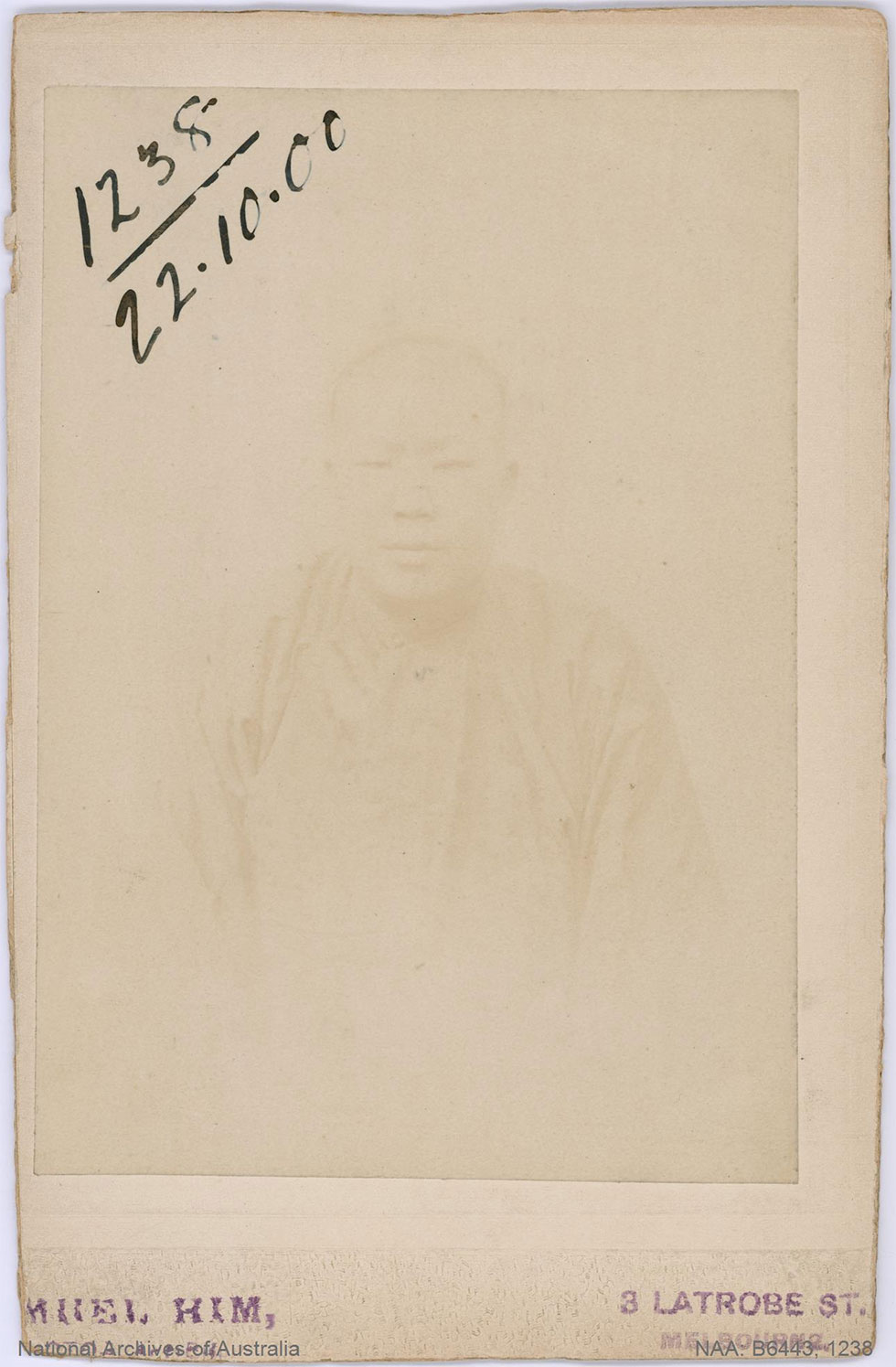
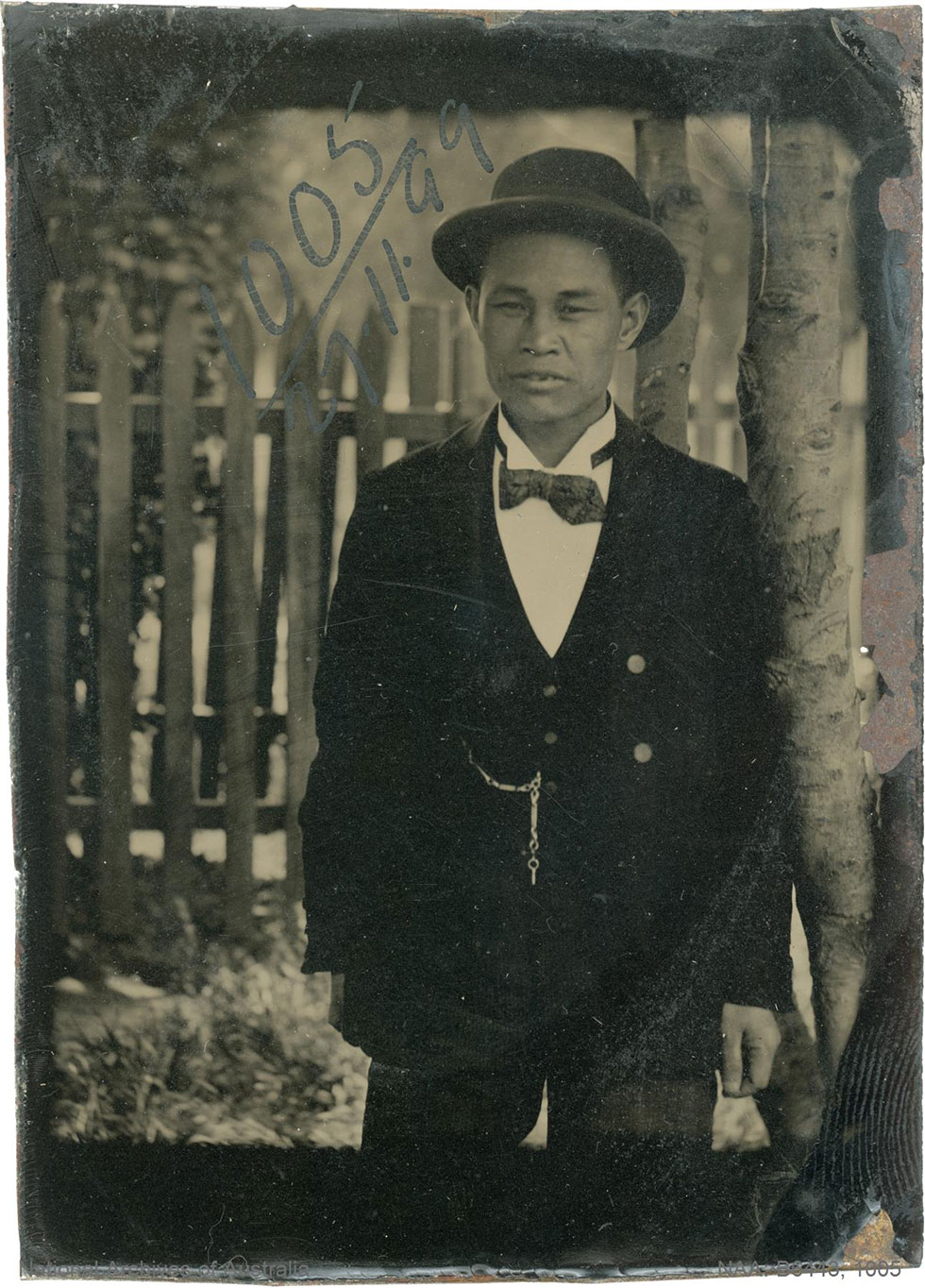
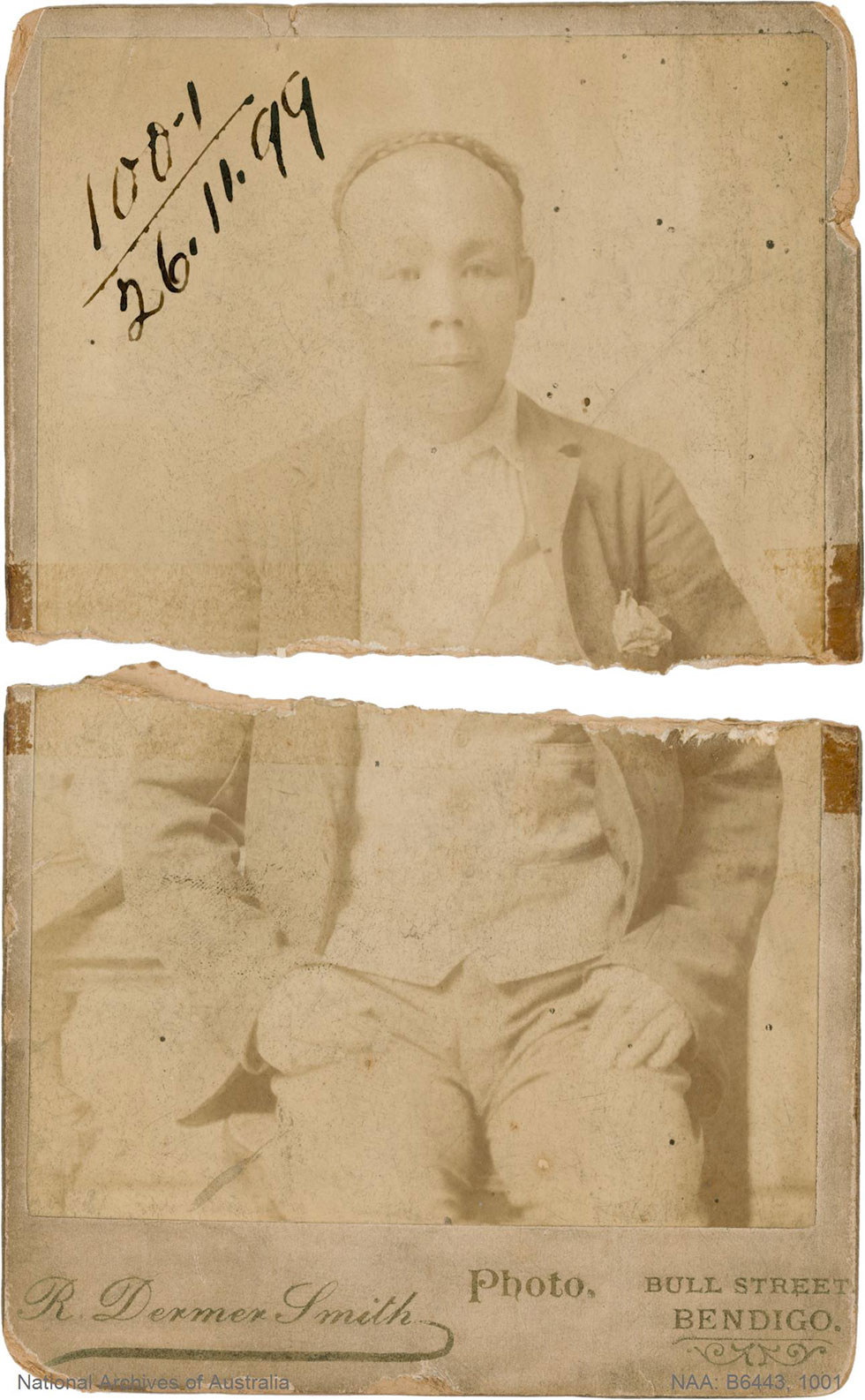
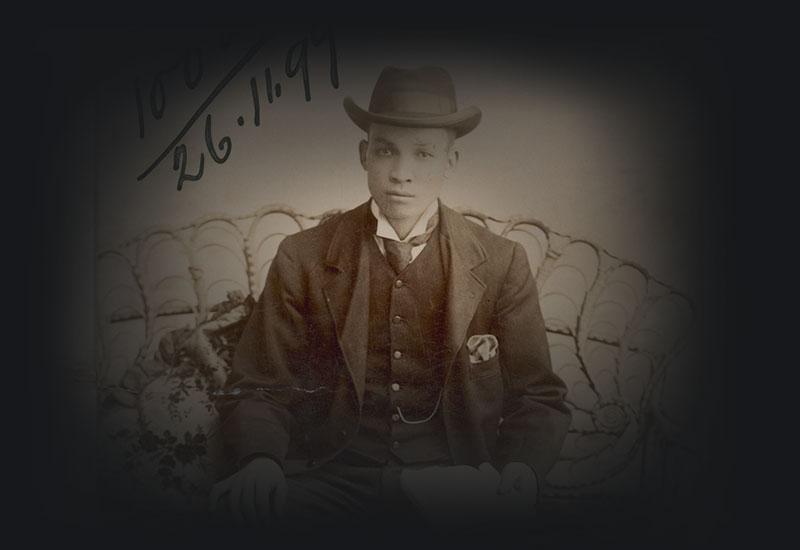
Series B6443 – Photographs and negatives of Chinese entering Australia was gathered by Customs officials in Victoria. Most of the 262 photographs date from 1899–1900. They were used to enforce restrictive and racist policies against Chinese migrants before and after Federation.
Racist caricatures and tough restrictions
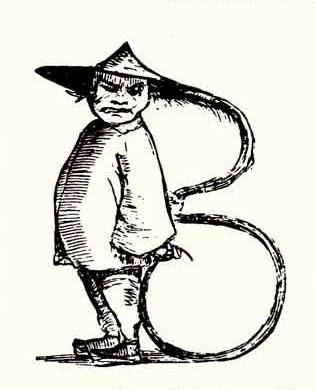
Victoria adopted restrictive immigration policies towards Chinese after the gold rush. This reflected wider xenophobic and racist attitudes. Chinese were widely portrayed in negative, even threatening ways: as an ‘alien horde’; cheap labour stealing jobs and undercutting wages; dissolute gamblers and drug addicts corrupting society; corrupt merchants; and illiterate idiots. These crude caricatures served to exaggerate the Chinese community’s ‘otherness’ and reinforced their exclusion from mainstream society.
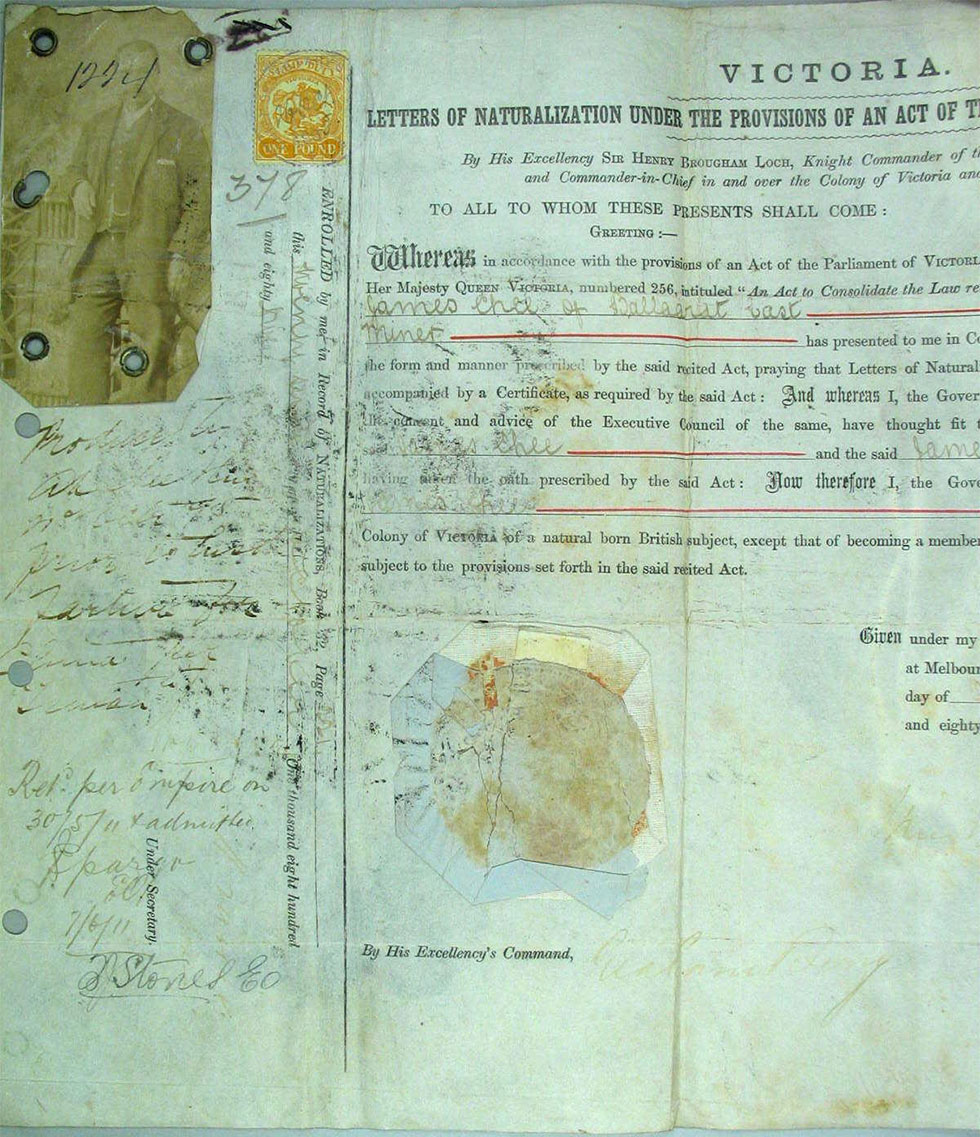
Even Chinese who were naturalised or locally born British subjects were subjected to immigration restrictions. If they left Victoria, they needed a special exemption to return. Before leaving, they had to present 2 photographs (with their names written on the back) to Customs officials. One was attached to their naturalisation, birth or exemption certificate. The other was retained by Customs to identify the person on their return. Hand and thumbprints were also taken.
Researchers Sophie Couchman and Kate Bagnall have identified these as early instances of biometric information being applied to travel documents. It was also racial profiling; these measures were implemented due to suspicions that many Chinese fraudulently entered Victoria using other people’s documents.
Striking a (counter) pose
The system of photographs and handprints singled out Chinese as ‘second class citizens’. Yet as Couchman and Bagnall have argued, the system gave them some agency. Since Chinese had to supply their own photographs, they could determine how they were portrayed.
Undoubtedly concerned about how Customs officials might perceive them, most were photographed in their ‘Sunday best’, often striking debonaire poses. In doing so, they presented themselves as successfully integrated into colonial society. Even those who chose more traditionally Chinese attire could subtly challenge the crude and racist caricatures. For example, holding a book visually signalled that they were literate and educated.
Most striking is how the men handled their hair. Back in China, men were required by imperial edict to shave the crown of their head. Their remaining hair had to be plaited into a long ponytail, known as a queue. This hairstyle, which clearly distinguished Chinese men, was widely ridiculed in Australia. Some men’s photographs show they had abandoned the hairstyle in Australia. Those who did not, discretely tucked their queues away (including under large hats) or wrapped it around their heads.
From restriction to recognition
The racist and discriminatory policies which required these photographs remained in force for decades. Chinese and other non-European migrants still had to apply for special exemption certificates to re-enter Australia until 1958. Australia only adopted a fully non-discriminatory, multicultural immigration policy in 1973.
Today, the significant contribution Chinese migrants have made to the development of Australia’s vibrant, multicultural society is recognised and valued. Digitising the historic photographs in B6443 is important to that.
Importantly, both sides of the photographs have been digitised. In many instances, the subject’s name is written in Chinese on the reverse side. Capturing this information enables these people’s original names to be recovered. At the time, Chinese names were often badly transliterated, making it hard for family historians to accurately trace lineages today.
Optimising preservation
Digitising these photographs also optimises their preservation for the future. This is critical because the photographs were produced using less stable nineteenth century print processes. Many were actually printed using egg-white (albumen) to bind light sensitive salts to the backing card. There is also an example in the series of a tintype photograph, printed on metal.
The photographs were digitised to National Archives’ digitisation preservation standards, with JPEG access copies and TIFF preservation masters. The physical originals were repackaged using new archival quality materials and are stored in special cold storage in Victoria.
The authors acknowledge the research of Sophie Couchman and Kate Bagnall which has informed this story: Identification Photography and the Surveillance of Chinese Mobility in Colonial Australasia: Australian Historical Studies: Vol 54, No 2